A Beginner's Guide to Sageuk: Know the Joseon Dynasty and Korean Historical Dramas Get Ten Times Better
Who exactly are "jeonha", "mama" and "jungjeon"? For first-time viewers of Korean historical dramas, we explain the Joseon dynasty, palace life, social classes, royal titles, traditional versus fusion sageuk and the best shows to start with.

Contents
- What is sageuk?
- The Joseon dynasty at a glance
- Palace people and their titles
- Palace layout: understanding the spaces on screen
- The class system: yangban, commoners and the lowborn
- Reading status through hanbok and props
- Expressions you'll hear in sageuk
- Recommended sageuk for beginners
- Late Joseon and the modern era: another world of sageuk
- Goryeo and Three Kingdoms sageuk
- Sageuk and the historical accuracy debate
- Tips for enjoying sageuk more
- Reading sageuk costumes
- The king's table: surasang
- Visiting sageuk filming locations
- The source of sageuk: the Annals of the Joseon Dynasty
- Three questions for enjoying sageuk more deeply
- Premises that keep coming back in sageuk
- Frequently asked questions
- Final thought: stories that cross time
Enjoy K-dramas long enough and sooner or later you'll come across a sageuk, a historical drama. Lavish hanbok, majestic palaces, plots around the throne and forbidden love — sageuk has a charm you won't find in contemporary dramas. But the first time you put one on, it's easy to be bewildered by unfamiliar words and complicated relationships. Who are "jeonha" and "mama"? Why are the ministers always kneeling? What's the difference between a crown prince and a grand prince?
You don't need to be a historian to enjoy sageuk properly. Knowing just a little background makes the tension of the story and the characters' emotions far more vivid. In this guide we focus on the Joseon dynasty, the setting of most Korean historical dramas, and explain palace layout and people, titles and the class system in simple terms, along with shows we recommend for beginners.
What is sageuk?
Sageuk means a drama set in history. Korean historical dramas cover many periods — the Three Kingdoms of Goguryeo, Baekje and Silla, the Goryeo dynasty, the Joseon dynasty — but Joseon-era dramas vastly outnumber the rest. Joseon left abundant records, its palaces and hanok are well preserved as filming locations, and it's the period viewers know best.
Sageuk falls broadly into two types. Traditional sageuk stays faithful to historical records, depicting real people and events. Fusion sageuk uses history as a backdrop but mixes in fictional characters, fantasy elements or modern sensibilities. Most of the historical dramas popular abroad recently are closer to fusion: Kingdom, with its zombies, and Mr. Queen, in which a modern man's soul enters the body of a Joseon queen, are classic examples.
The Joseon dynasty at a glance
Joseon was founded in 1392 by King Taejo, Yi Seong-gye, and lasted more than five centuries until it renamed itself the Korean Empire in 1897 — one of the longest-lasting dynasties in world history. Joseon took Confucianism as its founding ideology and built a society that prized loyalty, filial piety and propriety. That's why sageuk characters are so often torn between loyalty to the king and duty to their parents.
Kings who often appear in sageuk
| King | Reign | Stories often told |
|---|---|---|
| Taejo | 1392–1398 | The founding of Joseon and the chaos of late Goryeo |
| Taejong | 1400–1418 | The princes' strife; establishing strong royal power |
| Sejong | 1418–1450 | The creation of Hangul; a golden age of science and culture |
| Yeonsangun | 1494–1506 | Tyranny and deposition; the archetypal tragic king |
| Gwanghaegun | 1608–1623 | Pragmatic diplomacy and debates over his deposition |
| Sukjong | 1674–1720 | Court intrigue around Jang Hui-bin and Queen Inhyeon |
| Yeongjo | 1724–1776 | The tragedy of locking his son, Crown Prince Sado, in a rice chest |
| Jeongjo | 1776–1800 | A reformist king; the building of Hwaseong Fortress in Suwon |
The three generations of Yeongjo, Crown Prince Sado and Jeongjo in particular have inspired countless dramas and films. A father who drove his son to his death, and that son's son becoming king and trying to restore his father's honour — it's a drama in itself.
Palace people and their titles
Titles are what confuse sageuk viewers most. In Joseon palaces, how you addressed someone was strictly determined by rank.
| Person | Title | Notes |
|---|---|---|
| King | Jeonha | How ministers address the king ("Your Majesty"); an emperor is "pyeha" |
| Queen | Jungjeon (mama) | The king's official wife, named after the queen's palace, Junggungjeon |
| King's mother | Daebi (mama) | The previous king's queen, often very powerful at court |
| Crown prince | Seja, jeoha | The heir to the throne; ministers call him "jeoha" |
| King's son (by the queen) | Daegun | A grand prince born to the queen |
| King's son (by a concubine) | Gun | A prince born to a royal concubine |
| King's daughter | Gongju / ongju | Gongju if born to the queen, ongju if born to a concubine |
| Royal concubine | Bin, gwi-in, etc. | Titles vary by rank |
Mama is an honorific added when addressing royal family members: jungjeon-mama, daebi-mama, seja-mama. You'll often hear ministers cry "Jeonha, tongchokayeo jusiopsoseo", meaning "Your Majesty, please consider this deeply."
People who worked in the palace
- Sanggung and nain (court ladies): women who served the royal household. They entered the palace young and lived there for life. Jewel in the Palace and The Red Sleeve portray court ladies' lives in depth.
- Naesi (eunuchs): male officials who attended the king and handled palace duties.
- Eoui: royal physicians who looked after the health of the king and royal family.
- Sagwan (historians): officials who recorded the king's words and deeds. Rookie Historian Goo Hae-ryung imagines a female historian.
Palace layout: understanding the spaces on screen
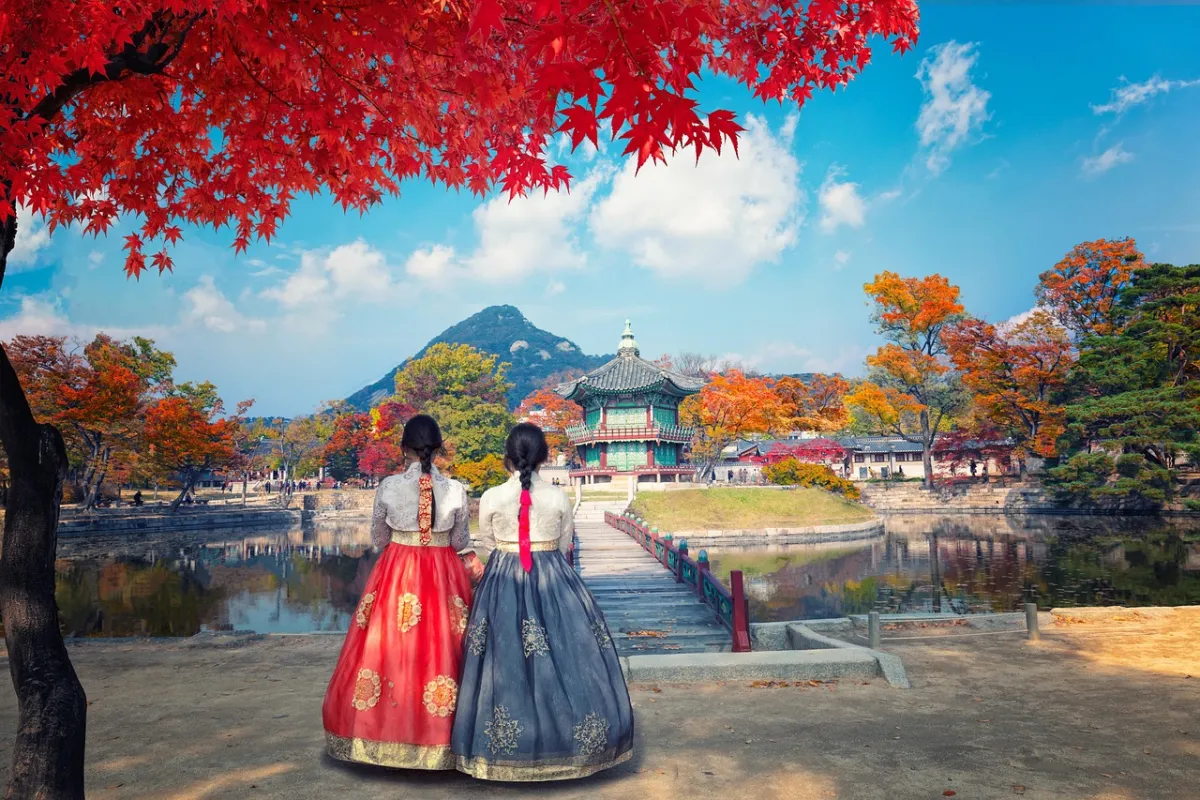
Joseon palaces were divided into spaces for governing and spaces for living. The large halls where the king meets ministers in sageuk are throne halls or council halls, while the king's and queen's living quarters are separate residential halls. Five palaces survive in Seoul — Gyeongbokgung, Changdeokgung, Changgyeonggung, Deoksugung and Gyeonghuigung — so walking through them after watching a sageuk brings the scenes vividly to life.
The painting behind the king's throne in sageuk is the Irworobongdo, "Sun, Moon and Five Peaks". It symbolises royal authority and appears in almost every scene featuring the king. It's even printed on the front of Korea's 10,000-won banknote, alongside King Sejong.
The class system: yangban, commoners and the lowborn
Joseon was a strictly hierarchical society, and many sageuk conflicts stem from these class barriers.
- Yangban: the ruling class eligible for government office. They became officials through the civil service examination and valued scholarship and etiquette.
- Jungin: the "middle people" — specialists such as doctors, interpreters and court painters.
- Sangmin: commoners — farmers, merchants and artisans — who made up most of the population.
- Cheonmin: the lowest class, including slaves, butchers and entertainers. Slaves were regarded as their owners' property.
Love between a yangban son and a servant, or a hero born a seoja (son of a concubine) who suffers discrimination, are sageuk staples. These stories show people trying to live with dignity within the limits of their era, and they still resonate deeply with viewers today.
Reading status through hanbok and props
In sageuk you can often tell a character's status from their clothes alone.
- Gollyongpo: the red robe the king wears for daily duties, embroidered with dragons on the chest and shoulders.
- Gat: the wide-brimmed black hat worn by yangban men. Thanks to Kingdom's success abroad, the gat gained worldwide attention as "the Joseon hat".
- Hyungbae: rank badges on officials' chests — cranes for civil officials, tigers for military officials, for example.
- Gache: large wigs worn by royal and yangban women to create grand hairstyles.
- Jangot and sseugae-chima: garments yangban women wore to cover their faces when going out.
Expressions you'll hear in sageuk
| Expression | Meaning |
|---|---|
| Tongchokayeo jusiopsoseo | "Please consider this deeply" |
| Seongeuni manggeukhaomnida | "Your Majesty's grace is boundless" |
| Eomyeongio | "By royal command" |
| Manggeukhaomnida | "I am overwhelmed / unworthy" |
| -haomnida, -hasiopsoseo | Extremely honorific verb endings |
| Soin, sonyeo, soenne | Humble words used by lower-status people to refer to themselves |
Sageuk speech is very different from modern Korean — so distinctive that Koreans mimic it as a joke. If you're learning Korean, comparing these expressions with modern honorifics makes for fascinating study.
Recommended sageuk for beginners
The classic of palace stories: Jewel in the Palace (Dae Jang Geum, MBC, 2003–2004)
The life of Jang-geum, who rises from palace kitchen cook to the king's physician. It shows Korean food, medicine and palace life in detail and became a defining Korean Wave sageuk after enormous success across Asia, the Middle East and beyond. At 54 episodes it's long, but nothing better introduces the world of sageuk.
The textbook romantic sageuk: The Moon Embracing the Sun (MBC, 2012)
A fusion sageuk about the fated love between a fictional king and the woman he loved as a child. Blending court intrigue, shamanism and romance, it caused a sensation when it aired.
A king through a court lady's eyes: The Red Sleeve (MBC, 2021)
The story of King Jeongjo and court lady Seong Deok-im, delicately portraying a woman who wanted to keep her own life even while loved by a king. It was praised for both its historical detail and its direction.
A light-hearted fusion sageuk: Mr. Queen (tvN, 2020–2021)
A comedy in which the soul of a modern male chef ends up in the body of a Joseon queen. Recommended if heavy historical dramas feel daunting.
History meets genre: Kingdom (Netflix, 2019–)
It combines a plague, zombies and a power struggle in Joseon. Adding thriller tension to sageuk's political drama, it introduced the genre's appeal to viewers worldwide.
A heroine's growth: Rookie Historian Goo Hae-ryung (MBC, 2019)
Starting from the idea of a female historian in Joseon, it cheerfully follows a heroine who takes on work women weren't allowed to do in her time.
The epic of Joseon's founding: Six Flying Dragons (SBS, 2015–2016)
An epic sageuk following the turbulent years from late Goryeo to the founding of Joseon through six characters. Its 50 episodes demand commitment, but political drama fans will be absorbed.
| Your taste | Recommendations |
|---|---|
| Palace life and food | Jewel in the Palace |
| Romance | The Moon Embracing the Sun, The Red Sleeve |
| Comedy | Mr. Queen |
| Thriller / genre | Kingdom |
| Women's stories | Rookie Historian Goo Hae-ryung |
| Political epic | Six Flying Dragons |
Late Joseon and the modern era: another world of sageuk
The modern era — from late Joseon through the Korean Empire to the Japanese colonial period — is increasingly popular in recent historical dramas. It was a turbulent age when Western culture arrived and the nation's fate hung in the balance, making for dramatic stories. Mr. Sunshine (tvN, 2018), set in Hanseong in the early 1900s, won great affection with its story of righteous army fighters, a diplomat and a yangban woman. Dramas of this era show a unique landscape where hanbok and Western suits coexist, and tell the stories of nameless people who tried to protect their country.
Goryeo and Three Kingdoms sageuk
Some dramas are set before Joseon. Moon Lovers: Scarlet Heart Ryeo (SBS, 2016), set in Goryeo, is a fantasy romance about a modern woman who travels back in time, especially popular abroad. Three Kingdoms dramas such as Queen Seondeok (MBC, 2009), about a Silla queen, show costumes and an ancient atmosphere quite different from Joseon's.
Sageuk and the historical accuracy debate
Because sageuk draws on history, debates about accuracy are frequent. Some dramas have been cancelled early after criticism that they glorified or distorted real figures. On the other hand, some argue that clinging too tightly to historical accuracy makes for less entertaining drama.
As a viewer, it's best to enjoy sageuk not as "history itself" but as "stories inspired by history". After watching a drama you like, looking up the real history adds another layer of fun as you compare the two. Joseon's history survives in the vast Annals of the Joseon Dynasty, which are inscribed on UNESCO's Memory of the World Register.
Tips for enjoying sageuk more
- Find a character chart: sageuk have large casts and complicated relationships. Character charts made by broadcasters or fans make them much easier to follow.
- Look up real figures: if real historical people appear, read a brief summary of their lives. You may learn the ending, but you'll enjoy seeing how the drama gets there.
- Pair it with a palace visit: watching sageuk before or after visiting Seoul's palaces makes the spaces feel far more alive. Remember that wearing hanbok gets you free admission.
- Notice the music and costumes: soundtracks using traditional Korean music and painstakingly made hanbok offer a beauty only sageuk can.
Reading sageuk costumes
The lavish costumes of sageuk are full of clues to characters' status and roles. Knowing just a few lets you guess who's who even in an unfamiliar scene.
| Costume | Worn by | Features |
|---|---|---|
| Gollyongpo (dragon robe) | The king | A red robe embroidered with dragons on the chest and shoulders, symbolising royal authority. |
| Gwanbok (official's robe) | Officials | Colours and the embroidered rank badge on the chest vary by rank: cranes for civil officials, tigers for military officials. |
| Dangui | Queens and court women | A ceremonial jacket worn over the jeogori, with long slits at the sides. |
| Gat | Yangban men | A black horsehair hat with a wide brim. Thanks to one drama, it drew huge attention from overseas viewers as "the Joseon hat". |
| Dopo | Yangban men | An outer robe worn when going out, conveying the neat, dignified image of a scholar. |
The king's table: surasang
The royal meal scenes common in sageuk carry interesting stories too. The king's table was called surasang, and the kitchen that prepared royal cuisine was the suragan. A surasang featured white rice, soup, stew, steamed dishes and many banchan; the "12-cheop bansang", with twelve side dishes, is known as the classic royal table setting.
Another sageuk staple is the "gimi" scene, where a tester samples the king's food for poison before he eats. A drama about royal cuisine became a huge hit by portraying spectacular dishes alongside the rivalry and growth of palace women. Royal cuisine is still passed down by specialists today, so you can get a taste of it through royal-cuisine experiences or a hanjeongsik meal.
Visiting sageuk filming locations
Sageuk scenes are filmed not only in real palaces but also on large sets built specifically for historical dramas. If you'd like to walk through drama scenery yourself, try these places.
- Korean Folk Village (Yongin, Gyeonggi-do): a recreated Joseon-era village used as a location for countless sageuk. You can stroll its streets in hanbok and enjoy traditional performances.
- Mungyeong Saejae (Mungyeong, North Gyeongsang): an old mountain road with surviving gates, near a large sageuk filming set. It's also a popular trekking route.
- Suwon Hwaseong Fortress (Suwon, Gyeonggi-do): a late-Joseon fortress and UNESCO World Heritage Site. Walking its walls, you can picture battle scenes and royal processions from sageuk.
- Namhansanseong (Gwangju, Gyeonggi-do): the mountain fortress where the king took refuge during the Qing invasion of 1636, a setting for historical films and dramas — also UNESCO World Heritage.
The source of sageuk: the Annals of the Joseon Dynasty
There's one record where many sageuk writers find the threads of their stories: the Annals of the Joseon Dynasty (Joseon Wangjo Sillok). This vast history records, day by day, events during each Joseon king's reign, and it's inscribed in UNESCO's Memory of the World Register. Historians were expected to record the king's words and deeds objectively, and it's said that even kings weren't allowed to read the Annals at will.
The Annals cover not only political events but also weather, disasters and ordinary people's lives, and writers sometimes spin a whole drama from a single short line. The Annals have been digitised and are searchable online, so if you're curious about the real background of a sageuk you love, it's worth a look.
Three questions for enjoying sageuk more deeply
- When in history is this story set? Checking the king and era behind a drama makes the characters' conflicts much easier to understand.
- Where does fact end and imagination begin? Looking up the real history after watching lets you compare which parts the writer reinterpreted.
- What is this drama saying about today? Many sageuk use the past to talk about present-day social issues. Think about what themes like power, justice and class discrimination mean to us now.
Premises that keep coming back in sageuk
Sageuk have their own favourite premises that viewers love to see. Knowing them makes it fun to predict where a story is heading.
- The woman disguised as a man: a woman dresses as a man to study or work. Set in places women couldn't enter, such as the Sungkyunkwan academy or the palace, it brings both romance and the nail-biting fear of being found out.
- The secret royal inspector (amhaeng-eosa): an official sent by the king to travel the provinces in disguise and punish corrupt magistrates. The moment he produces his horse-tablet badge (mapae) and the cry "The royal inspector has arrived!" rings out is one of sageuk's most satisfying scenes.
- The crown prince in disguise: a crown prince slips out of the palace, meets ordinary people, learns about the world and falls in love.
- Time-slip: a signature fusion-sageuk premise in which a modern person travels to Joseon, or someone from Joseon lands in the present. It combines culture-clash comedy with the tension of whether history can be changed.
- Palace intrigue: fierce power struggles among queens, royal concubines and officials over the king's favour or the succession — the core conflict of traditional sageuk.
The same premise becomes a completely different story depending on the era and characters. If a premise grabs you, look for other dramas that use it and compare them.
Frequently asked questions
Can I watch sageuk without knowing Korean history?
Of course. Most sageuk naturally explain the background for first-time viewers. Knowing the titles and class system in this guide is plenty.
Should I start with fusion or traditional sageuk?
We recommend fusion sageuk for beginners. Modern sensibilities and faster pacing help you settle into the genre naturally. Once you're hooked, move on to traditional sageuk.
The old-fashioned speech is hard to follow.
Relying on subtitles at first is fine. After a few episodes, words like jeonha, mama and -haomnida start to sound natural.
Final thought: stories that cross time
The real charm of sageuk is realising that the love, ambition and sorrow of people centuries ago aren't so different from ours. Kings, court ladies and servants all dreamed of better lives in their own places, and their stories cross the centuries to reach viewers today.
This weekend, choose one of the recommendations and travel back in time to a Joseon palace. By the time "jeonha" stops sounding strange, you'll already be under sageuk's spell.