Mastering Tteokbokki: History, Types, Regional Styles, a Basic Home Recipe and Variations
Tteokbokki is Korea's soul food. We trace its history from royal soy-sauce tteokbokki to gochujang tteokbokki, explain wheat vs rice cakes, introduce types from soupy to rosé to oil-fried, and share a foolproof basic recipe with tips for great flavour.

Contents
- A history of tteokbokki: from soy sauce to gochujang
- Wheat cakes vs rice cakes
- Types of tteokbokki
- What to eat with tteokbokki
- Basic gochujang tteokbokki at home (serves 2)
- Tips for great tteokbokki
- Variations
- Where to find great tteokbokki
- Tteokbokki and bunsik culture
- Making tteokbokki rice cakes at home
- Storing and reheating leftover tteokbokki
- Ordering tteokbokki in Korea
- Add-ons and toppings for tteokbokki
- A street snack: tteokkochi
- Korean tricks for enjoying the heat
- If you're vegetarian, halal or avoiding gluten
- Tteokbokki in K-dramas
- Tteokbokki goes global: instant foods and meal kits
- A tteokbokki party menu for friends
- Why Koreans crave tteokbokki when stressed
- Memories of the snack bar by the school gate
- Frequently asked questions
- Final thoughts
Ask Koreans "what's your favourite snack?" and many will answer "tteokbokki" without hesitation. Memories of sharing it with friends at a snack bar outside school, the sweet heat you crave when stressed, that red sauce that tastes especially good on rainy days — tteokbokki is so deeply rooted in daily life that it's called Korea's soul food.
In this guide we cover everything about tteokbokki: its history and many types, the different rice cakes, regional styles, and a foolproof basic recipe and variations to make at home.
A history of tteokbokki: from soy sauce to gochujang
Today tteokbokki means red gochujang sauce, but it wasn't originally spicy. Gungjung tteokbokki, eaten at the Joseon royal court and in aristocratic households, was a refined dish of cylindrical rice cakes stir-fried with beef, mushrooms and vegetables in soy sauce. Salty and sweet like japchae, it's still made for holidays and celebrations.
The gochujang tteokbokki we know today is said to have become popular in Seoul in the mid-20th century, after the Korean War. A shop in Seoul's Sindang-dong became famous for selling gochujang tteokbokki, and the area is still known as "tteokbokki alley". Later, tteokbokki made with cheap wheat-flour rice cakes became the signature dish of snack bars outside schools, turning it into a national snack loved by all ages.
Wheat cakes vs rice cakes
One long-running debate among tteokbokki fans is "wheat cakes or rice cakes?"
| Wheat cakes (mil-tteok) | Rice cakes (ssal-tteok) | |
|---|---|---|
| Made from | Wheat flour | Rice |
| Texture | Soft, springy and light | Dense and chewy |
| Sauce | Absorbs sauce well on the surface | Keeps the rice cake's own nutty flavour |
| Character | Snack-bar style, nostalgic | Holds up longer without going mushy; filling |
There's no right answer. If you love soft cakes soaked in sauce, choose wheat; if you like a dense, filling chew, choose rice. Thickness varies too, from thin, long tteokbokki cakes to thick garae-tteok, bite-sized joraengi-tteok and cheese-filled cakes.
Types of tteokbokki
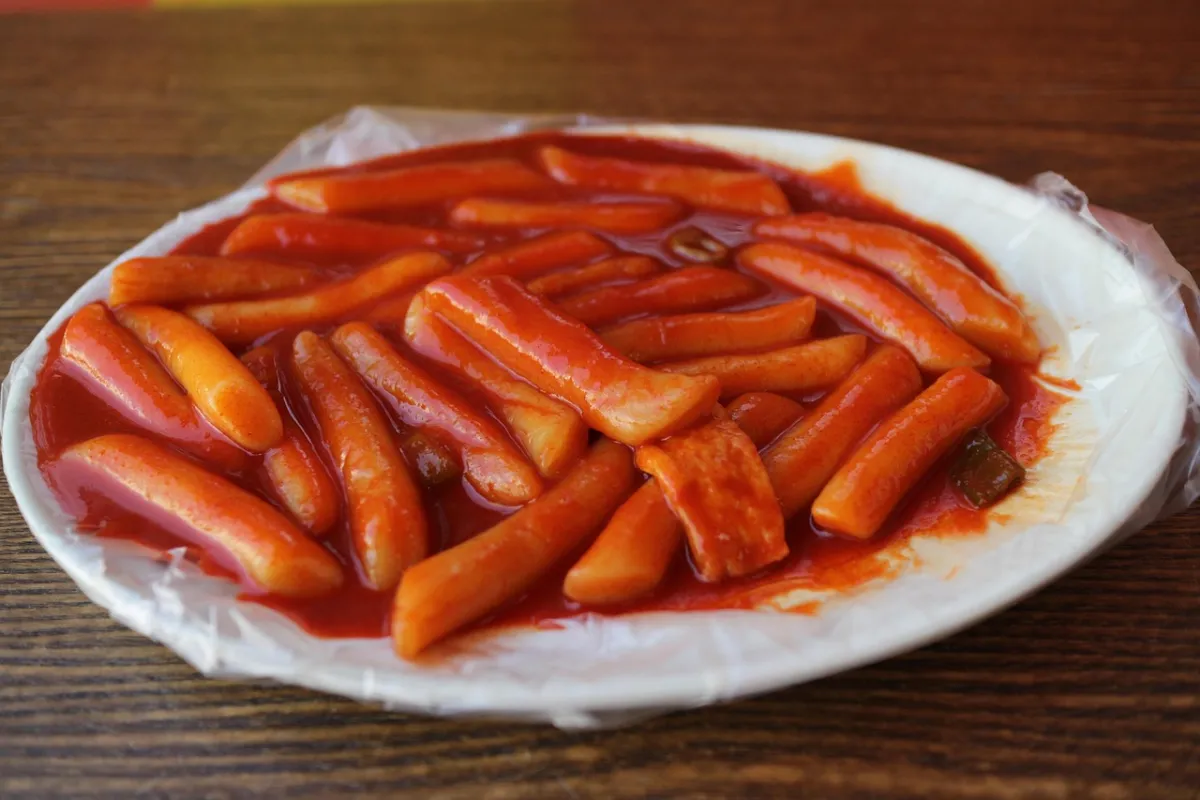
Gochujang tteokbokki
The most basic and popular type: rice cakes and fish cakes simmered in a sauce of gochujang, chilli powder, sugar, soy sauce and more. The thick red tteokbokki you see at snack bars and street stalls.
Gungjung tteokbokki (soy sauce tteokbokki)
The traditional version stir-fried with beef and vegetables in soy sauce. Not spicy, so children and those who can't handle heat can enjoy it.
Gungmul tteokbokki (soupy tteokbokki)
Tteokbokki with plenty of broth. Once the rice cakes are gone, dipping fried snacks or gimbap into the leftover broth is half the fun. Fish cake stock gives it depth.
Jeukseok tteokbokki (DIY tteokbokki)
Rice cakes, fish cakes, ramyeon noodles, vegetables, eggs and more cooked yourself in a pot on the table. The signature style of Sindang-dong's tteokbokki alley — frying rice in the leftover sauce at the end is a must.
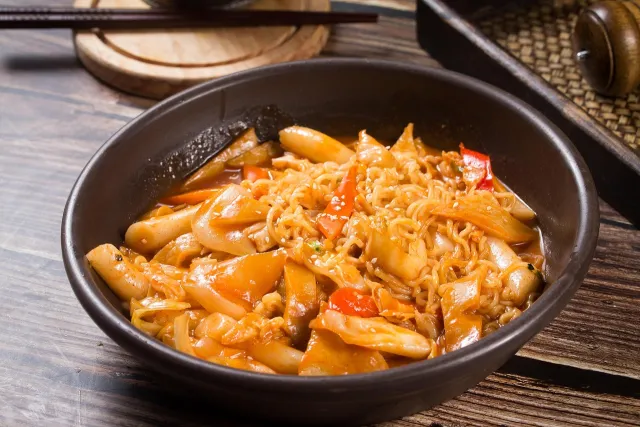
Rabokki
Tteokbokki with ramyeon noodles, the name a blend of "ramyeon" and "tteokbokki". Chewy rice cakes and curly noodles soaked in sauce go perfectly together.
Gireum tteokbokki (oil tteokbokki)
Rice cakes stir-fried in oil without broth and coated in chilli powder or soy seasoning. The speciality of Seoul's Tongin Market, with a crisp yet chewy texture.
Rosé tteokbokki
Tteokbokki made creamy and mellow by adding milk or cream and cheese to gochujang sauce. It became hugely popular in the 2020s and established itself as a new classic. The heat is softened, so it's great for people who struggle with spice.
Jjajang tteokbokki
Rice cakes cooked in jjajang sauce made from black bean paste, sweet and savoury.
Other reinventions
Curry, cream, mala, seafood and brisket tteokbokki — tteokbokki keeps reinventing itself with the trends of the times.
What to eat with tteokbokki
- Twigim (fried snacks): dipping gimmari, fried squid and sweet potato into tteokbokki sauce is the ultimate combination.
- Sundae: tteokbokki, sundae and twigim together — tteoksuntwi — is the basic snack bar set.
- Gimbap: dipping gimbap in tteokbokki sauce tempers the heat and makes it more filling.
- Boiled eggs: mash them into the sauce for extra richness.
- Fish cake broth: soothe your mouth between spicy bites with hot fish cake broth.
- Coolpis or milk: drinks that tame the heat, often drunk at snack bars.
- Fried rice: after jeukseok tteokbokki, fry rice and seaweed flakes in the leftover sauce.
Basic gochujang tteokbokki at home (serves 2)
Ingredients
- 300 g tteokbokki rice cakes (wheat or rice)
- 2 sheets of flat fish cake
- 1 spring onion (or leek), a handful of cabbage (optional), 2 boiled eggs (optional)
- 400 ml water or anchovy and kelp stock
- Sauce: 2 tbsp gochujang, 1 tbsp chilli powder, 1½ tbsp sugar (or 2 tbsp corn syrup), 1 tbsp soy sauce, ½ tbsp minced garlic
Method
- Prepare the rice cakes: if they're hard, soak them in lukewarm water for 10–20 minutes to soften. Separate any that are stuck together.
- Prep the rest: cut the fish cake into bite-sized pieces, the spring onion diagonally and the cabbage into large pieces.
- Mix the sauce: pour the stock (or water) into a pot and stir in all the sauce ingredients.
- Bring to the boil: when the sauce boils, add the rice cakes and cabbage and cook over medium heat, stirring.
- Add fish cake and spring onion: once the rice cakes soften and the sauce has reduced a little, add the fish cake, spring onion and boiled eggs.
- Reduce: simmer about five more minutes until the sauce thickens. Stir often so it doesn't stick to the bottom.
Tips for great tteokbokki
- Stock makes the difference: using anchovy and kelp stock instead of water gives far deeper flavour. Short on time? Add the fish cake first and let it flavour the liquid.
- Use syrup with sugar: corn syrup or oligosaccharide syrup adds gloss and helps the sauce cling.
- Adjust the heat: chilli powder controls the spiciness; gochujang controls umami and thickness. If you can't take heat, reduce the chilli powder and add a little ketchup.
- Don't overcook: long boiling makes the rice cakes mushy and can reduce the sauce until it's too salty.
- Leftovers: if the rice cakes have hardened, reheat with a splash of water to soften them.
- Cheese topping: scatter mozzarella on top at the end and cover to melt — it mellows the heat and adds richness.
Variations
Turning it into rosé tteokbokki
Reduce the water in the basic recipe and add 200 ml milk and 100 ml cream (or just 300 ml milk). Add sliced cheese or mozzarella at the end for soft, creamy rosé tteokbokki.
Gungjung tteokbokki
Blanch the rice cakes briefly in boiling water. Stir-fry beef with onion, carrot, mushrooms and peppers, add the rice cakes and season with 2 tbsp soy sauce, 1 tbsp sugar, 1 tbsp sesame oil and a little minced garlic. Finish with sesame seeds.
Gireum tteokbokki
Toss the rice cakes with 1 tbsp chilli powder, 1 tbsp soy sauce, ½ tbsp sugar, a little minced garlic and 1 tbsp cooking oil, then stir-fry in an oiled pan until slightly crisp outside.
Where to find great tteokbokki
- Sindang-dong tteokbokki alley: the birthplace of DIY tteokbokki, with many tteokbokki restaurants side by side.
- Tongin Market: a traditional market famous for oil tteokbokki.
- Snack bars near schools: long-running snack bars near neighbourhood schools often preserve that nostalgic taste.
- Tteokbokki chains: many chains let you choose your spice level, so first-timers can try without worry.
Tteokbokki and bunsik culture
You can't talk about tteokbokki without mentioning bunsik (분식) culture. Bunsik originally meant food made from flour, but today it covers cheap, quick snacks and light meals such as tteokbokki, gimbap, sundae (Korean blood sausage), twigim (fritters) and eomuk (fish cakes). Places that sell them are called bunsikjip.
For many Koreans, tteokbokki is tied to school-day memories. Pooling pocket money with friends to share a plate of tteokbokki at the snack shop in front of school is an experience shared across generations, which is why so many adults still call it their "soul food".
A phrase you'll hear often at bunsik shops is 떡튀순 (tteoktwisun), made from the first syllables of tteokbokki, twigim and sundae. Ordering all three together is a sort of classic combo — the key is dipping the fritters and sundae in the tteokbokki sauce. Here's a fun one too: in Korea the duffle coat is often called a "tteokbokki coat", because its long toggle buttons look like tteokbokki rice cakes.
Making tteokbokki rice cakes at home
Tteokbokki rice cakes can be hard to find abroad. If so, you can make your own from rice flour. They won't be quite as chewy as machine-pressed cakes from a rice mill, but you'll still enjoy the soft flavour of freshly made tteok.
Ingredients (serves 2)
- 2 cups (about 240g) non-glutinous rice flour (wet-milled rice flour is even better)
- About 3/4 cup hot water (adjust to the dough)
- 1/2 tsp salt
- A little sesame oil
Method
- Mix the salt into the rice flour, then add the hot water little by little, stirring with a spoon until it comes together in one lump.
- Put it in a heatproof bowl, cover with a damp cloth or cling film, and steam for about 20 minutes. If using a microwave, heat in 1-minute bursts two or three times, stirring in between.
- While the dough is still hot, put on plastic gloves brushed with sesame oil and knead it hard until smooth. This step determines how chewy the cakes will be.
- Roll the dough into long ropes about the thickness of a finger and cut into 5–6cm lengths.
- Brush lightly with sesame oil so they don't stick together, and cook them in tteokbokki straight away.
Homemade rice cakes cook faster and soften more easily than shop-bought ones, so add them last, once the sauce is bubbling, and cook only briefly.
Storing and reheating leftover tteokbokki
Rice cakes harden quickly once cold. Store leftovers in an airtight container in the fridge and eat them within a day or two. To reheat, add a little water and warm slowly over low heat with the lid on, and the rice cakes will soften again. If the sauce has reduced and tastes too salty, add water or stock — and toss in fish cakes or a boiled egg to enjoy it as if freshly made. In the microwave, sprinkle a spoonful or two of water and cover with cling film so the rice cakes don't dry out.
Ordering tteokbokki in Korea
At a jeukseok (DIY) tteokbokki restaurant, a pot arrives with rice cakes, vegetables and sauce, and you cook it yourself at the table. You can add extras such as ramyeon noodles, chewy jjolmyeon noodles, cheese or eggs. When you've nearly finished, the last joy of the meal is fried rice: rice and seaweed flakes stir-fried in the leftover sauce.
| Korean | Meaning |
|---|---|
| 떡볶이 1인분 주세요. (tteokbokki irinbun juseyo) | One portion of tteokbokki, please. |
| 덜 맵게 해 주세요. (deol maepge hae juseyo) | Please make it less spicy. |
| 치즈 추가해 주세요. (chijeu chugahae juseyo) | Please add cheese. |
| 포장해 주세요. (pojanghae juseyo) | To take away, please. |
| 볶음밥 2개 볶아 주세요. (bokkeumbap dugae bokka juseyo) | (At the end of a DIY meal) Two portions of fried rice, please. |
Many bunsik shops note on the menu that spice levels can be adjusted. If you're not used to spicy food, start mild, and pair it with a sweet drink like Coolpis (a peach-flavoured yoghurt drink) or milk to tame the heat.
Add-ons and toppings for tteokbokki
At bunsik shops and DIY tteokbokki restaurants, you can choose extra ingredients called sari. The sari you add can turn the same tteokbokki into a completely different dish.
| Sari / topping | Characteristics |
|---|---|
| Ramyeon sari | Curly instant noodles soak up the sauce, turning it into rabokki — the most popular add-on. |
| Jjolmyeon sari | Chewy jjolmyeon noodles make jjolbokki, great for anyone who loves a satisfying chew. |
| Dangmyeon sari | Clear, slippery glass noodles that absorb plenty of sauce. |
| Cheese | Wraps the heat in creaminess — good for anyone not used to spicy food. |
| Boiled egg | Mash it into the sauce for extra richness. |
| Dumplings and fritters | Add fried dumplings or gimmari (seaweed-wrapped noodle fritters) and soak them in the sauce. |
A street snack: tteokkochi
Tteokkochi — tteokbokki rice cakes skewered, fried until golden and brushed with a sweet-spicy glaze — is another long-loved snack. A nostalgic treat bought one at a time from stationery shops and snack bars near schools, it's crisp outside and chewy inside. At home, blanch the rice cakes briefly, thread them onto skewers and pan-fry, then brush with a glaze of gochujang, ketchup, corn syrup and soy sauce and fry once more.
Korean tricks for enjoying the heat
If tteokbokki's heat is a bit much, try the methods Koreans often use.
- Rice balls: dip a rice ball sprinkled with seaweed flakes in the tteokbokki sauce to soften the heat.
- Steamed egg or cheese: fluffy gyeranjjim (steamed egg) or cheese cools your tongue.
- Milk or yoghurt drinks: the compounds that make food spicy dissolve better in drinks with fat than in water, so milk works well. Gulping cold water can actually make the heat feel like it's spreading.
- Choose your level: at shops that let you pick a spice level, start with the mildest. Korea even has tteokbokki chains famous for extreme heat, popular with people who love a spicy challenge.
If you're vegetarian, halal or avoiding gluten
Tteokbokki may look like it's just vegetables and rice cakes, but there are ingredients to check.
- Eomuk: fish cakes are made from fish, so ask for them to be left out if you're vegetarian.
- Stock: many shops make their broth with anchovies or kelp, and some use meat stock. It's worth asking "멸치 육수예요?" ("Is it anchovy stock?").
- Wheat vs rice cakes: wheat cakes contain wheat flour. If you need to avoid gluten, check for rice cakes — but remember that sauces such as gochujang may also contain wheat.
- Halal: even meat-free tteokbokki is worth checking for sauce and stock ingredients. Making it at home lets you control everything.
Tteokbokki in K-dramas
In Korean dramas, tteokbokki often appears as comfort food. Classic scenes include a heartbroken protagonist laughing and crying over tteokbokki with a friend at a pojangmacha or snack bar, or characters revisiting the snack bar outside their old school to reminisce. Cheap and perfect for sharing, tteokbokki has become a symbol of friendship and memories in itself.
Tteokbokki goes global: instant foods and meal kits
Riding the popularity of the Korean Wave, tteokbokki has become a favourite abroad too. Instant cup tteokbokki, frozen tteokbokki and meal kits containing both sauce and rice cakes are sold in supermarkets and online stores overseas, letting people who've never been to Korea taste it easily.
When choosing a ready-made product, check the spice rating and cooking instructions on the pack. Cup tteokbokki just needs hot water or a spell in the microwave, and meal kits are ready after a few minutes' simmering in a pan. Add some fish cake, a boiled egg or spring onion and even an instant version can rival a snack bar.
A tteokbokki party menu for friends
Tteokbokki really shines when people get together. To recreate a Korean snack-bar atmosphere at home with friends, try setting the table like this.
| Dish | Role |
|---|---|
| Tteokbokki (mild and spicy) | Prepare two heat levels so everyone can join in. |
| Gimbap | A filling dish that's delicious dipped in tteokbokki sauce. |
| Twigim (gimmari, sweet potato, squid) | Completes the classic "tteok-twi" combo of fritters dipped in tteokbokki sauce. |
| Eomuk-tang | A warm, refreshing fish-cake broth that soothes the heat. |
| Fried rice | Finish by stir-frying rice and seaweed flakes in the leftover sauce. |
Simmer the tteokbokki in one big pot, set it in the middle of the table and share — the meal itself becomes a taste of Korea's warm, convivial snack-bar culture.
Why Koreans crave tteokbokki when stressed
For Koreans, tteokbokki is the ultimate comfort food. Many people say they crave spicy tteokbokki on days when they've bombed an exam, had a tough day at work or argued with a friend. Spiciness is actually closer to a sensation of pain than a taste, and that stimulation is known to trigger the release of feel-good substances in the body. Add the pleasure of chewing springy rice cakes and the sweet-salty sauce, and you feel noticeably lighter after emptying a plate. That's why "Want to get tteokbokki today?" can mean "Rough day? I'm here to listen" between friends.
Memories of the snack bar by the school gate
For many Koreans, tteokbokki is tied to childhood memories. Running to the snack bar in front of school with friends after class and pooling pocket money to share a plate of tteokbokki is a scene shared across generations. Spearing rice cakes one by one with toothpicks, dipping twigim in the leftover sauce and chatting away — those moments remain fondly missed long into adulthood. This nostalgia is also why shops advertising "old-school tteokbokki" are so popular today.
Frequently asked questions
How spicy is tteokbokki?
It varies by shop, but typical snack-bar tteokbokki is sweet with moderate heat. Many places let you choose a spice level, so start mild if it's your first time.
Can I find tteokbokki rice cakes abroad?
Asian grocery stores often sell chilled or frozen tteokbokki rice cakes, and there are meal kits you just need to boil.
Can I make it vegetarian?
Use kelp and vegetable stock instead of fish cake and anchovy stock, and add plenty of mushrooms or cabbage. Check the ingredients of shop-bought gochujang too.
Final thoughts
Tteokbokki isn't a fancy dish, but it's full of Koreans' memories and daily life. With friends, with family, sometimes alone, that sweet heat brings comfort. A plate of tteokbokki carries a Korean sentiment passed down through generations.
Tonight, cook a pot of tteokbokki at home. With the sound of red sauce bubbling away, a Korean snack bar will come to life in your kitchen.