The Complete Guide to Korean Ramyeon: Types, How to Cook It Perfectly, Korean-Style Toppings and Convenience Store Ramyeon Culture
Koreans eat more instant noodles per person than almost anyone in the world. This guide covers the difference between soup ramyeon and stir-fried noodles, the secrets of water and heat, Korean upgrades with egg and cheese, Han River ramyeon and convenience store culture.

Contents
- A short history of Korean ramyeon
- The main types of Korean ramyeon
- Basic principles for cooking ramyeon well
- The toppings Koreans love
- Korean-style ramyeon variations to try at home
- Convenience store ramyeon culture
- Han River ramyeon: cooking noodles in the park
- Korean expressions related to ramyeon
- What to eat with ramyeon
- How to enjoy ramyeon more healthily
- Frequently asked questions
- Final thoughts: everyday Korea in a single pot
Late at night when hunger strikes, on a rainy day when you crave something warm, or when you just want a quick meal on your own, the first food that comes to mind for most Koreans is ramyeon. Korea consistently ranks at or near the top of the world for instant noodle consumption per person, and the noodle aisle of any Korean supermarket is packed with dozens of brands and flavours stacked from floor to ceiling. Ramyeon has grown far beyond a simple convenience food. It appears in dramas, in films, in song lyrics and in everyday conversation, and it carries a surprising amount of memory and emotion for a product that costs less than a cup of coffee.
The Korean word is ramyeon (라면), and although it shares its origins with Japanese ramen, the two have developed into quite different things. In Korea, "ramyeon" almost always means instant noodles: a block of fried, dried noodles with a packet of seasoning powder and often a small sachet of dried vegetables. Fresh noodle soups served in restaurants usually go by other names, such as kalguksu or naengmyeon. Understanding this difference is the first step to understanding why Koreans talk about ramyeon with such affection.
In this guide we look at the history and main types of Korean ramyeon, the basic principles of cooking it well, the toppings and variations Koreans love, and the culture of eating ramyeon at convenience stores and in Han River parks. Whether you are planning a trip to Korea or simply want to enjoy Korean ramyeon properly at home, read on to the end.
A short history of Korean ramyeon
Instant ramyeon first appeared in Korea in the early 1960s. In the years after the Korean War, food was scarce and many families struggled to put enough on the table. Ramyeon was cheap, filling and quick to prepare, and it soon became a dependable meal for ordinary households. Government campaigns at the time even encouraged people to eat more flour-based foods to ease pressure on rice supplies, which helped noodles of all kinds become part of the national diet.
The earliest Korean ramyeon had a mild, chicken-based broth that many people found unfamiliar. The real turning point came when manufacturers began adapting the flavour to Korean tastes, adding red pepper powder, garlic and beef stock to create a bold, spicy soup. That spicy, savoury broth is still the signature of Korean ramyeon today and is the main reason it tastes so different from instant noodles made in other countries.
From the 1980s onwards the range expanded quickly. Jjajang ramyeon based on black bean sauce, cold bibim noodles for summer, seafood-flavoured soups and thick, chewy noodles all found loyal fans. Cup ramyeon also took off, making it possible to eat a hot meal anywhere with nothing more than a kettle. In the 2010s, an extremely spicy stir-fried noodle became a global sensation as people around the world filmed themselves taking on the "spicy noodle challenge," and Korean ramyeon spread far beyond Asia. Today it is exported to more than a hundred countries and has become one of the most recognisable K-food products on supermarket shelves worldwide.
Within Korea, ramyeon has also become a cultural marker of shared experience. Soldiers remember eating it during military service, students remember it as a late-night study snack, and office workers remember it as the dinner they ate at their desks during busy seasons. Almost every Korean has a personal story about ramyeon, which helps explain why the dish keeps appearing in popular culture.
The main types of Korean ramyeon
Korean ramyeon can be divided broadly into soup noodles and soupless noodles, and each group has several familiar styles. The table below summarises the most common types you will see in a Korean shop.
| Type | Characteristics | Best for |
|---|---|---|
| Spicy soup ramyeon | Beef or seafood stock with red pepper powder for a bold, warming broth | Cold days, hangovers, a hearty meal |
| Mild soup ramyeon | Clear, gentle broths in bone-stock, chicken or udon style | When spicy food feels like too much |
| Jjajang ramyeon | Noodles mixed with black bean sauce in the style of jjajangmyeon | Mixing with spicy ramyeon to make "jjapaguri" |
| Stir-fried noodles | Water is drained and the noodles are tossed in a thick, spicy sauce | Spice challenges, eating with cheese |
| Bibim and cold noodles | Noodles rinsed in cold water and mixed with a sweet, tangy sauce | Hot summer days |
| Cup ramyeon | Ready simply by adding hot water | Convenience stores, travel, late-night snacks |
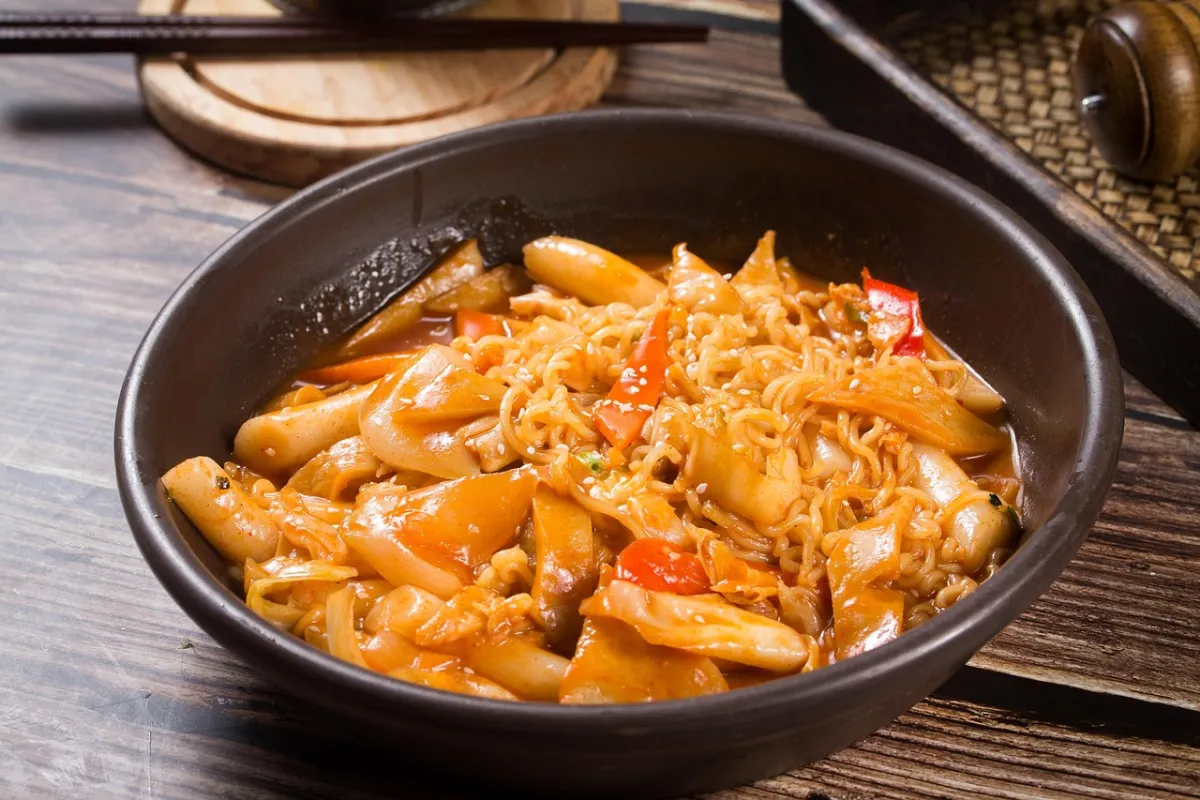
Spicy soup ramyeon is the classic. Its broth is usually red and slightly oily, with a deep beefy or seafood flavour and a heat that builds as you eat. Mild soup varieties are popular with children and with anyone who wants a comforting bowl without the burn. Bone-broth styles have a milky, rich soup, while chicken styles are lighter and clearer.
Jjajang ramyeon is cooked like soup noodles, but most of the water is poured away before the sauce powder and a little oil are mixed in. The result tastes similar to jjajangmyeon, the black bean noodle dish served at Korean-Chinese restaurants. Stir-fried noodles follow the same draining method but use a thick, very spicy sauce. Many people add cheese, mayonnaise or a fried egg to balance the heat.
Cold bibim noodles are a summer favourite. The noodles are boiled, rinsed under cold running water until chilled, then mixed with a sweet, sour and spicy sauce. Some people add sliced cucumber or a boiled egg. Cup ramyeon comes in versions of almost every type and is especially common in convenience stores, where hot water is always available.
Basic principles for cooking ramyeon well
Anyone can cook ramyeon, but following a few simple principles makes a noticeable difference. Koreans argue endlessly about the "right" way to do it, and every household has its own small habits, but the points below are the ones almost everyone agrees on.
1. Measure the water accurately
The single most important step is to use the amount of water printed on the back of the packet, usually between 500 and 550 millilitres. Too much water makes the broth thin and bland, while too little makes it salty and causes the noodles to turn soft and swollen. If you do not have a measuring jug, Koreans often use paper cups as a guide; about three standard paper cups is close to the right amount. When you add extra ingredients such as vegetables or rice cakes, add a little more water to compensate for the liquid they absorb.
2. Add the noodles and seasoning once the water boils
Wait until the water is at a full rolling boil before adding the noodles and seasoning. Some people insist the powder should go in first because it raises the boiling point and cooks the noodles faster; others prefer noodles first so they can watch the texture. In practice the difference in taste is small. What really matters is keeping the heat high throughout cooking so the water returns to the boil quickly and the noodles cook evenly.
3. Lift the noodles to let them meet the air
While the noodles are boiling, lift them out of the water a few times with chopsticks and let them drop back in. This is one of the best-known Korean ramyeon tips. Exposing the hot noodles briefly to cooler air helps the surface tighten, giving the noodles a springier, chewier texture. It also helps loosen the block so the strands cook evenly.
4. Cook slightly less than the recommended time
Turn off the heat about thirty seconds before the time printed on the packet. The noodles keep cooking in the hot broth while you carry the pot to the table, so they reach the ideal texture just as you start eating. Many Koreans prefer their noodles kkodeul-kkodeul, slightly firm and chewy, and taking them off the heat early is the easiest way to achieve this.
5. Use the right pot
Koreans often cook ramyeon in a thin, yellow aluminium pot with two handles. It heats up very quickly, which keeps the boil strong, and many people eat straight from it, using the lid as a small plate to cool the noodles. You do not need this exact pot at home, but a small, light saucepan that heats quickly will give similar results.
The toppings Koreans love
Plain ramyeon is good, but most Koreans add at least one or two extras. The beauty of ramyeon is that it adapts to whatever you have in the fridge.
- Egg: The most basic topping of all. Some people stir it into the broth so it forms soft ribbons; others drop it in whole and leave it untouched so the yolk stays runny. Which method is better is a popular topic of friendly debate.
- Green onion: Thinly sliced spring onion added at the end brings out the savouriness and aroma of the broth.
- Cheese: A single slice of processed cheese softens the heat and adds richness. It is especially popular with stir-fried noodles and spicy soup ramyeon.
- Kimchi: Ramyeon and kimchi are an inseparable pair. Eat it on the side or cook it in the pot for a sourer, deeper broth.
- Rice cakes and dumplings: Sliced rice cakes or frozen dumplings turn ramyeon into a filling meal.
- Bean sprouts: They add crunch and a clean, refreshing taste, which makes them a popular hangover choice.
- Leftover rice: For many Koreans, the true finish to a bowl of ramyeon is dropping a spoonful of cold rice into the leftover broth and eating it as a kind of soup rice.
Other common additions include sliced ham or sausage, canned tuna, tofu, mushrooms, cabbage and dried seaweed. A small handful of vegetables is an easy way to make a packet of noodles more balanced without changing its character.
Korean-style ramyeon variations to try at home
Jjapaguri
Jjapaguri combines a jjajang ramyeon with a spicy soup ramyeon, mixing the two sauces together. It became famous around the world after appearing in an internationally acclaimed Korean film, where it was served with tender steak. To make it, boil both kinds of noodles together, pour away most of the water leaving just a few spoonfuls, then add all of the jjajang powder and about half of the spicy powder and stir over the heat until glossy. Pan-fried beef cubes on top make it even more indulgent.
Budae-jjigae ramyeon
Budae-jjigae, or "army stew," is a spicy stew made with ham, sausages, kimchi, tofu and baked beans, and it is almost always finished with a block of ramyeon noodles. You can make a simple version at home by simmering these ingredients in water with a spoonful of red pepper paste, then adding the noodles and half of the seasoning packet. A slice of cheese on top at the end makes it taste close to the restaurant version.
Rosé stir-fried noodles
If spicy stir-fried noodles are too hot for you, try adding a splash of milk or cream after draining the water and simmering until the sauce thickens. The result is a pink, creamy "rosé" style dish that keeps the flavour but softens the heat. It has become a popular way for people who are not used to spicy food to enjoy these noodles.
Cold bibim noodles with toppings
In summer, many Koreans dress up cold bibim noodles with julienned cucumber, half a boiled egg, sesame seeds and a little sesame oil. Some even serve them alongside grilled pork belly, using the noodles as a cool, tangy partner to the rich meat.
Convenience store ramyeon culture
Most Korean convenience stores have a hot water dispenser, a microwave and a small counter or table by the window. Eating cup ramyeon there is completely normal and is part of daily life for students, office workers and travellers alike. The process is simple: choose your cup ramyeon, pay at the counter, peel the lid back halfway, add the seasoning, fill with hot water to the line marked inside the cup, close the lid and wait three to four minutes.
A classic "convenience store meal" pairs cup ramyeon with a triangle kimbap, a ready-to-eat sausage or a small pot of kimchi. Some stores even sell cup ramyeon designed to be eaten with a triangle kimbap dropped into the leftover broth. Many shops display shelves of cup noodles from floor to ceiling, so it is a fun place to try flavours you cannot easily find abroad.
There is also simple etiquette to follow. When you finish, pour the remaining broth into the dedicated liquid waste sink or container in the store, not into the general rubbish bin. Then separate the cup, lid and chopsticks according to the recycling signs. Leaving the table clean for the next person is considered basic courtesy.
Han River ramyeon: cooking noodles in the park
One experience frequently recommended to visitors is "Han River ramyeon." Convenience stores in the Han River parks in Seoul have instant ramyeon cooking machines. You buy a packet of noodles and a special paper bowl, put the noodles and seasoning in the bowl, place it on the machine and press a button. The machine fills the bowl with the right amount of water and boils it for you in a few minutes.
Eating ramyeon on a picnic mat by the river, with the city lights reflecting on the water and a cool breeze in the air, tastes completely different from eating it at home. Spring and autumn evenings are especially popular, and on weekends the parks fill with friends, couples and families sharing noodles, fried chicken and drinks. If you visit Seoul, it is an easy and inexpensive way to experience a slice of local life.
Remember to take your rubbish with you or use the bins provided, and to dispose of leftover broth properly. The parks are shared spaces, and Koreans take keeping them clean seriously.
Korean expressions related to ramyeon
Ramyeon appears in everyday Korean so often that it has produced several well-known expressions. Learning them is a fun way to pick up some natural Korean.
- "라면 먹고 갈래?" (Do you want to come in for some ramyeon?) — A line made famous by a Korean film, it is used as a playful, indirect way of showing romantic interest.
- "면이 불었다" (The noodles have swollen) — Describes noodles that have soaked up too much broth and become soft. It is often said with disappointment.
- "꼬들꼬들하다" (Firm and chewy) — Describes noodles cooked just short of soft, a texture many Koreans love.
- "국물이 끝내준다" (The broth is amazing) — A common compliment for a particularly delicious soup.
- "라면 한 그릇 할래?" (Shall we have a bowl of ramyeon?) — A casual invitation to grab a quick, simple meal together.
What to eat with ramyeon
Koreans rarely eat ramyeon completely on its own. Kimchi is the essential side dish, and its sourness cuts through the richness of the broth. Danmuji, the bright yellow pickled radish, is another popular partner, especially at snack restaurants. Kimbap and ramyeon are a classic combination at Korean snack bars, where you can order both for a quick, satisfying lunch. At home, many people simply set out a bowl of rice to add to the broth at the end.
Snack restaurants called bunsikjip also serve cooked ramyeon with toppings such as egg, cheese or dumplings. Ordering ramyeon at one of these casual places is a good way to taste a "restaurant-style" version prepared with more care than a quick home bowl.
How to enjoy ramyeon more healthily
Ramyeon is delicious, but it is high in sodium and relatively low in fibre and protein. A few small changes can make a big difference. Using only about two-thirds of the seasoning packet, or leaving some of the broth unfinished, can significantly reduce the amount of salt you consume. Adding generous amounts of vegetables such as cabbage, mushrooms, spinach or bean sprouts improves the nutritional balance, and an egg or a few pieces of tofu adds protein.
Some people also blanch the noodles first, pour away the water and then cook them in fresh water with the seasoning. This removes some of the oil from the fried noodles. Non-fried noodle products are also widely available in Korea for those who want a lighter option. Ramyeon is best enjoyed as an occasional treat rather than an everyday meal, and that is how most Koreans think of it too.
Frequently asked questions
Is all Korean ramyeon spicy?
No. There are many mild options, including bone-broth and chicken ramyeon, jjajang ramyeon and udon-style noodles. Check the packaging for chilli pepper symbols or labels indicating a mild flavour. Many brands also show a spice level on the packet.
Is there ramyeon suitable for vegetarians?
Ramyeon certified as vegetarian or vegan is becoming more common. However, the seasoning in standard ramyeon often contains beef or seafood ingredients, so always check the ingredient list carefully before buying.
Can I take Korean ramyeon home as a souvenir?
In most countries, instant noodles can be brought in for personal use, but some countries restrict foods containing meat products. Check the import regulations of your destination before you leave. Packets are light and compact, which makes them a popular and inexpensive souvenir.
What is the difference between ramyeon and ramen?
In Korea, ramyeon almost always refers to instant noodles with a spicy, seasoned broth, while Japanese ramen is usually a freshly made noodle soup served in restaurants with carefully prepared stock. The two share a common origin but have developed into distinct dishes.
Final thoughts: everyday Korea in a single pot
Ramyeon may be cheap and simple, but for Koreans it holds memories of late-night snacks during school days, long conversations with friends and comfort on rainy evenings. Use the principles and toppings in this guide to cook your own perfect bowl, and experiment until you find the combination you like best. And if you travel to Korea, try enjoying ramyeon like a local, at a convenience store window or on a mat beside the Han River. It is one of the simplest and most authentic ways to taste everyday Korean life.