Korean Holiday and Seasonal Foods: The Meaning and Stories Behind Seollal Tteokguk, Chuseok Songpyeon, Boknal Samgyetang and Dongji Patjuk
In Korea, certain foods are eaten on every holiday and turning point of the seasons. We explain the meaning, origins and modern scene behind Seollal's tteokguk, Chuseok's songpyeon, Daeboreum's five-grain rice and nuts, Boknal's samgyetang, Dongji's red bean porridge and birthday seaweed soup.

Contents
- Korea's holidays and seasonal markers
- Seollal: a year older with a bowl of tteokguk
- Jeongwol Daeboreum: wishing for a healthy year
- Chuseok: giving thanks for abundance
- Dano: welcoming summer
- Sambok: fighting heat with heat — samgyetang
- Dongji: red bean porridge to chase away bad energy
- Kimjang: a community festival preparing for winter
- Foods for special days in everyday life
- Holiday food in modern times
- How travellers can experience holiday food
- Frequently asked questions
- Final thoughts
Ask Koreans "what do you eat at Seollal?" and almost everyone will answer "tteokguk". Ask "and at Chuseok?" and they'll say "songpyeon". In Korea, certain foods are always eaten on holidays and at the turning points of the seasons. They carry wishes for health and good fortune, gratitude to ancestors and the wisdom of living in step with the seasons.
In this guide we explore Korea's signature holiday and seasonal foods, as well as foods for special days in everyday life, and the meanings and stories behind them. You'll also understand why scenes of families gathering to cook are portrayed as so important in Korean dramas.
Korea's holidays and seasonal markers
Most of Korea's traditional holidays follow the lunar calendar, so their solar dates change every year. The biggest are Seollal, the first day of the first lunar month, and Chuseok, the 15th day of the eighth lunar month. Both bring holidays of several days, when many people return to their hometowns.
The jeolgi are the 24 divisions of the year based on the sun's movement, which served as a calendar of seasonal change in farming days. On markers such as Ipchun (start of spring), Haji (summer solstice) and Dongji (winter solstice), customs of eating seasonal foods have been passed down.
Seollal: a year older with a bowl of tteokguk
Tteokguk
On Seollal morning, Koreans eat tteokguk: thin slices of white garae-tteok rice cake in a clear broth. There's even a saying that "you only turn a year older once you've eaten tteokguk" — it's the symbolic food of the new year.
- White rice cakes: starting the new year with a clean, bright heart.
- Long garae-tteok: the long, extruded rice cake symbolises longevity.
- Coin shapes: sliced into rounds, the rice cakes resemble old coins, expressing wishes for wealth and abundance.
Depending on the region, people eat tteok-manduguk with dumplings, and broths vary — beef, anchovy, chicken. It's topped with egg ribbons, seaweed and seasoned meat.
Seollal customs
At Seollal, families perform ancestral rites and do sebae, a deep New Year's bow to elders. Elders respond with words of blessing and sebaetdon, New Year's money — the biggest Seollal treat for children. Families also play traditional games such as yutnori.
Other Seollal foods
Various jeon (meat patties, fish, courgette), galbi-jjim (braised short ribs), japchae, sikhye (a sweet rice drink) and sujeonggwa (a cinnamon and ginger punch) also appear on the Seollal table.
Jeongwol Daeboreum: wishing for a healthy year
The 15th day of the first lunar month, when the first full moon of the year rises, is Jeongwol Daeboreum. On this day people eat various foods to pray for a healthy year and a good harvest.
- Ogokbap: rice cooked with five or more grains — glutinous rice, foxtail millet, sorghum, red beans, soybeans — for a good harvest and health.
- Mugeun namul: greens dried the previous year, such as fernbrake, chwinamul and dried radish greens, stir-fried and eaten in the belief that they ward off summer heat exhaustion.
- Bureom: cracking hard nuts such as walnuts, peanuts and chestnuts with your teeth in the morning, wishing for a year free of skin boils and with strong teeth.
- Gwibalgisul: a cup of cold rice wine in the morning, said to sharpen your hearing so you'll hear good news all year.
At night people make wishes on the full moon, and some regions hold events such as burning a "moon house" bonfire.
Chuseok: giving thanks for abundance
Songpyeon
Chuseok's signature food is songpyeon: rice-flour dough filled with sesame, beans, chestnuts or red beans, shaped into half-moons and steamed on a bed of pine needles. The needles lend a gentle pine scent and keep the cakes from sticking together.
Families sitting together making songpyeon on the eve of Chuseok is a quintessential Korean holiday scene. An old saying goes that "if you shape pretty songpyeon, you'll have a pretty daughter", so there's plenty of laughter as everyone compares their shapes. The half-moon shape is said to express wishes for growth and prosperity, like a moon that will wax to full. Today, five-coloured songpyeon tinted with mugwort, kabocha squash or purple sweet potato are popular too.
The Chuseok table
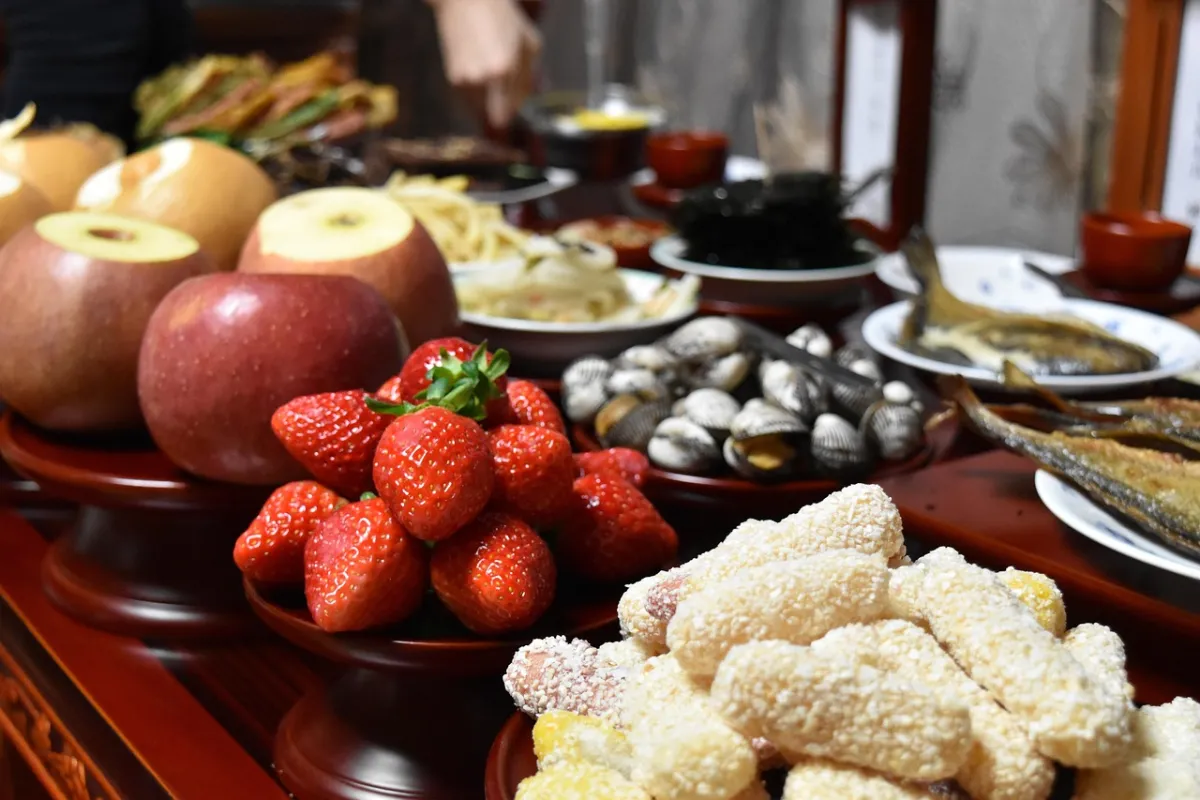
At Chuseok, families set an ancestral table with newly harvested grains and fruit to give thanks for the year's harvest. Taro soup, galbi-jjim, various jeon and namul, and fruits such as apples, pears, persimmons and jujubes appear. Recently, more families simplify the rites or spend the holiday travelling together.
Dano: welcoming summer
Dano, the fifth day of the fifth lunar month, marks the start of summer. People ate surichwi-tteok, rice cakes made with a mountain herb and stamped with a cartwheel pattern. Women washed their hair in iris-infused water for shine and to ward off bad energy, and people enjoyed swinging and ssireum wrestling. The Gangneung Danoje Festival, inscribed on UNESCO's list of Intangible Cultural Heritage, is still celebrated on a grand scale.
Sambok: fighting heat with heat — samgyetang
The three hottest periods of summer — chobok, jungbok and malbok — are called sambok, and their days are boknal. On boknal it's customary to eat restorative food, the most famous being samgyetang.
Samgyetang is a young chicken stuffed with glutinous rice, ginseng, jujubes and garlic and simmered until tender. Eating hot food on hot days is called iyeol-chiyeol, "fighting heat with heat": sweating over a hot broth was believed to revive a body worn out by the heat. On boknal, long queues form outside famous samgyetang restaurants. Eel, chueotang (loach soup), and cool kongguksu (soy milk noodles) and watermelon are also favourite summer foods.
Dongji: red bean porridge to chase away bad energy
On Dongji, the winter solstice and longest night of the year (around 22 December), Koreans eat patjuk, red bean porridge. Red beans were believed to repel bad energy, and in the past people even sprinkled porridge on gates and walls. It contains saealsim, round balls of glutinous rice, and there was a custom of eating as many as your age. Dongji was also called "little Seollal", and some believed you turned a year older by eating Dongji patjuk. Depending on the region, it's sweetened with sugar or seasoned with salt.
Kimjang: a community festival preparing for winter
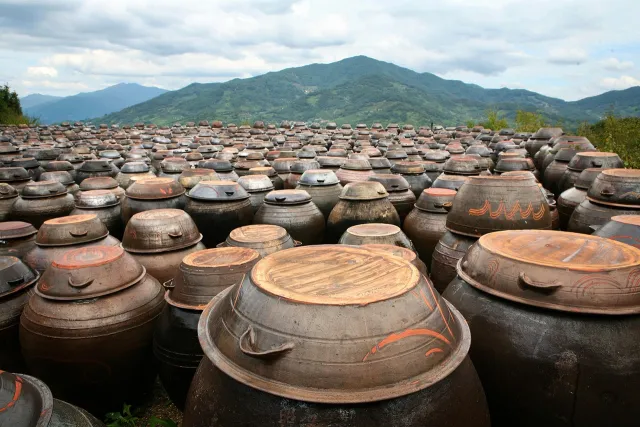
Between late autumn and early winter comes kimjang, making enough kimchi in one go to last the winter. Family and neighbours gather to salt dozens of cabbages and mix the seasoning — a big event. On kimjang day, wrapping boiled pork in freshly made kimchi, kimjang bossam, is a treat. Korea's kimjang culture was inscribed on UNESCO's list of Intangible Cultural Heritage in recognition of its spirit of community and sharing.
Foods for special days in everyday life
| Occasion | Food | Meaning |
|---|---|---|
| Birthday | Miyeokguk (seaweed soup) | From mothers eating seaweed soup to recover after childbirth; also gratitude to the mother who gave birth to you |
| First birthday | Baekseolgi, susu-pattteok | White baekseolgi for purity and long life; sorghum rice cakes with red beans to ward off misfortune |
| Moving house | Sirutteok | Sharing red bean rice cake with new neighbours as a greeting and to chase away bad energy |
| Exams | Yeot, chapssal-tteok | Sticky taffy and glutinous rice cakes given so you'll "stick" (pass) |
| Moving day | Jjajangmyeon | A modern custom: ordering easy delivery food on a busy day of unpacking |
| Rainy days | Pajeon and makgeolli | A custom tied to the idea that rain sounds like jeon sizzling in a pan |
There's also a custom of not eating seaweed soup during exam season: slippery seaweed is associated with "slipping" — failing — the exam.
Holiday food in modern times
In the past, holiday food was made at home over several days; now many families buy jeon and songpyeon at markets or supermarkets, or order holiday food sets. Some families travel instead of holding rites, or make fewer dishes, so holidays are changing. But the spirit of a family gathering to share a bowl of tteokguk or a plate of songpyeon lives on.
How travellers can experience holiday food
- Visit traditional markets: just before the holidays, markets buzz with people buying jeon, rice cakes and fruit.
- Drop into a rice cake shop: try songpyeon, sirutteok, chapssal-tteok and more.
- Experience programmes: palaces, folk villages and museums sometimes hold songpyeon-making and traditional games during the holidays.
- Restaurant menus: tteokguk, samgyetang and patjuk are available in restaurants year-round.
- Holiday closures: many shops and restaurants close on Seollal and Chuseok themselves, and traffic is heavy, so plan ahead.
Frequently asked questions
Is tteokguk only eaten at Seollal?
It's a must at Seollal, but people enjoy it at restaurants and at home all year round too.
Is samgyetang only eaten in summer?
It's especially popular on boknal, but it's enjoyed as a restorative dish all year — and it's a favourite with foreign visitors.
What should a foreigner do if invited to a Korean home for the holidays?
Bring a small gift (such as a fruit or drinks set) and greet the elders politely. Simply cooking together or eating heartily will earn you a warm welcome.
Final thoughts
Korea's holiday and seasonal foods carry the wisdom of living with the rhythm of the seasons and wishes for the family's health and happiness. A bowl of tteokguk holds hope for the new year, a songpyeon gratitude for abundance, and a bowl of patjuk the wish to drive away misfortune.
If you travel to Korea or cook Korean food, remember the stories behind each dish. The same food tastes far deeper when you know what it means.