How to Make Doenjang Jjigae: Korean Soybean Paste Stew from Stock to Finish
Doenjang jjigae is the stew that appears most often on Korean tables. We cover making anchovy-kelp stock, the order to add ingredients, choosing soybean paste, beef, seafood and vegan versions, and common mistakes.

Contents
- What is doenjang? The roots of Korean fermentation
- Jang-making: a culture recognised by UNESCO
- Doenjang jjigae, doenjang guk and gang-doenjang: what's the difference?
- Ingredients: serves two
- Step 1: Make anchovy-kelp stock
- Step 2: Prepare the ingredients
- Step 3: The order of ingredients makes the flavour
- Why cook it in an earthenware pot?
- Variations that take it up a notch
- Seasonal ingredients to swap in
- Vegetarian and vegan doenjang jjigae
- Making doenjang jjigae abroad
- Common mistakes and how to fix them
- Why restaurant doenjang jjigae tastes different from home-made
- Prep-ahead tips
- Other ways to use doenjang
- What to eat with doenjang jjigae
- How to store doenjang
- Frequently asked questions
- Final thought: finding your own family's flavour
Ask Koreans which dish says "home cooking" and many will name doenjang jjigae, soybean paste stew. It isn't flashy, but the sound of it bubbling in an earthenware pot and its nutty aroma are enough to melt away the day's fatigue. Along with kimchi stew, it's the stew Korean households make most often, and it's also what people order to finish a meal at a Korean barbecue restaurant.
Because doenjang jjigae has so few ingredients, small details make a big difference. That's why one family's stew tastes deep and savoury while another's, made with the same paste, comes out salty and muddy. In this guide we share a basic recipe for two along with the secrets of a really good doenjang jjigae: how to make stock, the order to add ingredients and how to choose your paste. We also include substitutions for cooking abroad and a vegetarian version.
What is doenjang? The roots of Korean fermentation
Doenjang is a traditional Korean fermented paste made from soybeans. Boiled soybeans are mashed and shaped into blocks called meju, which are dried and fermented, then soaked in brine. After several months the liquid is drained off to become soy sauce, and the solids left behind are aged separately to become doenjang. Traditionally, then, doenjang and soy sauce are siblings born from the same crock.
Doenjang is often compared to Japanese miso, but the difference is clear. Miso includes rice or barley koji and tends to be sweeter and smoother, while traditional doenjang is made mainly from soybeans and salt, giving it a saltier, more savoury, more pungent flavour and a coarser, more rustic texture. Its flavour holds up to long simmering, which makes it perfect for stews.
Doenjang is one of the jang, the foundational seasonings of Korean food, and together with soy sauce (ganjang) and chilli paste (gochujang) it's counted among the three essential pastes of the Korean kitchen. In the past every household made its own in earthenware crocks on a terrace called a jangdokdae, and there was even a saying that a family thrives when its jang tastes good.
Jang-making: a culture recognised by UNESCO
Korea's culture of making jang was inscribed on UNESCO's Representative List of the Intangible Cultural Heritage of Humanity in 2024. The recognition covers the whole process — boiling soybeans to make meju, preparing jang in late winter or early spring, tending it carefully for a long time — together with the knowledge it involves and the sharing within communities.
Traditionally, families chose an auspicious day for making jang, and charcoal and red chillies were floated in the crocks to ward off evil spirits. Opening the crocks every day to let in the sun and covering them when it rained was an important daily task for the elders of the household. With apartment living now the norm, far fewer families make their own jang, but the culture carries on through traditional jang artisans and hands-on jang-making programmes.
A single bowl of doenjang jjigae made at home contains all that long waiting. Thinking of it that way, its earthy flavour can taste a little different.
Doenjang jjigae, doenjang guk and gang-doenjang: what's the difference?
There are several soupy dishes made with doenjang. The difference lies mainly in the amount and thickness of the broth.
| Dish | Characteristics | How it's eaten |
|---|---|---|
| Doenjang guk (soup) | Plenty of clear broth with a gentle doenjang flavour; spinach, mallow or napa cabbage | Ladled into individual bowls and eaten with rice |
| Doenjang jjigae (stew) | Less, thicker broth with lots of ingredients | The pot is placed in the middle of the table and shared |
| Gang-doenjang | Simmered down until thick, with almost no broth | Spooned onto lettuce wraps or bibimbap |
| Cheonggukjang | Made with soybeans fermented quickly over a few days; very pungent | Cooked as a stew and eaten with rice |
Start with doenjang jjigae. It shows off the paste's flavour best and is a great way to use up vegetables in the fridge.
Ingredients: serves two
Stock
- 600 ml water
- 8–10 large dried anchovies for stock (heads and guts removed)
- 1 piece of dried kelp (dasima), 10 × 10 cm
Stew
- 2 tablespoons doenjang (adjust between 1.5 and 2.5 depending on saltiness)
- ½ teaspoon gochujang (optional, for colour and depth)
- ½ block of tofu (about 150 g)
- ⅓ Korean zucchini (aehobak), 1 small potato, ½ onion
- A handful of shiitake or oyster mushrooms
- 1 hot green chilli (cheongyang), ½ red chilli, ⅓ stalk of Korean leek or a spring onion
- ½ tablespoon minced garlic
- ½ teaspoon gochugaru (optional)
Step 1: Make anchovy-kelp stock
Half of a great doenjang jjigae is decided by the stock. You can make the stew with plain water, but stock adds an unmistakable depth.
First, pull off the anchovies' heads and the dark guts, which can make the stock bitter. Toast the cleaned anchovies in a dry pot over low heat for a minute or two to drive off any fishy smell. Add the water and kelp and bring to a boil over medium heat; as soon as the water boils, remove the kelp. Boiled too long, kelp makes the stock slimy and bitter. Simmer the anchovies for about ten more minutes, then remove them, and your basic stock is ready.
If you're short on time, rice-washing water is an old Korean household trick. Save the cloudy water from the second or third rinse of your rice and use it instead of stock; it softens the broth and reduces doenjang's muddiness. Ready-made stock packets or stock tablets work well too.
Step 2: Prepare the ingredients
Cut everything into similar bite-sized pieces so it cooks evenly and is easy to eat.
- Potato: 1.5 cm cubes. Potatoes take longest to cook, so cut them slightly smaller than everything else.
- Zucchini: half-moons or cubes about 1 cm thick.
- Onion: 1.5 cm squares.
- Tofu: 2 cm cubes.
- Mushrooms: torn or sliced into bite-sized pieces.
- Chillies and leek: sliced on the diagonal.
Step 3: The order of ingredients makes the flavour
The biggest secret of doenjang jjigae is the order in which you add ingredients. The rule is firm, slow-cooking ingredients first and soft, quick-cooking ones last.
- Dissolve the doenjang in stock: when the stock boils, turn the heat down and press the doenjang through a sieve with a spoon. Dissolving it smoothly without lumps keeps the broth clean. If using gochujang, dissolve it now as well.
- Add the potato: add the potato first and simmer for about five minutes. Its starch gives the broth a slightly thicker, silkier body.
- Add onion, zucchini and mushrooms: when the potato is half cooked, add the remaining vegetables and simmer for another four to five minutes.
- Add tofu and garlic: when the vegetables are nearly done, add the tofu and minced garlic. Tofu toughens and breaks up if cooked too long, so give it just two or three minutes.
- Finish with chillies and leek: just before turning off the heat, add the chillies, leek and, if you like, gochugaru, and let it bubble once more to release their aroma.
Boiling doenjang hard for a long time drives off its nutty aroma and makes the stew taste muddy, so once the paste is dissolved, keep the stew at a gentle simmer. Some cooks add half the doenjang at the start and the other half at the end to preserve its fragrance.
Why cook it in an earthenware pot?
Doenjang jjigae is often made in a ttukbaegi, a traditional Korean earthenware pot. A ttukbaegi heats slowly and holds heat for a long time, so the stew keeps bubbling away on the table long after the heat is off. That's why restaurants serve it still boiling.
If you don't have one, an ordinary pot works with little difference in taste. If you do use a ttukbaegi, keep a few things in mind. Season a new one before first use by boiling rice-washing water in it, and avoid putting a cold pot on high heat or plunging a hot one into cold water, as it may crack. Detergent can soak into the clay, so clean it with water and a soft brush.
Variations that take it up a notch
Brisket doenjang jjigae
Stir-fry thinly sliced beef brisket (chadolbagi) in the pot first to render its fat, then add the stock. The result is a rich, nutty stew popular at barbecue restaurants — recommended if you love a fuller flavour.
Seafood doenjang jjigae
Clams, prawns or squid add a refreshing taste of the sea. Soak clams in salted water to purge the sand before adding them, and turn the heat down as soon as they open so they don't toughen.
Shepherd's purse doenjang jjigae
In early spring, Koreans add naengi (shepherd's purse) foraged from the fields to their doenjang jjigae to taste the season. Its fragrant greenness pairs beautifully with the earthy paste. If spring greens are hard to find, add crown daisy or spinach at the end instead.
Gang-doenjang with river snails
Simmer the stew down until thick and add river snails or minced meat, and it becomes gang-doenjang. It's a treat spooned onto lettuce with rice or mixed straight into a bowl of rice.
Seasonal ingredients to swap in
Doenjang jjigae is a perfect vessel for seasonal produce. Change the ingredients with the seasons and the same stew tastes completely different.
| Season | Suggested ingredients | Flavour |
|---|---|---|
| Spring | Shepherd's purse, wild chives (dallae), spring cabbage | Fragrant and fresh |
| Summer | Korean zucchini, mild green chillies, potato | Sweet with a gentle kick |
| Autumn | Mushrooms, Korean radish, mallow | Deep and refreshing broth |
| Winter | Napa cabbage, dried radish greens (siraegi), dried cabbage leaves | Earthy and hearty |
Doenjang jjigae made with siraegi — dried radish greens — is a winter favourite in Korea. The chewy texture and nutty taste of the dried greens pair beautifully with doenjang. If you can't find it, a handful of hearty greens such as kale added near the end gives a similar wintry depth.
Following the seasons is also how Korean home cooks keep a dish they eat several times a week from ever getting boring. Once you've mastered the basic method, think of the stew as a template and let the market decide what goes in.
Vegetarian and vegan doenjang jjigae
Swap the anchovy stock for a vegetable stock made with kelp and shiitake mushrooms. Soak one piece of kelp and three or four dried shiitake in 600 ml of water for about 30 minutes, then simmer for ten minutes for a savoury stock. Slice the rehydrated shiitake and add them to the stew. Thin slices of Korean radish make the broth even sweeter and more refreshing.
Doenjang itself is mostly made from soybeans and salt, but some commercial products contain anchovy or seafood extracts, so vegans should always check the label.
Making doenjang jjigae abroad
- Doenjang: available at Korean grocers, large Asian supermarkets and online. In a pinch you can use Japanese miso, but it's sweeter, so use a little more and boost the seasoning with soy sauce. Dark red miso is closer to doenjang than white miso.
- Korean zucchini: use ordinary courgette/zucchini.
- Cheongyang chilli: a little hot jalapeño or bird's eye chilli gives a similar kick.
- Dried anchovies: if hard to find, use the kelp-and-mushroom stock or Japanese dashi.
Common mistakes and how to fix them
It's too salty
Doenjang's saltiness varies hugely by product. If your stew is salty, add more water or stock and more ingredients that absorb salt, such as tofu or potato. Next time, get into the habit of adding less doenjang at first and adjusting at the end.
It tastes muddy or bitter
The doenjang was probably boiled too hard for too long, the anchovy guts were left in, or the kelp was boiled too long. Sieve the paste as you dissolve it and simmer gently. Rice-washing water also reduces muddiness.
It tastes flat
The stock may have been weak or there wasn't enough doenjang. Dissolve a little more paste, or season with soup soy sauce or salt. A tiny bit of gochujang brings the savouriness to life.
Why restaurant doenjang jjigae tastes different from home-made
Many people have tried and failed to recreate the doenjang jjigae they had at a barbecue restaurant. Restaurant versions are usually richer, sweeter and more intensely savoury. Meat fat or brisket gives the broth weight, gochujang or chilli flakes often turn it red, and some restaurants add commercial seasoning to boost the umami.
Home-made doenjang jjigae, by contrast, tends to be lighter and more subtle — usually built around vegetables and tofu so you can eat it every day without tiring of it. If you want it closer to the restaurant style, stir-fry brisket or pork first to render the fat, add a little more gochujang and make a stronger stock. If you want a light stew for everyday eating, the basic recipe in this guide will suit you well.
Prep-ahead tips
There are ways to make doenjang jjigae quickly even on busy weekdays. On the weekend, make a big batch of anchovy-kelp stock, let it cool, and freeze it in ice-cube trays or small containers. Take out what you need and use it straight away to save time.
Prepping vegetables in advance helps too. Cut potato, zucchini and onion, store them in an airtight container in the fridge, and you can make the stew immediately for the next two or three days. Some households even premix doenjang, minced garlic and gochujang into a "stew base". With this preparation, a warm pot of doenjang jjigae is ready fifteen minutes after you get home.
Other ways to use doenjang
Once you've bought a tub of doenjang, there's plenty to do with it besides stew.
- Ssamjang: mix 2 tablespoons of doenjang, 1 tablespoon of gochujang, 1 teaspoon of minced garlic, 1 teaspoon of sesame oil and sesame seeds for the dipping paste served with grilled meat and lettuce wraps. Chopped onion or nuts make it even richer.
- Doenjang-seasoned greens: toss blanched spinach or spring greens with doenjang, sesame oil and minced garlic for a nutty side dish.
- Doenjang pork belly marinade: mix doenjang with mirin and honey, brush it on pork and grill it for a salty, savoury flavour.
- Doenjang dressing: combine doenjang with vinegar, honey and sesame oil for a fusion dressing that's great on salads.
What to eat with doenjang jjigae
Doenjang jjigae goes with almost anything, but some pairings are especially good.
- Freshly cooked white rice: its best partner. Spoon the stew's ingredients over your rice, or mix in a little broth.
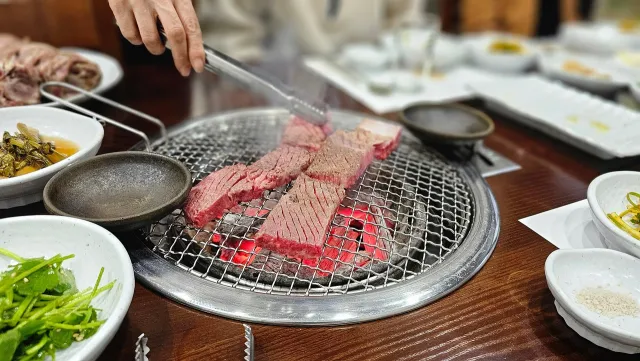
- Grilled pork belly: finishing a barbecue meal with doenjang jjigae and a bowl of rice is the classic Korean course.
- Rolled omelette and seasoned laver: with a few simple side dishes, one pot of doenjang jjigae makes a satisfying meal.
- Young radish or napa cabbage kimchi: earthy stew and tangy kimchi never fail.
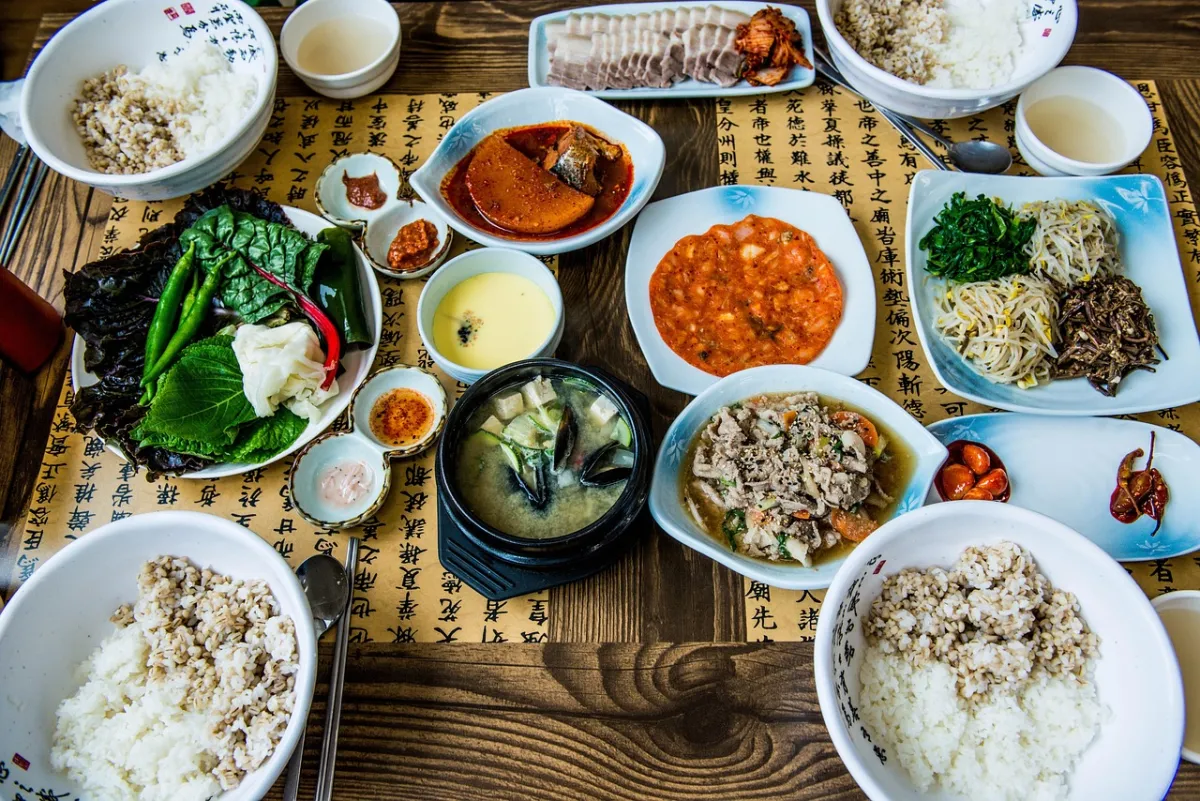
Koreans traditionally placed the stew in the middle of the table and everyone ate from it with their own spoon. These days many people ladle it into individual bowls for hygiene.
How to store doenjang
Once opened, keep doenjang in the fridge. Exposure to air dries out the surface and darkens it, so after use, smooth the surface flat, press cling film directly onto it and close the lid. A white film sometimes forms on top; it's usually yeast from fermentation and can be scraped off. But if you see black or blue-green mould or notice an odd smell, don't use it. Stored well, doenjang keeps for a long time, and its flavour can even deepen with age.
Frequently asked questions
Can I reheat doenjang jjigae?
Yes — many people say it's even better the next day once the flavours have soaked in. Reheating reduces the broth and makes it saltier, though, so add a splash of water. A stew with potato and tofu is best eaten within a day or two of refrigeration.
Do I have to add meat?
No. The basic stew is delicious with just vegetables and tofu. Meat and seafood are optional extras to suit your taste.
Is doenjang healthy?
Doenjang contains soybean protein and a range of compounds produced during fermentation, and it has long been regarded as a healthy food. It's fairly high in salt, though, so avoid drinking too much of the broth, and consult a professional about diets related to specific health conditions.
Final thought: finding your own family's flavour
There's no single correct doenjang jjigae. Even in Korea, each household and region uses different ingredients and types of paste, which is why everyone misses "Mum's doenjang jjigae". Use this recipe as your base, make it a few times, and find your own flavour by adding your favourite ingredients or adjusting the amount of paste.
This evening, make a pot with the vegetables left in your fridge and a block of tofu. As it bubbles away, Korea's most ordinary and most comforting dinner table will appear in your kitchen.