Jeju Island Travel Guide: Volcanic Landscapes, Haenyeo Divers and a 4-Day Route Around the Island
Hallasan and Seongsan Ilchulbong, emerald beaches and oreum cones, haenyeo divers and dol hareubang statues — a first-timer's guide to Jeju with sights by region, a four-day itinerary, car and bus tips and must-eat foods.

Contents
- What kind of island is Jeju?
- Getting to Jeju and getting around
- Jeju by region
- East Jeju: spectacular volcanic scenery
- West Jeju: emerald seas and cafés
- Seogwipo (south): waterfalls and coastal cliffs
- Hallasan, oreum and the Olle trails
- Haenyeo: the women who farm the sea
- Foods you must try on Jeju
- Suggested itinerary: four days on Jeju
- Jeju by season
- Practical tips for Jeju
- Frequently asked questions
- Final thought: the island of wind, stone and sea
For Koreans, Jeju is the "nearest getaway" and an island they return to again and again throughout their lives. Beloved for decades as a honeymoon destination, a school-trip destination and a family holiday spot, it has become an international destination drawing travellers from around the world. It's just over an hour by plane from Seoul's Gimpo Airport, yet the moment you land, a landscape completely unlike the mainland unfolds.
Black basalt stone walls and palm trees, volcanic peaks rising towards the sea, small cones called oreum dotted everywhere. Jeju was made by volcanoes, so its terrain, culture and food differ from the rest of Korea. In this guide we divide Jeju into east, west, south and north, introduce the sights in each, and share a four-day itinerary for first-time visitors along with transport, food and seasonal tips.
What kind of island is Jeju?
Jeju is Korea's largest island, floating in the sea south of the peninsula. At its centre rises Hallasan (1,947 m), the highest mountain in South Korea, surrounded by hundreds of small volcanic cones known as oreum. Hallasan, Seongsan Ilchulbong and the Geomunoreum lava tube system were inscribed on the UNESCO World Heritage List in 2007 as "Jeju Volcanic Island and Lava Tubes".
Jeju has long been called Samdado, "the island of three abundances": wind, stones and women. The fierce sea winds, the basalt left by volcanoes and the strength of the haenyeo — women divers who supported their families by harvesting the sea — became the three symbols of Jeju. Black stone walls stacked around houses and fields, and traditional houses built low against the wind, can still be seen all over the island.
Getting to Jeju and getting around
By air and sea
Most travellers fly into Jeju International Airport. The Gimpo–Jeju route is often counted among the busiest air routes in the world, with flights all day, and there are direct flights from Busan, Daegu, Gwangju and other cities, as well as some international cities. If you prefer the sea, ferries run from Mokpo, Wando, Busan and elsewhere.
Jeju has distinctive entry rules, including a visa-free entry programme for travellers of certain nationalities. Conditions vary by nationality and can change, so always check the latest information before you travel.
Rental car
A rental car is the most convenient way to get around Jeju. Sights are scattered across the island and some areas have infrequent public transport, so most visitors rent a car near the airport. Foreign drivers need an International Driving Permit, passport and home licence, and requirements vary by company, so check in advance. Jeju is windy and some coastal and mountain roads are winding, so drive carefully.
Buses and taxis
If you don't drive, you can still travel by bus. Express buses link the airport and main towns, and trunk and local buses circle the island; transport cards are accepted. Journeys take longer, though, so build in extra time. Booking a taxi tour or bus tour for a day is another option.
Jeju by region
| Region | Highlights | Atmosphere |
|---|---|---|
| Jeju City (north) | Airport, Dongmun Market, Yongduam Rock, Hamdeok Beach | The island's gateway; markets and city energy |
| East | Seongsan Ilchulbong, Udo, Seopjikoji, Manjanggul, Bijarim Forest | Dramatic volcanic landscapes and sunrises |
| West | Hyeopjae and Geumneung beaches, Aewol café street, green tea fields | Emerald seas and stylish cafés |
| Seogwipo (south) | Cheonjiyeon and Jeongbang waterfalls, Jusangjeolli cliffs, Olle Market | Waterfalls, coastal cliffs and a mild climate |
| Mid-mountain and Hallasan | Hallasan, Saryeoni Forest Path, oreum | Forests, volcanic cones and trekking |
East Jeju: spectacular volcanic scenery
Seongsan Ilchulbong
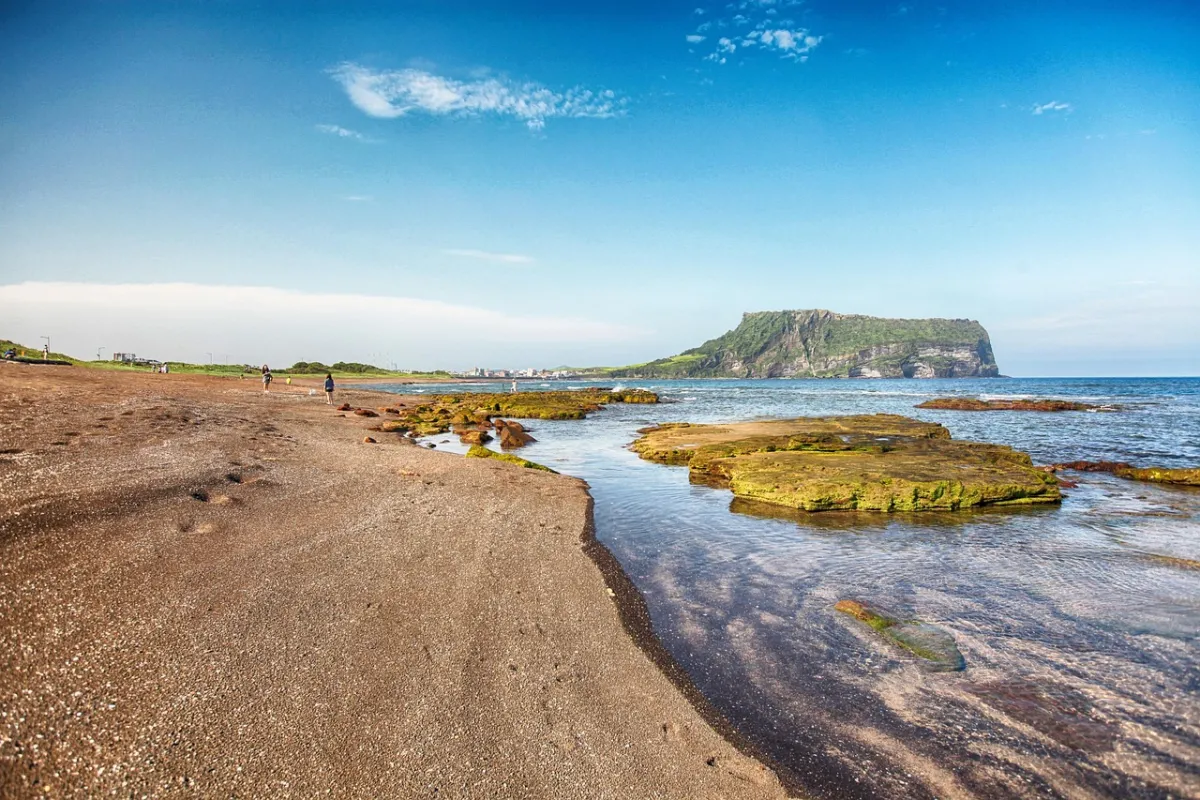
Rising from the sea at Jeju's eastern tip, Seongsan Ilchulbong ("Sunrise Peak") is a crater formed by an undersea eruption around 5,000 years ago. It takes about 20–30 minutes to climb the stairs to the top, where a vast circular crater and the sea spread out before you. As the name suggests, it's a famous sunrise spot, crowded with people watching the first sunrise of the year on New Year's Day.
On the shore below, you can sometimes watch haenyeo give diving demonstrations or sell freshly caught seafood. Whether this happens depends on the weather and circumstances.
Udo
About 15 minutes by boat from Seongsan Port is Udo, an island said to resemble a cow lying down. Its white coral-sand beaches, emerald sea and coastal road make it popular to circle by electric bike or scooter. Don't miss Udo's famous peanut ice cream.
Manjanggul and Bijarim Forest
Manjanggul is the best-known cave in the Geomunoreum lava tube system: you can walk part of the enormous tunnel carved by flowing lava. It's cool inside even in midsummer, so bring a layer. Nearby Bijarim is a forest of thousands of nutmeg yew trees, many centuries old — a lovely place to rest on paths filled with the scent of the forest.
West Jeju: emerald seas and cafés
Hyeopjae and Geumneung beaches
Hyeopjae Beach in western Jeju is famous for its clear, shallow emerald water. The view across the sea to the small island of Biyangdo is one of Jeju's signature images. Neighbouring Geumneung Beach is a little quieter, ideal for a relaxed day by the sea. Sunsets here are especially beautiful.
The Aewol coastal road and cafés
Sea-view cafés line the Aewol coastal road. Sipping coffee while gazing at the sea through floor-to-ceiling windows is the Jeju moment many travellers dream of. Drive slowly along the coast and stop at whichever café catches your eye.
Green tea fields
The wide green tea fields and tea museum west of Seogwipo are a popular spot for strolling between green rows and enjoying green tea desserts. Jeju's mild climate and volcanic soil are known to suit tea cultivation.
Seogwipo (south): waterfalls and coastal cliffs
Cheonjiyeon and Jeongbang waterfalls
Near central Seogwipo, Cheonjiyeon Waterfall plunges at the end of a path through lush forest and is lit up at night for evening walks. Jeongbang Waterfall is known for falling directly into the sea, so looking up at it from the rocks on the shore is a special experience.
Jusangjeolli Cliffs
Formed as lava cooled into hexagonal columns, Jusangjeolli is a spectacular row of regular stone pillars along the coast that look almost hand-carved. Waves crashing white against the columns make an unforgettable sight.
Seogwipo Maeil Olle Market
Seogwipo's main traditional market, where you can try Jeju tangerines and hallabong, omegi rice cakes and black pork skewers. Many people buy tangerine chocolate or dried tangerines as souvenirs.
Hallasan, oreum and the Olle trails
Climbing Hallasan
You can reach Baengnokdam, Hallasan's summit crater lake, via the Seongpanak or Gwaneumsa trails — a serious hike of about eight to ten hours return. The summit trails sometimes operate a reservation system, so check and book in advance. If that's too demanding, the Yeongsil or Eorimok trails up to Witse-oreum are excellent alternatives. Mountain weather changes quickly, so always carry a windproof jacket, water and snacks.
Oreum
Jeju has hundreds of oreum. Most can be climbed in about 30 minutes, making them perfect for a gentle walk. Famous ones include Saebyeol Oreum, which turns silver with swaying grass in autumn; Yongnuni Oreum, with beautiful gentle ridges (sometimes closed to let it recover); and Sangumburi, with its deep crater.
The Jeju Olle trails
The Jeju Olle trails are walking routes linking the island's coast, villages and oreum, made up of more than twenty courses. Olle is a Jeju word for the narrow lane leading from the main road to a house. Some people walk the whole network, but even choosing one or two courses for a half-day walk brings you close to everyday Jeju life.
Haenyeo: the women who farm the sea
Haenyeo are women who dive into the sea without breathing equipment, holding their breath to harvest conch, abalone, sea urchins and seaweed. Jeju's haenyeo culture was inscribed on UNESCO's Representative List of the Intangible Cultural Heritage of Humanity in 2016. Haenyeo have maintained a unique culture of managing the sea together as a community, sharing their harvest, and having experienced senior divers guide the younger ones.
At the Haenyeo Museum in eastern Jeju you can learn in detail about their history, daily lives and tools. At restaurants and "haenyeo houses" run by divers, you can taste dishes made from the day's catch. As the number of haenyeo declines and their average age rises, a range of efforts are under way to preserve this culture.
Foods you must try on Jeju
| Food | What it is |
|---|---|
| Black pork barbecue | Jeju's native black pork, cut thick and grilled; Jeju-style, it's dipped in meljeot (anchovy sauce) |
| Gogi-guksu | Jeju-style noodles in pork bone broth topped with sliced boiled pork |
| Haemul ttukbaegi | Abalone, crab, prawns and clams simmered with doenjang in an earthenware pot |
| Jeonbok-juk | Nutty abalone porridge, green from the abalone's innards; a popular breakfast |
| Galchi jorim / galchi gui | Jeju's silver hairtail fish, braised spicy or grilled |
| Omegi tteok | Traditional Jeju rice cake made from glutinous millet and coated in red bean |
| Tangerines and hallabong | Jeju's iconic citrus; in winter you can go tangerine picking |
In the evening, Dongmun Market in Jeju City hosts a night market with all kinds of street food: black pork skewers, abalone gimbap, tangerine juice and more. It's a great stop on your first or last evening.
Suggested itinerary: four days on Jeju
| Day | Route |
|---|---|
| Day 1 | Arrive at the airport → Yongduam Rock → Hamdeok Beach → Dongmun night market (stay in Jeju City) |
| Day 2 | Bijarim Forest → Manjanggul → Haenyeo Museum → Seongsan Ilchulbong → Seopjikoji (stay in Seongsan) |
| Day 3 | Morning on Udo → Saryeoni Forest Path → Jeongbang Waterfall in Seogwipo → evening walk at Cheonjiyeon (stay in Seogwipo) |
| Day 4 | Jusangjeolli → green tea fields → Hyeopjae Beach → Aewol cafés → airport |
This route circles the island clockwise. Moving your accommodation by region saves a great deal of travel time. If you want to climb Hallasan, add an extra day.
Jeju by season
- Spring (March–May): yellow canola flowers and cherry blossoms colour the island; many consider it the most beautiful season.
- Summer (June–August): the season for swimming and snorkelling. Watch for the monsoon and typhoon warnings.
- Autumn (September–November): silver grass ripples on every oreum, and clear days make it ideal for trekking.
- Winter (December–February): red camellias bloom and tangerines ripen for picking. Snow-covered Hallasan is spectacular, but winter hiking requires crampons and proper gear.
Practical tips for Jeju
- Be ready for wind: Jeju is often windy; pack a light windbreaker even in summer.
- Check the weather: flights and ferries can be cancelled in bad weather, so leave slack in your schedule.
- Protect nature: don't damage plants on oreum or the coast, and take your rubbish with you. Some oreum close periodically to let nature recover.
- Respect haenyeo work areas: don't enter divers' work spaces or fishing grounds or harvest seafood yourself. A village's marine resources are a precious shared livelihood.
- Jeju dialect: Jeju has its own dialect that even mainland Koreans struggle to understand. "Honjeo opseoye" — "welcome" — is the best-known Jeju phrase.
Frequently asked questions
How many days do I need for Jeju?
Four days is about right to see the main sights. If you want to climb Hallasan, walk the Olle trails or simply relax, we recommend five days or more.
Can I travel Jeju without driving?
Yes. Bus routes connect the whole island, and there are taxi tours and group bus tours. Allow plenty of time for travel, though.
Can I swim in Jeju's sea?
During the summer beach season you can swim at beaches with lifeguards. Jeju's water can be cool and some spots have strong currents, so swim only in designated areas.
Final thought: the island of wind, stone and sea
Jeju is an island you can't fully know in one trip. Spring's canola flowers, autumn's silver grass, summer's sea and winter's camellias each show a different face — which is why so many people call Jeju "the island I want to visit again".
On your first trip, rather than cramming in too much, take time to climb a single oreum and feel the wind, sit on a beach watching the sunset and eat black pork skewers at the market. That slow time is Jeju's greatest gift.