Getting Around Korea: A Visitor's Guide to Transport Cards, Subway, Buses, Taxis and the KTX
Korea is famous for its convenient public transport. From buying a transport card to riding the subway and buses, transfer discounts, taxis and ride apps, KTX and express buses between cities, domestic flights and rental cars — all in one guide.

Contents
- Where it all starts: the transport card
- The subway: a traveller's best friend
- Buses: easy once you know the colours
- Taxis: convenient, if you know the basics
- From the airport to the city
- Between cities: KTX and SRT
- Express and intercity buses
- Domestic flights and ferries
- Rental cars: freedom in the regions
- Bikes and walking
- Essential apps for travellers
- Transport etiquette
- Journey times on key routes at a glance
- Reading subway signs
- Understanding subway announcements
- Getting around with lots of luggage
- Korean for getting around
- The Seoul subway lines travellers use most
- Seoul's public bikes: Ttareungyi
- Telling taxi types apart
- Getting around Busan and Jeju
- Late-night transport: night buses
- If you lose something
- Frequently asked questions
- Final thought: know the transport, widen the trip
Public transport is one of the things foreign visitors praise most about Korea: clean, punctual subways, dense bus networks and high-speed trains that link the country in a few hours. In Seoul, the subway alone gets you to most sights comfortably, and with the KTX even cities like Busan or Gangneung become day trips.
For first-time visitors, though, plenty of things are unfamiliar. Where do you buy a transport card? What do the bus colours mean? How do transfers work? How do you call a taxi? In this guide we go through Korea's transport options one by one, with practical tips so even first-timers can get around without getting lost.
Where it all starts: the transport card
Your first step to using public transport in Korea is a transport card. It works on subways and buses and even in some taxis and convenience stores, so you'll use it throughout your trip.
Where to buy and how to top up
The most widely used card is T-money. You can buy one at convenience stores and vending machines in airports and subway stations. It's a prepaid card topped up with cash at convenience store tills or recharge machines in subway stations, which offer English and other languages.
If your balance is too low you won't get through the gate, so keep it well topped up during your trip. At the end, remaining balances can often be refunded at convenience stores, minus a small fee.
Cards for travellers
Cards designed for foreign visitors combine transport with payment functions and attraction discounts. Some cities also offer pass-type products with unlimited public transport for a set period. Seoul runs an unlimited public transport pass valid for a fixed number of days; compare it with a regular card based on your itinerary and how much you'll travel. Products and prices can change, so check official information.
The subway: a traveller's best friend
Seoul's metropolitan subway is a web of lines — Lines 1 to 9 plus the Airport Railroad, Sinbundang Line, Gyeongui–Jungang Line and more. Busan, Daegu, Gwangju and Daejeon have subways too.
How to ride the subway
- Check the line and direction: use a map app to find your route and transfer stations. Each line has its own colour and number.
- Through the gate: tap your card on the reader; it beeps and the gate opens.
- Find the platform: the same line has different platforms for each direction. Check the "next station" name and final destination on the signs.
- Exiting: tap your card again at the exit gate to settle the fare. Extra charges may apply depending on distance.
Transfers and discounts
With a transport card, you get a transfer discount when switching between subway and bus or between buses. Tap your card when getting off buses too, or the discount won't apply. Transfers must happen within a set time, which can vary by region and time of day.
Subway culture worth knowing
- Station numbers: Seoul stations have unique numbers, handy when station names are hard to read.
- Announcements: next stops and transfers are announced in Korean, English, Japanese and Chinese.
- Priority seats: leave the seats for the elderly at the ends of carriages and the pink seats for pregnant women empty.
- Exit numbers: large stations often have more than ten exits. Check the exit nearest your destination to avoid wandering above ground.
- Operating hours: the subway generally runs from around 5:30 a.m. to around midnight. Last trains vary by line and station, so check if you're out late.
Buses: easy once you know the colours
Seoul's city buses are colour-coded by type. Knowing the colours makes it much easier to work out which bus to take.
| Colour | Type | What it does |
|---|---|---|
| Blue | Trunk bus | Long routes linking major districts of Seoul |
| Green | Branch bus | Short routes linking neighbourhoods to subway stations |
| Red | Express (wide-area) bus | Fast links between Seoul and the surrounding Gyeonggi area |
| Yellow | Circular bus | Loops around a set downtown area |
How to ride the bus
Board through the front door and tap your card. To get off, press the stop button near the rear door and tap your card again on the reader there. If you don't tap when getting off, you won't get a transfer discount. Arrival times are shown in real time on stop displays and map apps.
Night buses
Late at night when the subway stops, night buses with route numbers beginning with "N" serve Seoul's main areas — a cheaper option than a taxi for getting back to your accommodation.
Taxis: convenient, if you know the basics
Types of taxi
- Regular taxis: the most common; colours vary by region. In Seoul you'll see many orange, white or silver taxis.
- Deluxe taxis: often black, with higher fares but roomier cars and more upscale service.
- Jumbo taxis: van taxis, ideal for lots of luggage or larger groups.
- International taxis: driven by drivers who can communicate in foreign languages; available by reservation or at airports.
Using ride-hailing apps
Taxi apps such as Kakao T are widely used in Korea. Enter your pickup point and destination and a nearby taxi is assigned, so you don't need to explain where you're going in Korean — especially convenient for foreigners. You can register a foreign card in the app or pay directly when you get out.
Taxi tips
- Show addresses in Hangul: if you hail a taxi on the street, show your destination's address or name in Korean.
- Late-night surcharge: fares are higher late at night.
- Payment: most taxis accept cards and transport cards.
- Seat belts: wear one even in the back seat.
From the airport to the city
| Option | Features |
|---|---|
| AREX express train | Non-stop from Incheon Airport to Seoul Station; fast and comfortable |
| AREX all-stop train | Stops at stations such as Hongik University and Gongdeok; cheaper and convenient for transfers |
| Airport limousine bus | Direct to major hotels and districts; handy with lots of luggage |
| Taxi | Most convenient but expensive; useful late at night |
Gimpo Airport is close to central Seoul and easy to reach on subway Lines 5 and 9 and the Airport Railroad. It handles domestic flights and some short-haul international routes.
Between cities: KTX and SRT
Korea's high-speed rail links the main cities quickly, connecting Seoul and Busan in around two and a half hours.
- KTX: high-speed trains run by Korail from stations such as Seoul and Yongsan to Busan, Daegu, Gwangju, Mokpo, Gangneung, Yeosu and more.
- SRT: high-speed trains departing from Suseo Station in south-east Seoul — handy if you're staying in the Gangnam area.
Booking tips
Book on the official Korail and SRT apps or websites, which have foreign-language pages. Tickets sell out very quickly at weekends, holidays and long weekends, so book as soon as your plans are fixed. Foreign visitors can also buy a Korail pass for unlimited train travel over a set period. Missing your departure can void the ticket or incur fees, so at big stations arrive early enough to find your platform.
Regular trains
Slower but cheaper trains such as the ITX and Mugunghwa are also available — a good choice if you want to travel leisurely and enjoy the scenery. The ITX-Cheongchun from Seoul to Gapyeong and Chuncheon is popular for trips to Nami Island.
Express and intercity buses
For smaller towns and attractions without train stations, express and intercity buses are useful. Seoul's main terminals include Seoul Express Bus Terminal (Central City), Dong Seoul Bus Terminal and Nambu Terminal. Premium buses with wide seats are comfortable even for long journeys and often cheaper than the train. Buy tickets through bus booking apps or at terminal counters.
Domestic flights and ferries
Flying is the usual way to Jeju. Countless flights run between Gimpo and Jeju every day, and many other cities such as Busan, Daegu and Cheongju also have flights to Jeju. You need ID (a passport for foreigners) for domestic flights too.
If you love islands, ferries are an appealing option. Boats sail from Mokpo, Wando, Yeosu, Busan and elsewhere to Jeju and the islands of the south coast. Sailings can be cancelled in bad weather, so leave slack in your plans.
Rental cars: freedom in the regions
For regions with sparse public transport, such as Jeju or Gangwon, a rental car is convenient. Foreigners driving in Korea generally need an International Driving Permit, a passport and their home licence. Accepted licences can vary by country, so check before you travel.
- Korea drives on the right.
- There are many speed cameras, so keep to the limits.
- Use a Korean map app for accurate navigation.
- Expressway tolls are paid with a Hi-pass device, cash or card.
Bikes and walking
Seoul has a public bike scheme, Ttareungyi, which you can rent easily through an app. Cycling the paths along the Han River is another of Seoul's pleasures, especially popular around the Yeouido, Banpo and Ttukseom Han River parks.
Central Seoul is more walkable than you might think. The route from Gyeongbokgung through Bukchon to Insadong, the Cheonggyecheon stream path and the Namsan trails are all great ways to feel the city on foot.
Essential apps for travellers
| App type | What it's for |
|---|---|
| Naver Map / KakaoMap | Public transport directions, real-time bus arrivals, walking routes |
| Kakao T | Taxi hailing (plus designated drivers and bikes in some areas) |
| Official Korail and SRT apps | High-speed train booking |
| Express/intercity bus booking apps | Long-distance bus tickets |
| Subway map apps | Route checking, last trains, best carriages for quick transfers |
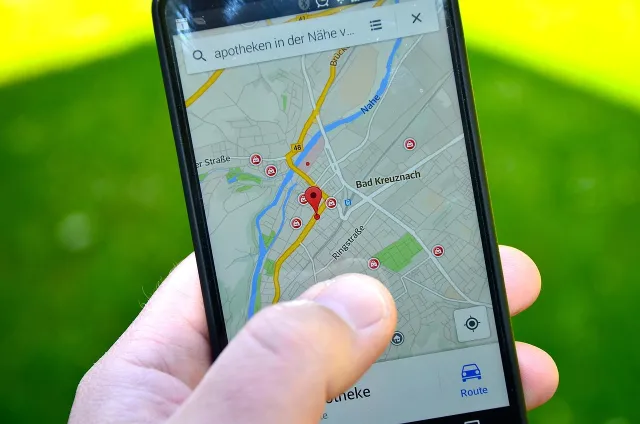
Because of security regulations, some foreign map services offer only limited directions in Korea, so local map apps are far more accurate. Most have English interfaces.
Transport etiquette
- Queue: line up at the marked spots on subway platforms and let passengers off before boarding.
- Keep quiet: avoid loud phone calls or conversations on public transport.
- Big luggage: rush hour can be too crowded for large suitcases, so travel off-peak if possible.
- Escalators: for safety, you're encouraged not to walk or run on escalators and to hold the handrail.
- Food: avoid eating strong-smelling food on buses and subways.
Journey times on key routes at a glance
When planning your itinerary, start by understanding travel times between cities. The table below shows approximate times from Seoul; they vary with train type, stops and traffic.
| Route | Recommended transport | Approximate time |
|---|---|---|
| Seoul → Busan | KTX / SRT | About 2 hours 30 minutes |
| Seoul → Gyeongju | KTX (Singyeongju Station) | About 2 hours |
| Seoul → Jeonju | KTX | About 1 hour 40 minutes to 2 hours |
| Seoul → Gangneung | KTX | About 2 hours |
| Seoul → Jeju | Domestic flight | About 1 hour 10 minutes in the air |
| Busan → Gyeongju | KTX or express bus | About 30 minutes to 1 hour |
Factor in the time from the station to the city centre too. Singyeongju Station, for example, is outside central Gyeongju, adding another 20–30 minutes by bus or taxi.
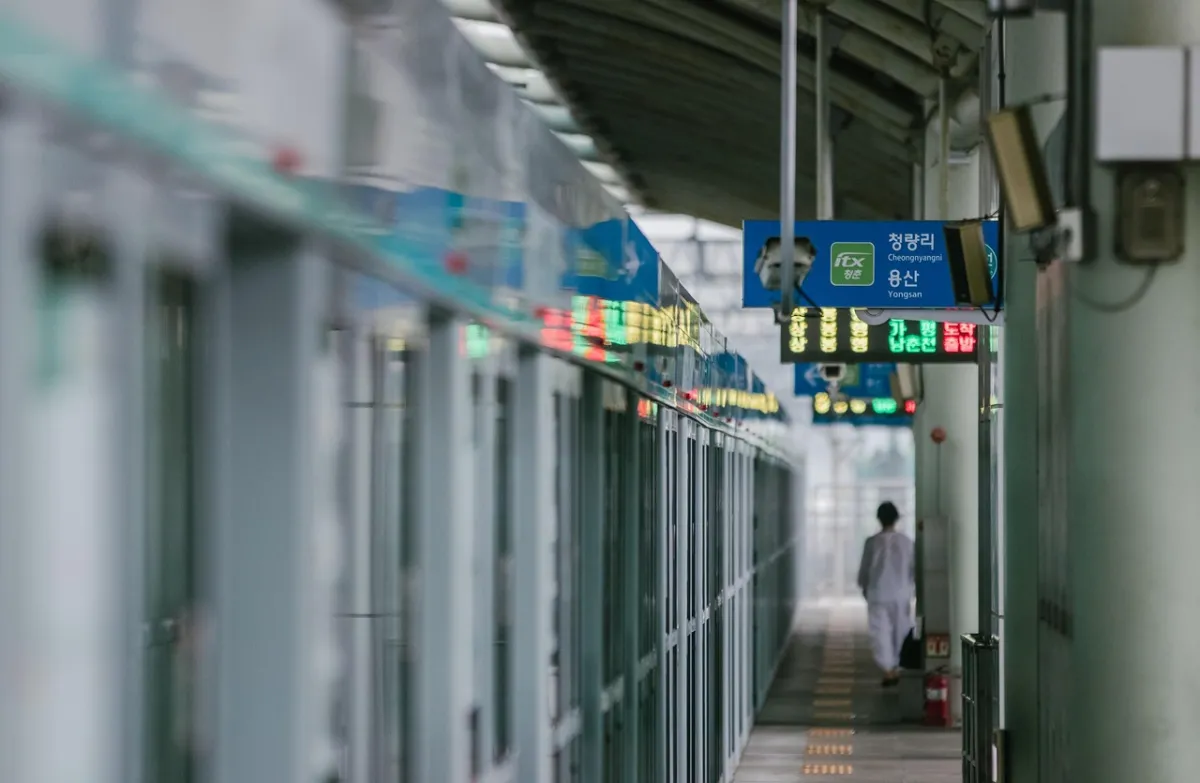
Reading subway signs
- Line colours and numbers: each Seoul subway line has its own colour and number — Line 2 is green, Line 3 orange, and so on. Remembering the colours makes transfers much easier.
- Station numbers: every station has a unique number. If Korean station names are hard to read, searching by number is handy.
- Exit numbers: Koreans arrange meeting points with exit numbers, as in "Gangnam Station, Exit 11". Big stations have more than ten exits, so knowing the right one can cut your walk dramatically.
- Fast-transfer positions: subway apps can tell you which carriage is closest to the transfer passage or exit. Use this when you're short of time.
Understanding subway announcements
Subway announcements are made in Korean, English, Chinese and Japanese, but understanding the Korean one lets you get ready sooner.
| Announcement | Meaning |
|---|---|
| 이번 역은 ○○역입니다. (ibeon yeogeun ○○yeogimnida) | This station is ○○. |
| 내리실 문은 오른쪽입니다. (naerisil muneun oreunjjogimnida) | The doors on the right will open. |
| ○호선으로 갈아타실 분은 이번 역에서 내리시기 바랍니다. | Passengers transferring to Line ○, please get off at this station. |
| 이 열차의 종착역입니다. (i yeolchaui jongchagyeogimnida) | This is the final stop for this train. |
Getting around with lots of luggage
- Avoid rush hour: the subway is packed on weekdays from 7–9 am and 6–8 pm. If you're moving with a large suitcase, travel outside these times.
- Find the lifts: most subway stations have lifts, but not at every exit. Check which exits have them in a map app beforehand.
- Luggage delivery services: services linking airports, some major stations and accommodation let you sightsee without dragging a heavy suitcase around.
- Take a taxi: on days with lots of luggage, especially when changing accommodation, a taxi or airport limousine bus can actually be more efficient.
Korean for getting around
| Korean | Meaning |
|---|---|
| 이 버스 ○○ 가요? (i beoseu ○○ gayo?) | Does this bus go to ○○? |
| 여기서 내려 주세요. (yeogiseo naeryeo juseyo) | (In a taxi) Please stop here. |
| ○○역 몇 번 출구예요? (○○yeok myeot beon chulguyeyo?) | Which exit of ○○ Station is it? |
| 어디서 갈아타요? (eodiseo garatayo?) | Where do I transfer? |
| 트렁크 좀 열어 주세요. (teureongkeu jom yeoreo juseyo) | (In a taxi) Could you open the boot, please? |
The Seoul subway lines travellers use most
Seoul's subway has many lines and looks complicated at first, but the ones travellers use most come down to a handful.
| Line | Key stations | Notes |
|---|---|---|
| Line 2 (green) | Hongik Univ., City Hall, Dongdaemun History & Culture Park, Gangnam, Jamsil | A loop line circling central Seoul that links most major districts. |
| Line 3 (orange) | Gyeongbokgung, Anguk, Jongno 3-ga, Apgujeong | Handy for the palaces, Bukchon and Insadong. |
| Line 4 (sky blue) | Seoul Station, Myeong-dong, Dongdaemun, Hyehwa | Often used for Myeong-dong shopping and Daehangno theatres. |
| Line 9 (gold) | Gimpo Airport, Yeouido, Express Bus Terminal, Sinnonhyeon | Express trains make for fast travel south of the Han River. |
| AREX (airport railroad) | Incheon Airport, Gimpo Airport, Hongik Univ., Seoul Station | Connects the airports with the city. |
The base fare with a transport card is around 1,500 won, rising slightly with distance. Transport cards also give transfer discounts when you switch between bus and subway within a set time, saving money.
Seoul's public bikes: Ttareungyi
Seoul has a public bike scheme called Ttareungyi. You can rent a bike at stations all over the city and return it to another, and foreign visitors can buy passes through the dedicated app. The cycle paths along the Han River parks are scenic and flat, perfect for a ride. On city streets, though, watch out for traffic, and wearing a helmet is recommended. Try it instead of the subway for short hops or to enjoy a Han River sunset.
Telling taxi types apart
- Regular taxis: in various colours such as orange, white and silver — the most common and cheapest.
- Deluxe taxis (mobeom): black taxis with a higher base fare but more space and better service; an option when regular taxis are scarce.
- Jumbo taxis: van-type taxis, convenient for groups or lots of luggage.
- Foreign-language taxis: driven by drivers who can communicate in English, Japanese or Chinese, available at airports or by booking — a good choice if your Korean makes you nervous.
Late-night surcharges apply, and taxi-hailing apps let you enter your destination in advance, which is handy even if you can't communicate verbally.
Getting around Busan and Jeju
Busan also has a good subway system linking major sights such as Haeundae, Seomyeon and Nampo-dong, and the transport card you used in Seoul often works there too. Jeju, by contrast, has no subway and a widely spread bus network with long intervals in many areas. If you're exploring Jeju by public transport, check timetables in advance with a bus app and base yourself in one area to explore it thoroughly.
Late-night transport: night buses
The Seoul subway usually stops running around midnight. If you've been at a late show or out with friends, be sure to check the last-train time. Missing it doesn't necessarily mean an expensive taxi, though. Seoul has night buses running from late at night until dawn; routes with an "N" before the number link major nightlife districts and residential areas. Fares are a little higher than regular buses but far cheaper than a taxi. Set your departure time to late at night in a map app and it will suggest night-bus routes too. Taxis can be hard to catch on weekend nights, so knowing about night buses is reassuring.
If you lose something
If you leave something on the subway, a bus or in a taxi, don't panic — calmly gather the details. For the subway, note the station where you got off, the time and which carriage you were in; for a bus, the route number and the time you got off. If you paid with a transport card, the payment record can help identify the vehicle. Korea has an online service where you can search lost property from public transport, and if you ask at a station information centre, staff will help you look. Korea is known as a country where lost items often find their way back to their owners, so don't give up — ask.
Frequently asked questions
Can I pay cash instead of using a transport card?
Some buses accept cash, but cash payment is declining, and for the subway you'd need to buy a single-journey card. A transport card is far more convenient and cheaper.
When is rush hour?
Generally weekdays from 7 to 9 a.m. and 6 to 8 p.m. Avoid these times if you're carrying large luggage.
Which is faster, taxi or subway?
Seoul often has heavy traffic, so the subway is frequently faster at rush hour. Taxis are convenient for short distances or late at night.
Final thought: know the transport, widen the trip
Korea's public transport can look complicated at first, but with one transport card and a map app you'll soon feel at home. And once you're confident getting around, your trip can extend well beyond Seoul to the whole country.
When you land, buy and top up a transport card first. That small card will be the first key to taking you all over Korea.