Seoul in 4 Days: A First-Timer's Itinerary Planned Neighbourhood by Neighbourhood
Palaces and hanok villages, markets and the Han River, trendy café streets — a four-day Seoul itinerary for first-time visitors that keeps travel time to a minimum, plus where to stay, how to get around and what it costs.

Contents
- Before you go: the essentials
- Where to stay: neighbourhoods compared
- Day 1: Walking the Joseon capital — Gyeongbokgung, Bukchon, Insadong, Gwangjang Market
- Day 2: Seoul from above — Namsan, Myeongdong, Euljiro
- Day 3: Youth and the river — Hongdae, Yeonnam-dong, Mangwon Market, Han River Park
- Day 4: Seoul today — Seongsu-dong, Seoul Forest, Jamsil
- If you have more time: extra places worth visiting
- Ten foods you must try in Seoul
- Adjusting the plan by season
- How much will it cost?
- Practical tips for Seoul
- Korean phrases you'll actually use
- Frequently asked questions
- Final thought: plan tightly, walk slowly
Seoul can feel overwhelming on a first visit. Glass towers rise right beside palaces more than 600 years old, and centuries-old alley markets sit a few subway stops from the trendiest café streets. With so much to see, planning often ends with a map covered in circles — and a trip spent mostly in transit.
This is a four-day itinerary for first-time visitors to Seoul. The key is to cover one area per day to cut down travel time. Day one is the old royal heart of the city; day two, Namsan and Myeongdong; day three, youthful Hongdae and the Han River; and the last day, Seongsu and Jamsil, two of Seoul's most talked-about districts right now. For each day you'll find a walking route, food suggestions and small tips locals would give you.
Before you go: the essentials
When to visit
Seoul has four distinct seasons. The best times to travel are spring (April–May) and autumn (late September to early November). Spring brings cherry blossoms and mild weather; autumn brings clear skies and fiery foliage. Summer (July–August) is hot and humid with a monsoon season, so mix in indoor plans. Winter (December–February) often drops below freezing, but the air is crisp and the year-end decorations are dazzling.
Arriving and getting into the city
Most international flights land at Incheon International Airport. The easiest way into the city is the Airport Railroad (AREX). There's a non-stop express train to Seoul Station and an all-stop commuter train; the commuter train calls at major transfer stations such as Hongik University and Gongdeok, which can be more convenient depending on where you're staying. If you have lots of luggage or land late at night, airport limousine buses and taxis are good options.
Depending on your nationality, you may need a Korea Electronic Travel Authorization (K-ETA) before you fly, or you may be exempt — and these rules change from time to time. Always check the latest information on the official K-ETA website or with Korea's Ministry of Foreign Affairs before you travel.
Transport cards and essential apps
Buy a transport card such as T-money at an airport convenience store and top it up; it works on the subway, buses and even some taxis. Transfers between subway and bus within a set time get a discount. There are also rechargeable cards designed for foreign visitors, some with payment functions built in, so compare them at the airport.
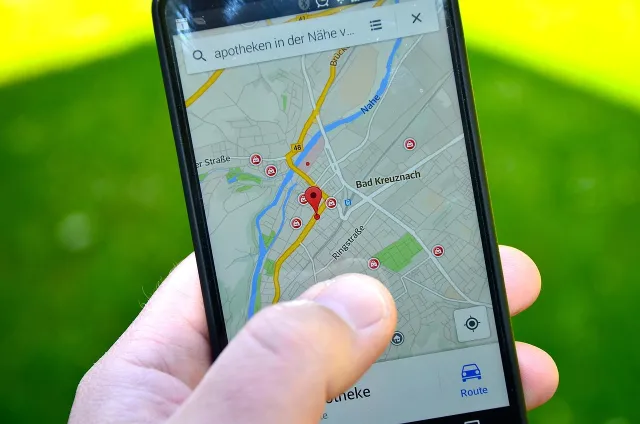
For maps, use Naver Map or KakaoMap. Because of security regulations, Google Maps offers only limited directions in Korea, and local apps are far more accurate for public transport and walking routes. Both have English interfaces. To hail a taxi, the Kakao T app is handy because you don't have to explain your destination aloud.
Where to stay: neighbourhoods compared
Seoul is big, and where you stay makes a huge difference to how tired you'll be. For a first visit, choose from these areas.
| Area | Pros | Best for |
|---|---|---|
| Myeongdong / Euljiro | Many airport bus stops; easy to get anywhere | First-timers who prioritise shopping and transport |
| Jongno / Insadong | Palaces and hanok village within walking distance; traditional atmosphere | History and culture lovers |
| Hongdae / Yeonnam | Direct airport rail link; young, lively nightlife | Nightlife and café fans |
| Seongsu | Trendy cafés and pop-up stores; quieter evenings | Repeat visitors and design lovers |
| Gangnam | Sleek hotels and big shopping malls | Business travellers |
This itinerary works best if you stay in Myeongdong or Jongno. Several subway lines run through both, putting every area in the plan within roughly 30 minutes.
Day 1: Walking the Joseon capital — Gyeongbokgung, Bukchon, Insadong, Gwangjang Market
Morning: Gyeongbokgung and the changing of the guard
Start your trip at the heart of Seoul. Gyeongbokgung, built in 1395, was the main royal palace of the Joseon dynasty and is the largest and most iconic of Seoul's five palaces. Several times a day a royal guard-changing ceremony takes place at Gwanghwamun Gate; the procession of guards in vivid traditional uniforms is not to be missed. Times can vary by season, so check the official website.
Inside, stroll slowly from Geunjeongjeon, where the king held official ceremonies, to Gyeonghoeru, a pavilion that seems to float on its pond, and on to Hyangwonjeong at the back. Visitors wearing hanbok get free admission to the palaces, so many travellers rent one from a shop nearby and take photos. Gyeongbokgung is usually closed on Tuesdays, so plan around it.
Lunch: Seochon or Samcheong-dong
Seochon, west of the palace, and Samcheong-dong, to the east, are full of small restaurants and cafés. Seochon is home to Tongin Market, famous for its lunchbox experience: you swap cash for old-style brass coins and use them to fill a tray with small portions from different stalls.
Afternoon: Bukchon Hanok Village and Insadong
Climb the hill from Samcheong-dong and you'll reach Bukchon Hanok Village. Hundreds of traditional houses here are still lived in, so some zones restrict visiting hours to protect residents' privacy — generally only between 10 a.m. and 5 p.m. Respect the hours and keep your voice down in the alleys.
Walk south from Bukchon and you'll arrive in Insadong, a street of traditional crafts, tea houses and galleries. Ssamziegil, a spiralling shopping complex, is great for browsing small studios. A little further east, Ikseon-dong is a maze of old hanok converted into cafés and restaurants, packed with youthful style.
Evening: Cheonggyecheon and Gwangjang Market
After dark, follow the Cheonggyecheon stream that runs through downtown. Walking paths line both banks of the restored stream, softly lit at night. Head east along it and you'll reach Gwangjang Market, trading since the early 1900s. At the stalls in the middle of the market you can try bindaetteok (mung bean pancakes), bite-sized "addictive" mayak gimbap and yukhoe (Korean beef tartare). There's no better place to end your first evening with the old flavours of Seoul.
Day 2: Seoul from above — Namsan, Myeongdong, Euljiro
Morning: Namsan and N Seoul Tower
Begin day two with a panorama of the city. Namsan is a mountain right in the middle of Seoul, crowned by N Seoul Tower. You can ride the cable car up, but on a fine day we recommend walking the Namsan trails; it takes 30–40 minutes to reach the top, with lovely views of the city through the trees.
At the base of the tower, the observation terrace is covered in countless "love locks" left by couples. From the observatory you'll see Bukhansan mountain and the palaces to the north, and the Han River and Gangnam's skyscrapers to the south. Visibility is best on a clear morning.
Lunch: Namsan pork cutlet
At the foot of Namsan is a cluster of old restaurants serving thick pork cutlets. "Namsan donkatsu" — a wide, flattened cutlet served with soup and rice — is pure nostalgia for Seoulites.
Afternoon: Myeongdong shopping and street food
Come down from Namsan and you're in Myeongdong. Lined with cosmetics shops and clothing stores, it's ideal for K-beauty shopping, and from late afternoon street stalls set up in the middle of the road selling egg bread, tornado potatoes and cheese hot dogs. Stop by Myeongdong Cathedral too: completed in 1898, it was Korea's first Gothic-style church, and its red-brick building is beautiful.
Evening: Euljiro, "Hipjiro"
In the evening, head next door to Euljiro. In the past few years, distinctive bars and cafés have opened one by one in these old alleys of printing shops and hardware stores, earning the area the nickname "Hipjiro". Part of the fun is finding bars hidden up unmarked stairways, and "Nogari Alley", where you can drink beer with dried pollack snacks at old-school pubs, is famous.
Day 3: Youth and the river — Hongdae, Yeonnam-dong, Mangwon Market, Han River Park
Morning: a stroll through Yeonnam-dong
Day three is all about Seoul's youthful energy. Start the morning in Yeonnam-dong near Hongik University Station. The Gyeongui Line Forest Park, built on a disused railway, runs through the neighbourhood. Locals walking dogs and sipping coffee on benches have earned it the nickname "Yeontral Park", a nod to New York's Central Park. Small cafés, bakeries and gift shops line both sides.
Lunch: Mangwon Market
A little west, in Mangwon-dong, is Mangwon Market, where locals do their shopping. Prices are lower than at touristy markets, and it's full of everyday snacks such as sweet-and-sour fried chicken (dakgangjeong), croquettes and knife-cut noodles. Buy a little from several stalls and share.
Afternoon: Hongdae
Return to Hongdae in the afternoon. The area around Hongik University is a mecca for indie music and street performance, and on weekend afternoons you'll easily find dance crews and bands busking. Quirky clothing shops, stationery stores and character shops make browsing alone eat up hours.
Evening: chimaek at Han River Park
Around sunset, take the subway to Yeouido or Mangwon Han River Park. One of Seoulites' favourite evening scenes is chimaek — fried chicken (chikin) and beer (maekju) on a picnic mat by the river. You can order chicken from shops near the park or through a delivery app, and "Han River ramyeon", cooked in instant noodle machines at convenience stores, is hugely popular. On spring and autumn nights the river breeze is refreshing, and depending on the season Yeouido hosts fountain shows and fireworks festivals.
Day 4: Seoul today — Seongsu-dong, Seoul Forest, Jamsil
Morning: Seoul Forest
On your last day, head to one of Seoul's hottest neighbourhoods. In the morning, shake off travel fatigue with a gentle walk in Seoul Forest, a beloved green escape with wide lawns and a deer enclosure.
Lunch and afternoon: Seongsu-dong's café streets
Right next to Seoul Forest, Seongsu-dong was once an industrial area full of shoe factories and warehouses. As these red-brick buildings turned into cafés, concept stores and brand pop-ups, it earned the nickname "the Brooklyn of Seoul". New pop-up stores open almost every weekend, so the streets look different every time you visit. Take a break with a coffee in one of the high-ceilinged warehouse cafés.
Evening: Jamsil and Lotte World Tower
Spend your final evening in Jamsil. At 123 storeys and 555 metres, Lotte World Tower is Korea's tallest building, and from the Seoul Sky observatory at the top you can watch the whole city from sunset into the night. Stroll around Seokchon Lake in front of the tower: during cherry blossom season it becomes a pink tunnel, and in other seasons the city lights reflected on the water make a beautiful ending to the trip.
If it's the night before your flight, the mall is also a good place for last-minute souvenirs. Foreign visitors can claim tax refunds on purchases above a certain amount; many stores offer instant refunds or give you paperwork to claim at the airport. Bring your passport.
If you have more time: extra places worth visiting
- Changdeokgung and its Secret Garden: a UNESCO World Heritage palace whose garden, Huwon, can only be entered on a guided tour at set times. Book ahead.
- Dongdaemun Design Plaza (DDP): a striking curved building, lit up at night and perfect for photos.
- Bukhansan National Park: a national park reachable by subway. A great half-day hike if you love the outdoors.
- National Museum of Korea: a huge museum covering Korean history in one place, with free permanent exhibitions — ideal for a rainy day.
- DMZ tours: visit the front line of Korea's division. Tours must be booked through authorised operators.
Ten foods you must try in Seoul
Half of any trip is the food. Ticking off the dishes below one by one as you go is a great way to enjoy Seoul.
| Dish | What it is | Where |
|---|---|---|
| Bindaetteok | Thick pancake made from ground mung beans | Gwangjang Market |
| Samgyeopsal | Pork belly grilled at your table and wrapped in lettuce | Any neighbourhood, especially Mapo |
| Tteokbokki | Rice cakes in sweet-and-spicy gochujang sauce | Snack bars; Sindang-dong Tteokbokki Alley |
| Kalguksu | Hand-cut noodles simmered in broth | Myeongdong, markets |
| Fried chicken and beer | Crispy Korean-style fried chicken | Han River parks, neighbourhood chicken shops |
| Bibimbap | Rice mixed with seasoned vegetables and gochujang | Insadong, Korean restaurants |
| Seolleongtang / gomtang | Milky broth from long-simmered beef bones | Old restaurants in Jongno |
| Hotteok | Griddled sweet pancake filled with brown sugar syrup | Street stalls in Myeongdong and Namdaemun |
| Gimbap | Rice and fillings rolled in seaweed | Snack bars, convenience stores |
| Bingsu | Finely shaved ice topped with red beans or fruit | Cafés, especially in summer |
If you're travelling alone, note that some barbecue restaurants only accept orders for two portions or more. Look for places with single-portion menus, or make the most of markets and snack bars where eating alone is easy. Restaurants catering to solo diners have multiplied in recent years.
Adjusting the plan by season
The basic itinerary works year-round, but swapping a few stops to suit the season lets you see a Seoul that exists only at that time of year.
Spring (late March–May)
When the cherry trees bloom in early April, spend the evening of day three on Yeouido's Yunjung-ro blossom avenue and the evening of day four walking under the blossoms at Seokchon Lake. Crowds are enormous at this time, so aim for early mornings or weekdays. Plum blossoms and azaleas also brighten the palaces, making day one even prettier.
Summer (June–August)
Fill the hottest part of the day with indoor plans such as museums and malls, and move outdoor sightseeing to mornings and evenings. After sunset, the Han River parks and Cheonggyecheon are the best places to enjoy a summer night in Seoul. During the monsoon, downpours come suddenly, so always carry an umbrella — and cool off with bingsu and cold buckwheat noodles (naengmyeon).
Autumn (late September–November)
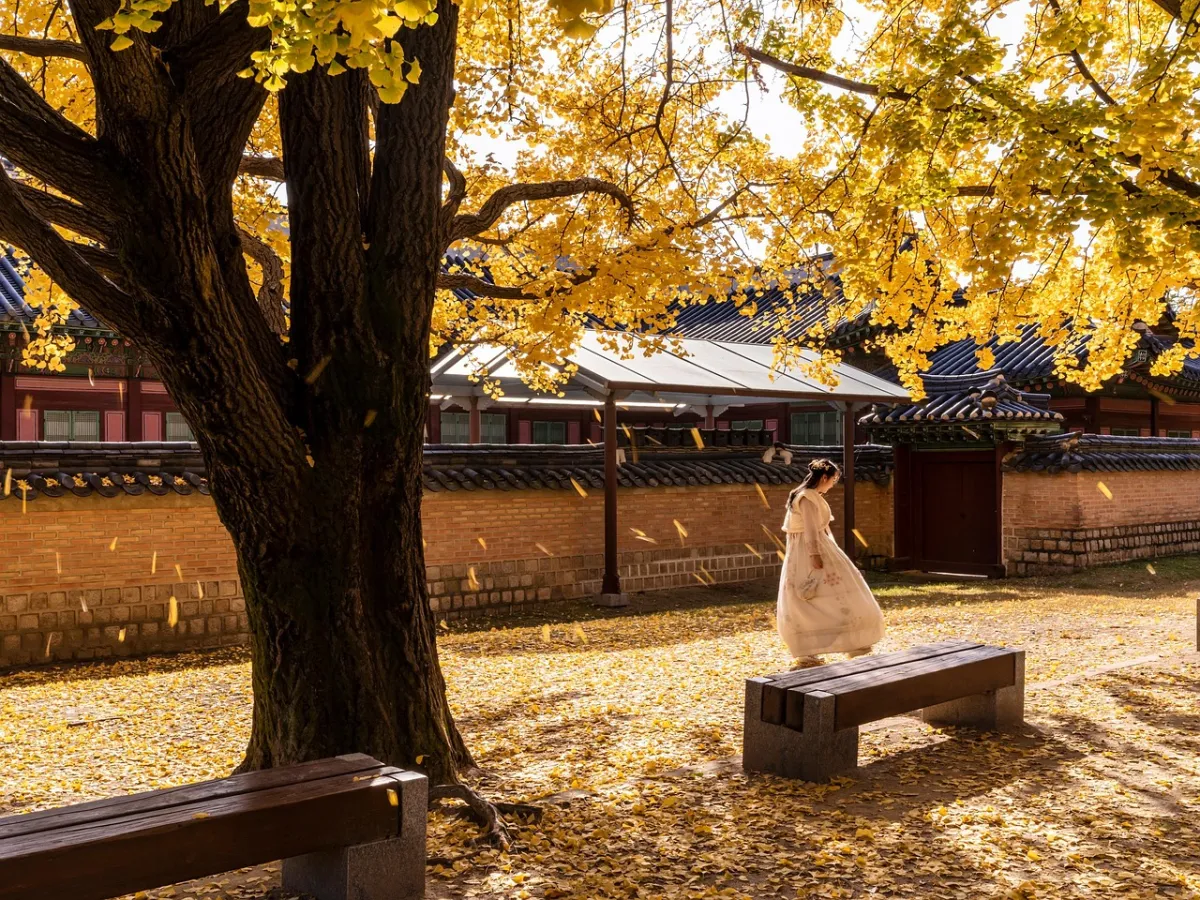
Autumn is when the palaces are at their most beautiful. Add the maples of Changdeokgung's Secret Garden or the golden ginkgo trees along Deoksugung's stone-wall path. Around October, the silver grass fields of Haneul Park turn silvery and become a popular sunset walk.
Winter (December–February)
In freezing weather, cut down on walking and use the shopping malls and underground arcades connected below ground. At the end of the year, Myeongdong and Gwanghwamun are decked out in dazzling lights. On a bitterly cold day, a jjimjilbang — a Korean sauna — is a special experience: lie on the heated floor, sip sweet rice punch (sikhye) and snack on baked eggs.
How much will it cost?
Prices in Seoul are similar to or slightly higher than in other big Asian cities. Below is a rough daily budget per person; actual costs depend on exchange rates and travel style.
| Item | Budget | Mid-range | Comfortable |
|---|---|---|---|
| Accommodation (per night) | Guesthouse ₩30,000–50,000 | Business hotel ₩100,000–150,000 | Luxury hotel ₩250,000+ |
| Food (per day) | ₩20,000–30,000 | ₩40,000–60,000 | ₩100,000+ |
| Transport (per day) | ₩5,000–10,000 | ₩10,000–20,000 | Mostly taxis, ₩30,000+ |
| Admissions & activities | Cheap if focusing on palaces and museums | ₩20,000–40,000 incl. observatories | Including shows and experiences |
Seoul's public transport is excellent, so you can easily get around without taxis. And by eating at markets and casual snack bars, you can have a filling meal for under ₩10,000.
Practical tips for Seoul
- Internet: buy a SIM card or eSIM at the airport so you can use map and translation apps freely. Many cafés and subway stations also offer free Wi-Fi.
- Payment: cards are accepted almost everywhere, but small market stalls sometimes take cash only, so carry a little.
- Restaurant culture: side dishes are usually refilled for free. There's no tipping, and water is often self-service.
- Subway etiquette: leave the pink seats for pregnant women and the priority seats for the elderly empty. Loud phone calls are considered rude.
- Safety: Seoul is relatively safe even at night, but basic caution with belongings is always wise. In an emergency call 112 (police) or 119 (fire and ambulance); tourists can also call 1330, the travel helpline.
Korean phrases you'll actually use
You can travel perfectly well without Korean, but a few words go a long way toward closing the distance with locals. Here are the phrases foreign visitors find most useful.
| Situation | Korean | Pronunciation |
|---|---|---|
| Hello | 안녕하세요 | annyeonghaseyo |
| Thank you | 감사합니다 | gamsahamnida |
| Ordering | 이거 주세요 (This one, please) | igeo juseyo |
| Asking the price | 얼마예요? (How much is it?) | eolmayeyo |
| Paying | 계산해 주세요 (The bill, please) | gyesanhae juseyo |
| Spice level | 안 맵게 해 주세요 (Not spicy, please) | an maepge hae juseyo |
| Asking directions | ○○ 어디예요? (Where is ○○?) | ○○ eodiyeyo |
To call a server in a restaurant, raise your hand and say "jeogiyo!" ("excuse me!"). It may feel a little loud at first, but in Korea it's completely normal. Many restaurants also have a call button on the table — just press it and someone will come.
A small bow when you say hello or thank you is appreciated, especially with older people. And when someone hands you something, receiving it with both hands is a simple gesture that shows respect.
Frequently asked questions
Are four days enough for Seoul?
They're enough to see the main sights. But every neighbourhood in Seoul has its own atmosphere, and most visitors leave saying they want to explore other areas next time. On a first trip, we recommend doing less and walking each neighbourhood at a relaxed pace.
Can I travel without speaking Korean?
Absolutely. The subway and major sights have good English, Chinese and Japanese signage, and translation apps make restaurants easy. Learn just annyeonghaseyo (hello) and gamsahamnida (thank you) and locals will greet you warmly.
Where should I go if it rains?
There are plenty of indoor attractions: the National Museum of Korea, Starfield Library at COEX, large shopping malls and jjimjilbang bathhouses. Have one rainy-day plan in mind so you can swap a day if needed.
Final thought: plan tightly, walk slowly
Seoul is far more charming on foot than it looks on a map. This itinerary is tightly organised to cut travel time, but if you stumble on an alley you love, feel free to put the plan down and stay longer. The little restaurant in a street where you got lost, or the café you wandered into by chance, may become the scene you remember longest.
From the curved eaves of the palaces to the breeze off the Han River and the smell of mung bean pancakes in the market — spend four days walking through Seoul's past and present.