The Complete Bibimbap Guide: From Seasoned Vegetables to Crispy Stone-Pot Rice
Rice topped with vegetables in five colours, gochujang and an egg, all mixed together — that's bibimbap. We explain its meaning and regional styles, how to make the basic namul, the perfect sauce ratio and stone-pot bibimbap.

Contents
- The meaning of bibimbap: five colours and harmony
- Where did bibimbap come from?
- Regional styles of bibimbap
- Ingredients: basic bibimbap for two
- Making the basic namul
- How to arrange and mix
- Stone-pot bibimbap and its crispy crust
- Vegetarian and vegan bibimbap
- Making bibimbap abroad
- Tips for even better bibimbap
- A week of bibimbap from one batch of namul
- Seafood bibimbap from seaside towns
- Ordering bibimbap in a Korean restaurant
- A bibimbap party for guests
- Dishes to make from leftover bibimbap ingredients
- The world of "bibim": bibimbap's relatives
- Mix with a spoon or with chopsticks?
- Caring for a stone pot
- Nurungji and sungnyung: the joy of the last spoonful
- Bibimbap festival in Jeonju
- The nutritional balance of a bowl of bibimbap
- Bibimbap in the sky
- Frequently asked questions
- Final thought: harmony in a bowl
Bibimbap is one of the dishes people abroad most often try first when they discover Korean food. A bowl ringed with colourful vegetables like flower petals looks healthy at a glance, and because you control the spice, anyone can enjoy it. It's also famous as an in-flight meal; plenty of people first tasted bibimbap on a plane.
Bibimbap means exactly what it says: "mixed rice". Rice is topped with various seasoned vegetables, meat and an egg, then mixed with gochujang. It looks simple, but it carries the Korean culinary philosophy of balancing colour, flavour and nutrition. In this guide we look at bibimbap's meaning and regional styles, then walk through basic vegetable recipes you can make at home, a delicious bibimbap sauce ratio and how to get crispy rice in a stone pot.
The meaning of bibimbap: five colours and harmony
Look down on a well-prepared bowl of bibimbap and you'll see ingredients of different colours arranged in a circle. This is often explained in relation to the traditional Korean concept of obangsaek, the five cardinal colours — white, black, red, blue-green and yellow — each symbolising a direction and an element of nature.
| Colour | Typical ingredients |
|---|---|
| White | Bellflower root, radish, bean sprouts, rice |
| Black | Fernbrake (bracken), shiitake mushrooms, seaweed |
| Red | Gochujang, carrot, beef tartare |
| Green | Spinach, Korean zucchini, cucumber |
| Yellow | Egg yolk, yellow mung bean jelly |
Including ingredients of every colour naturally gives you a wide range of nutrients. And mixing them together is sometimes interpreted as a symbol of harmony — different things coming together to create a single flavour. That's why bibimbap is often presented as a dish symbolising unity in Korean society.
Where did bibimbap come from?
There are several stories about bibimbap's origins. One says it began with the custom of mixing the vegetables and dishes from an ancestral memorial table into rice after the rites. Another says leftover food was mixed into rice on the last night of the year so it wouldn't be carried into the new year. Yet another says farmers combined various side dishes in one bowl to eat easily in the fields during the busy farming season.
Whichever is true, bibimbap clearly grew out of the everyday wisdom of turning whatever ingredients you have into one hearty meal. Even today, Korean households often gather leftover side dishes from the fridge, put them on rice and mix it all with gochujang and sesame oil. The elegant restaurant bibimbap and the quick bowl mixed at home share the same roots.
Regional styles of bibimbap
Jeonju bibimbap
The most famous bibimbap comes from Jeonju in North Jeolla Province. Rice cooked in beef bone broth is topped with bean sprouts, yellow mung bean jelly, beef tartare and many other garnishes, and served neatly in a brass bowl. Jeonju is renowned as a food city, and many travellers visit specifically to eat bibimbap there.
Jinju bibimbap
Bibimbap from Jinju in South Gyeongsang is known for being topped with beef tartare and served with blood sausage soup. Its vivid colours have earned it the nickname "flower rice" (hwaban).
Sanchae bibimbap
Bibimbap packed with wild mountain vegetables (sanchae), popular in mountain areas such as Gangwon, Jirisan and Seoraksan and at restaurants near temples. To savour the vegetables' natural fragrance, it's sometimes mixed with soy-based sauce instead of gochujang.
Dolsot bibimbap
Bibimbap served sizzling in a heated stone pot. The nutty, crispy rice crust that forms on the bottom is a treat, making it especially popular with foreigners.
Other kinds
There are many bibimbaps that use local specialities: raw fish (hoedeopbap), young radish kimchi (yeolmu bibimbap), Jeju sea urchin and Tongyeong's sea squirt bibimbap, to name a few.
Ingredients: basic bibimbap for two
- 2 bowls of warm cooked rice
- ½ bunch spinach, 150 g soybean sprouts, 100 g cooked fernbrake, 150 g Korean radish, ½ Korean zucchini, ½ carrot
- 100 g minced or thinly sliced beef (optional)
- 2 eggs
- Sesame oil, salt, minced garlic, soup soy sauce, sesame seeds
Bibimbap gochujang sauce
- 3 tablespoons gochujang
- 1 tablespoon sugar or honey
- 1 tablespoon sesame oil
- ½ teaspoon minced garlic
- 1 tablespoon water or lemon-lime soda (to adjust consistency)
- A pinch of sesame seeds
Making the basic namul
Seasoned vegetables, or namul, are the heart of bibimbap. Korean namul are broadly divided into blanched and seasoned (sukchae), raw and seasoned (saengchae) and stir-fried. Season each one lightly so the bowl doesn't become too salty once everything is mixed.
Spinach namul
Blanch the spinach in boiling salted water for about 30 seconds, rinse in cold water and squeeze out the water firmly. Cooking it too long makes it mushy. Cut into bite-sized lengths and toss gently with a little salt, minced garlic, sesame oil and sesame seeds.
Bean sprout namul
Put the sprouts in a pot with half a cup of water and a pinch of salt, cover and cook for about five minutes. Opening the lid halfway can bring out a raw, beany smell, so either keep it covered the whole time or cook with the lid off from the start. Don't rinse the cooked sprouts; spread them out to cool, then toss with salt, sesame oil and sesame seeds.
Stir-fried fernbrake
Pre-cooked fernbrake, sold in packs, makes this easy. Squeeze out the water, cut into lengths, season with soup soy sauce and minced garlic, then stir-fry in perilla or sesame oil. Adding a little water and covering the pan softens fernbrake's chewy texture.
Radish namul
Julienne the radish finely and stir-fry in an oiled pan, then add a little water and cook until translucent. Season with salt and finish with sesame seeds. The radish's gentle sweetness adds a refreshing note to the bowl.
Zucchini and carrot
Julienne the zucchini and carrot, sprinkle each lightly with salt and stir-fry quickly in oil. Don't cook them too long, so their colours stay bright.
Stir-fried beef
Marinate minced or sliced beef with 1 tablespoon of soy sauce, ½ teaspoon of sugar, minced garlic and sesame oil, then stir-fry. For a meatless version, stir-fry shiitake mushrooms in the same seasoning instead.
How to arrange and mix
Put warm rice in a bowl and arrange the vegetables on top in a circle, grouped by colour. Placing contrasting colours next to each other makes it look much more appetising. Put the beef in the centre and top with a fried egg. A runny yolk mixes into the rice as you stir, adding richness.
Just before eating, add as much sauce as you like, drizzle with sesame oil and mix thoroughly with a spoon. Loosening the vegetables gently with chopsticks first, then mixing with a spoon, keeps the rice from being crushed so it stays fluffy. If you don't handle spice well, use a soy-based or doenjang-based sauce instead of gochujang.
Stone-pot bibimbap and its crispy crust
You can enjoy the crispy rice of dolsot bibimbap at home too. Use a stone pot, a heavy cast-iron pot or an earthenware ttukbaegi.
- Coat the inside of the pot generously with sesame oil.
- Add the rice and arrange the vegetables and meat on top.
- Heat over low heat for five to eight minutes. A crackling sound from the bottom means the crust is forming.
- Turn off the heat, add an egg yolk or fried egg and mix in the gochujang.
- Scrape up the crust from the bottom with a spoon at the end.
A hot stone pot can cause burns, so always set it on a trivet and keep hands away from the bowl. The same goes when eating dolsot bibimbap at a restaurant.
Vegetarian and vegan bibimbap
Leave out the meat and bibimbap becomes a vegetarian dish with ease. Pan-fried tofu or shiitake stir-fried in soy sauce keeps it satisfying. For a vegan version without egg, add avocado or grilled tofu for richness. Sanchae bibimbap, which comes from temple cuisine, was originally a clean-tasting bibimbap made without meat or the five pungent vegetables such as garlic and green onion.
Most gochujang is suitable for vegetarians, but ingredients vary by product, so vegans should check the label.
Making bibimbap abroad
- Gochujang: available at most Asian grocers, large supermarkets and online.
- Fernbrake and bellflower root: if hard to find, leave them out and use stir-fried mushrooms or aubergine instead.
- Korean radish: use daikon or ordinary white radish.
- Korean zucchini: use courgette/zucchini.
- Sesame oil: it defines bibimbap's aroma, so try hard to get some — ideally toasted sesame oil with a deep fragrance.
Tips for even better bibimbap
- Keep the rice fluffy: soft, wet rice clumps like rice cake when mixed. Use slightly less water than usual.
- Cool the vegetables first: piling on hot vegetables tends to release water.
- Serve with soup: bibimbap goes well with a clear soup such as bean sprout soup, doenjang soup or seaweed soup.
- Seaweed flakes and sesame: a sprinkle at the end makes the bowl even nuttier.
A week of bibimbap from one batch of namul
Make a generous batch of namul and store it in airtight containers, and you can enjoy bibimbap in different ways for two or three days. Day one, classic gochujang bibimbap; day two, mix in a spoonful of doenjang stew; day three, add chopped kimchi. Refrigerated namul is best eaten within two to three days.
Seafood bibimbap from seaside towns
Bibimbap is also a bowl for local ingredients. Coastal areas developed bibimbap topped with seafood from their own waters, so if you travel to the seaside, be sure to try the local version.
| Bibimbap | Characteristics | Where to try it |
|---|---|---|
| Meongge bibimbap (sea squirt) | Finely chopped sea squirt with an intense taste of the sea, mixed with rice, seaweed flakes and sesame oil. | Tongyeong, Geoje and the southern coast |
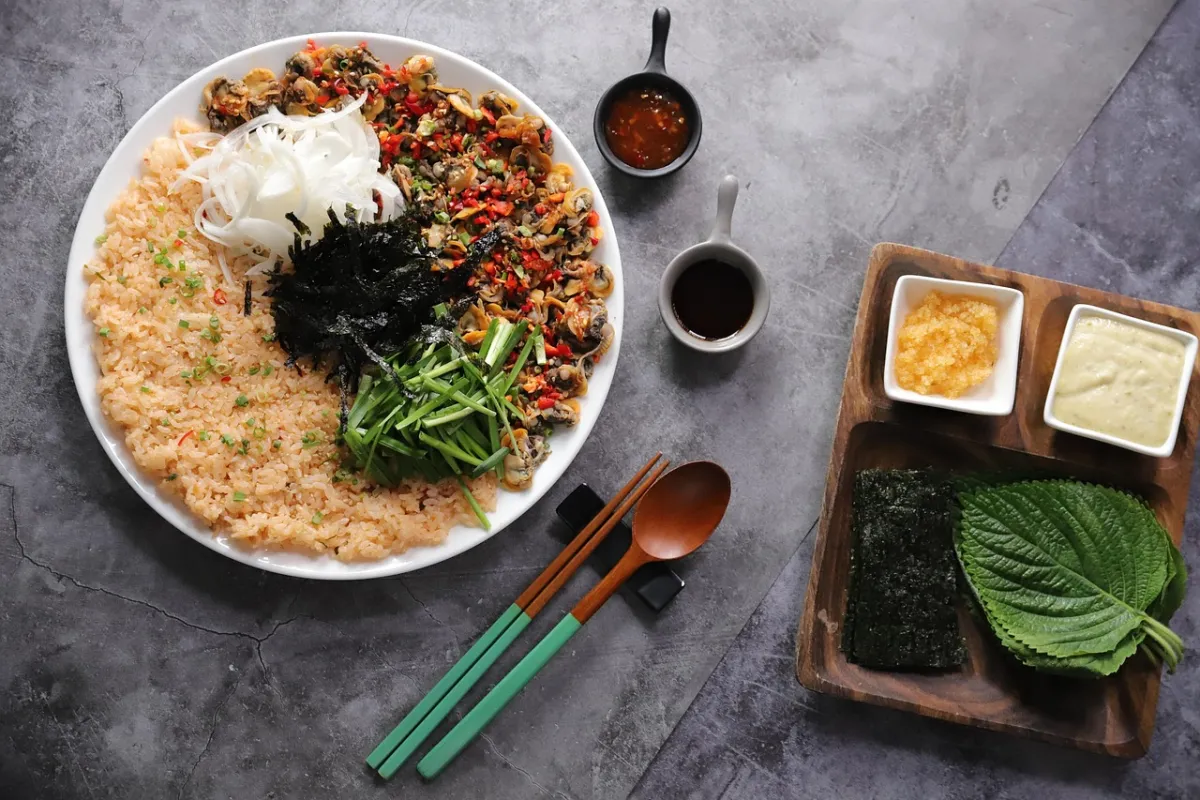
| Kkomak bibimbap (cockle) | Boiled cockles tossed in a sweet-spicy sauce, piled generously on rice. | Beolgyo in South Jeolla, Gangneung in Gangwon-do and elsewhere |
| Hoedeopbap (raw fish rice bowl) | Fresh raw fish and vegetables on rice, mixed with chogochujang (vinegared gochujang). | Raw-fish restaurants and seaside eateries nationwide |
| Yeolmu bibimbap (young radish kimchi) | Mixed with refreshing summer young-radish kimchi. Not seafood, but a beloved summer treat. | Korean restaurants nationwide, especially in summer |
Seafood bibimbaps often use chogochujang or a soy-based sauce instead of plain gochujang, giving a tangier flavour that's quite different from regular bibimbap.
Ordering bibimbap in a Korean restaurant
Bibimbap is easy to adjust for spice and ingredients. Learn these phrases to order it the way you like.
| Korean | Meaning |
|---|---|
| 고추장은 따로 주세요. (gochujang-eun ttaro juseyo) | Gochujang on the side, please — so you can control the heat yourself. |
| 덜 맵게 해 주세요. (deol maepge hae juseyo) | Please make it less spicy. |
| 고기 빼 주세요. (gogi ppae juseyo) | No meat, please — useful for vegetarians. |
| 달걀 빼 주세요. (dalgyal ppae juseyo) | No egg, please. |
| 돌솥으로 주세요. (dolsoteuro juseyo) | In a stone pot, please. |
If you're vegetarian, also ask whether stock or jeotgal (salted seafood) is used, not just meat. Asking "고기나 생선 들어가요?" ("Does it contain meat or fish?") gets a helpful answer at most restaurants.
A bibimbap party for guests
Bibimbap is a great dish to share with a crowd. Put each namul and topping in its own bowl in the middle of the table and let guests choose their favourites and mix their own — the fun atmosphere takes care of itself.
- Prepare the ingredients: four or five basic namul, stir-fried beef or tofu, and fried eggs.
- Offer several sauces: a gochujang sauce, a soy sauce dressing and a milder doenjang sauce, so guests who can't handle heat can join in.
- Add extra toppings: avocado, salmon, kimchi or flying-fish roe bring personality and liven up the party.
- Mix together in one big bowl: finally, put everything into a large mixing bowl and mix it together to share. In Korea, mixing and eating from one bowl together is also a way of sharing jeong — warmth and affection.
Dishes to make from leftover bibimbap ingredients
- Bibimbap gimbap: roll leftover namul and beef with rice in seaweed for a different kind of gimbap.
- Bibimbap rice balls: shape mixed rice into balls and roll them in seaweed flakes for lunch boxes or snacks.
- Namul jeon: chop leftover namul, mix into a pancake batter and pan-fry into savoury pancakes.
The world of "bibim": bibimbap's relatives
"Bibim" means mixing various ingredients evenly with a seasoning, and the idea extends well beyond rice to many Korean dishes.
- Bibim-guksu: thin wheat noodles tossed in a sweet-spicy gochujang sauce and topped with cucumber, kimchi and a boiled egg — a summer favourite for reviving the appetite.
- Bibim-naengmyeon: chewy naengmyeon noodles mixed with a spicy sauce; together with mul-naengmyeon in icy broth, it's one of the two great styles of naengmyeon.
- Jjolmyeon: a bunsik dish of thick, chewy noodles mixed with vegetables and a tangy, sweet-spicy sauce.
- Hoedeopbap: fresh raw fish and vegetables over rice, mixed with chogochujang — a popular seaside dish.
The culture of "mixing into one" runs deep in Korean food. Seeing different ingredients brought into harmony by a seasoning reminds you why bibimbap is called "the dish of harmony".
Mix with a spoon or with chopsticks?
There's a small knack to mixing bibimbap. Pressing down hard with a spoon can crush the rice and make it mushy, so some people prefer lifting and tossing with chopsticks to keep the grains intact. Scatter the ingredients evenly with chopsticks first, then finish by gently mixing with a spoon: the rice stays fluffy while the seasoning spreads evenly. Rather than adding all the gochujang at once, add half, taste and add more as needed.
Caring for a stone pot
If you've bought a stone pot (dolsot) to enjoy dolsot bibimbap at home, learn how to look after it. Before first use, wash it well, rub the inside with cooking oil and heat it slowly over a low flame a few times — it'll last for years. Stone pots don't like sudden temperature changes, so never pour cold water into a hot pot or put a cold pot straight onto high heat, or it may crack. After use, soak it in warm water, clean with a soft scrubber and dry it completely before storing. Heavy detergent can leave odours in the stone, so use only a little.
Nurungji and sungnyung: the joy of the last spoonful
The crisp rice stuck to the bottom of a dolsot — nurungji — is the part many people wait for most. Traditionally, Koreans poured water into the pot after cooking rice and boiled the scorched layer into sungnyung, a drink enjoyed at the end of a meal. Its toasty flavour was thought to refresh the palate and aid digestion. Some Korean restaurants still serve sungnyung or nurungji after a meal, and supermarkets sell instant nurungji that's easy to cook at home.
Bibimbap festival in Jeonju
Jeonju, famous as the home of bibimbap, holds a bibimbap-themed festival every year. Events include crowds mixing bibimbap together in a giant bowl, markets for tasting regional bibimbap and cooking classes. Timing a visit to Jeonju Hanok Village with the festival makes for an especially memorable bibimbap experience. Dates vary each year, so check official information before you go.
The nutritional balance of a bowl of bibimbap
Bibimbap is praised not only for its taste but also as a nutritionally balanced meal. Rice provides carbohydrates; the various namul provide fibre, vitamins and minerals; and adding egg or meat completes it with protein. Sesame oil adds nutty flavour and helps the body absorb fat-soluble vitamins. Adding a lot of gochujang increases sodium and sugar, though, so start with a little and add more as you taste. Using less rice and plenty of namul, or swapping white rice for multigrain rice, makes for a lighter, healthier bowl.
Bibimbap in the sky
Bibimbap is also famous as an in-flight meal on international routes. After Korean airlines introduced it on board, it became hugely popular with foreign passengers and played a part in introducing Korean food to the world. On board, the rice, namul, a tube of gochujang and sesame oil usually come separately so passengers can mix it themselves. For travellers trying Korean food for the first time, bibimbap on the plane can become their first impression of a trip to Korea. Once you arrive and taste bibimbap made with freshly cooked rice in a restaurant, comparing the two is part of the fun.
Frequently asked questions
Do I have to mix bibimbap?
Mixing is the point, as the name says. But tasting each vegetable on its own before mixing is a nice way to appreciate the ingredients.
Is bibimbap healthy?
It lets you eat many vegetables at once, so it's considered a balanced meal. The sodium and calories depend on how much gochujang and sesame oil you use, so adjust to taste.
What side dishes go with bibimbap?
Bibimbap already contains several vegetables, so a single side of kimchi is enough. A clear soup makes it a more filling meal.
Final thought: harmony in a bowl
Choosing ingredients, seasoning each vegetable and arranging the colours make bibimbap a joy to prepare. And at the end, when you mix everything together, ingredients with their own personalities come together into one flavour.
This weekend, make your own bibimbap with the vegetables in your fridge. More important than any fixed recipe is the pleasure of choosing what you love and mixing to your heart's content.