The K-Pop Fandom Glossary: Bias, Comeback, Fan Chants and Every Term a Fan Should Know
Ever been stumped when someone asked "Who's your bias?" From ipdeok and comebacks to light sticks and photocards, we explain the words K-pop fandoms use every day — and the etiquette of a healthy fan culture.

Contents
- What is a fandom?
- The basics: words for loving someone
- Words for groups and members
- Words about the activity cycle
- Video and content terms
- Merchandise and album terms
- Concert and cheering terms
- Words for fan activities
- Social media and community terms
- English-style terms used by international fans
- Etiquette for a healthy fan culture
- Frequently asked questions
- Final thought: the feeling inside each word
When you start loving K-pop, the first thing you run into isn't the music — it's the language. Join a fan community and you're hit with sentences like "My choeae is the maknae", "The comeback teaser just dropped" and "Trading pocas!" At first it sounds like an alien tongue. Even people who know Korean are often thrown by fandom vocabulary.
Fandom terms aren't just passing slang; they're a compressed language built up over decades of K-pop culture. Knowing them makes fan conversations understandable and idols' variety shows and live streams far more fun. In this guide we sort the essential terms by theme and introduce the English-style expressions used by international fans, along with the etiquette of a healthy fan culture.
What is a fandom?
The Korean word paendeom comes from the English "fandom", meaning the community of fans who love a particular artist. What sets K-pop fandoms apart is that they go beyond listening to music to actively shaping the artist's career: album sales, streaming, voting, promotion, even charitable donations. That's why fandoms are sometimes described as "a community that grows together with the artist".
Most K-pop groups have an official fandom name. The moment a group announces its fandom name after debut is a special event for fans, and idols call out the name on stage when they thank their supporters. Many fandoms also have a symbolic colour or an official light stick.
The basics: words for loving someone
| Term | Meaning | Example |
|---|---|---|
| Choeae (최애) | Your favourite member (literally "most loved") | "Who's your choeae?" |
| Chaae (차애) | Your second favourite | "Choeae is the leader, chaae is the maknae." |
| Olpaen (올팬) | A fan of the whole group rather than one member ("all-fan") | "I'm an olpaen." |
| Ipdeok (입덕) | Becoming a fan ("entering the deok world") | "I fell in after watching this stage." |
| Taldeok (탈덕) | Quitting being a fan | "There's no taldeok!" |
| Hyudeok (휴덕) | Taking a break from fan activities | "On hyudeok during exams." |
| Deokjil (덕질) | Everything you do as a fan | "Busy with deokjil all weekend." |
| Deokhu / deok (덕후) | Someone deeply into something (from the Japanese "otaku") | "I'm a total K-pop deokhu." |
| Ipdeok video | The video that turned someone into a fan | "Recommend me an ipdeok video." |
Among international fans, your choeae is your "bias" and your chaae a "bias wrecker" — the member who threatens to steal you from your bias. "Ult" can mean your ultimate bias. Mixing Korean and English is part of what makes the global K-pop fandom distinctive.
Words for groups and members
Position terms
- Leader: represents the group and guides the members
- Main / lead / sub vocalist: distinguished by the weight and role of their singing parts
- Main / lead dancer: members who lead the performance
- Rapper: handles the rap parts
- Visual: the member regarded as the group's "face"
- Centre: the member who stands in the middle on stage and in photos
- Maknae: the youngest member. A "golden maknae" is an affectionate name for a youngest who's good at everything.
Group terms
- Unit: a sub-group of members who promote separately
- Solo debut: releasing an album alone, separate from group activities
- Wanjeonche (완전체): all members active together. When every member reunites after military service or solo work, it's a "wanjeonche comeback".
- Sunbae / hoobae: the relationship between artists who debuted earlier and later. At the same agency, they're "company sunbae and hoobae".
Words about the activity cycle
K-pop groups work in a repeating cycle. Understand it and you'll see the "seasons" of fandom life.
| Term | Meaning |
|---|---|
| Comeback | Releasing a new album or single and starting promotions — called a "comeback" even if the group never went away |
| Teaser | Preview photos or videos released before a comeback |
| Spoiler (spo) | Hinting at comeback details early; idols' accidental "spoilers" are a fan favourite |
| Showcase | An event unveiling a new album for the first time |
| Eumbang (음방) | Short for "music broadcast": weekly TV music shows on fixed days |
| First place / trophy | Winning that week's number one on a music show; a first win after debut is especially emotional |
| Hwaldonggi / gongbaekgi | Promotion period versus the gap while preparing the next comeback |
| Makbang (막방) | The last music-show performance of an album's promotions |
Music-show winners are often decided by combining digital chart results, album sales, broadcast points and fan votes, which is why fans throw themselves into streaming and voting during comeback periods.
Video and content terms
- Jikcam (직캠, fancam): a stage video that follows a single member. Broadcasters now release official fancams too.
- Dance practice video: choreography filmed in the practice room, great for checking how sharp the synchronisation is.
- Jakeon (자컨): short for "self-made content" — variety shows, vlogs and so on produced by the agency or group.
- Behind: behind-the-scenes or making-of footage.
- Live broadcast (rabang): idols chatting with fans in real time on fan platforms or social media.
- Challenge: short-form videos copying a song's point choreography. Idols filming challenges together has become part of comeback promotion.
- Mubi (뮤비): short for music video; view counts in the first 24 hours often make headlines.
Merchandise and album terms
| Term | Meaning |
|---|---|
| Goods (굿즈) | Official artist merchandise: light sticks, posters, clothing and more |
| Poka (포카) | Short for "photocard": member photo cards inserted at random in albums |
| Bias poka / random | Getting the member you want is down to luck, so fans trade with each other |
| Migongpo (미공포) | "Unreleased photocards" given only by particular retailers |
| Toploader | A rigid clear sleeve that protects photocards |
| Albumkkang (앨범깡) | Opening albums to see what's inside, often shared as videos |
| Version | The same album released in several versions with different designs and contents |
Photocards are at the heart of K-pop merchandise culture. Because you never know which member's card is inside an album, a culture of buying multiple copies or trading with other fans has grown up around getting your bias's card. Overbuying can become a burden, though, so it's important to enjoy it within your budget.
Concert and cheering terms
Light sticks
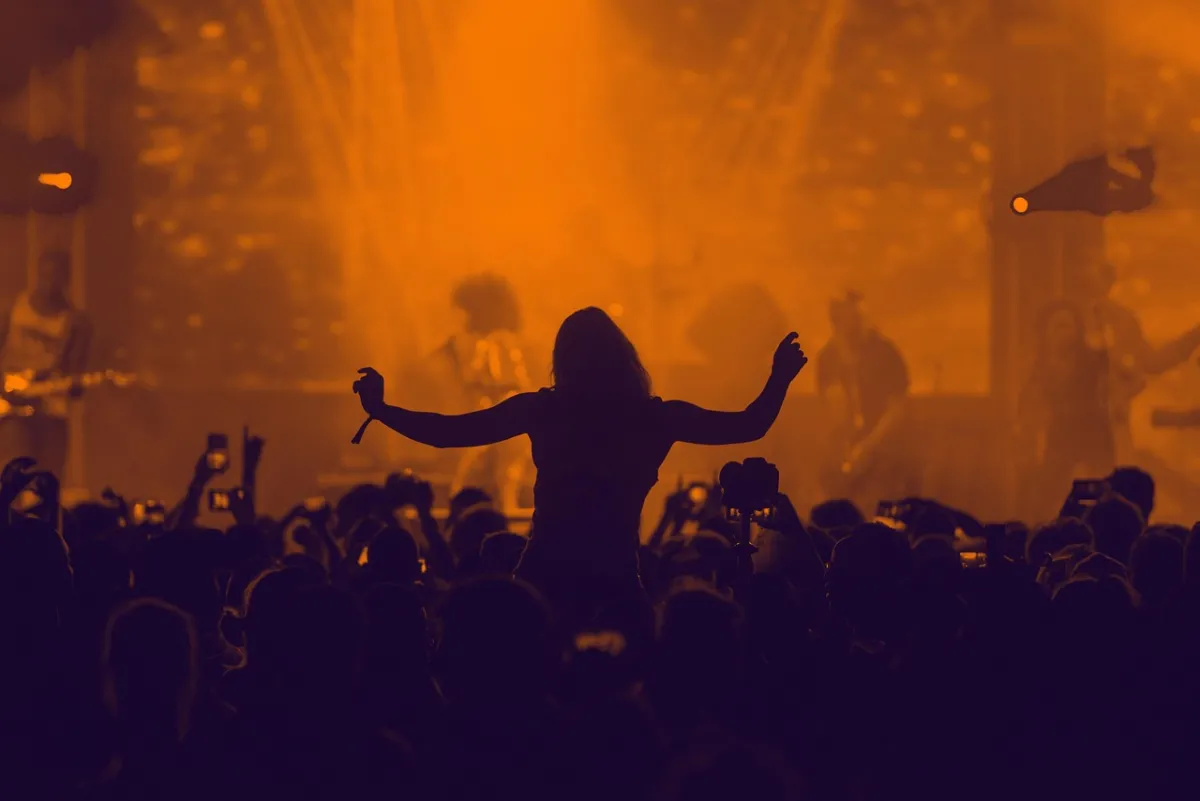
The light stick is a fandom's emblem. Each group has an official light stick with a unique design, and the latest models connect by Bluetooth to the venue's lighting system, changing colour in time with the songs. The moment an entire arena glows in one colour is one of the most beautiful sights at a K-pop concert.
Fan chants (eungwonbeop) and singalongs
Fan chants are lines that fans shout together during a song, usually calling out the members' names in order or singing along with particular lyrics. Agencies often release official fan chant videos, so practising beforehand makes taking part much more fun. Ttechang — the audience singing the whole song together — is famous as the Korean concert culture that moves foreign artists most.
Concert terms
- Ticketing: booking concert tickets. Popular shows sell out in minutes, giving rise to pikketing ("bloody ticketing").
- Setlist: the list of songs performed at a concert.
- Paenssa (팬싸): short for "fan signing", an event where you can chat with idols up close and get an autograph.
- Yeongtong paenssa: a "video-call fan signing", a short video chat with an idol that became established after the pandemic.
- Hi-touch: an event where fans high-five idols as they pass.
Words for fan activities
- Seuming (스밍): short for "streaming" — repeatedly playing songs on music sites to boost chart results.
- Chonggong (총공): short for "all-out attack" — fans streaming, voting or running hashtag campaigns together at a set time.
- Support (seopot): fans sending idols lunchboxes or coffee trucks as encouragement.
- Coffee truck: sending a truck of coffee and snacks to a filming set.
- Birthday café: a café decorated for a member's birthday where fans gather.
- Subway ads: fans pooling money for congratulatory ads on subway station billboards for birthdays or debut anniversaries.
- Donations: fandoms donating to charities in an idol's name; birthday donations have grown hugely in recent years.
Birthday cafés and subway ads have even become attractions that foreign fans seek out when visiting Korea. Seeing an idol's birthday ad in a Seoul subway station is now an everyday sight.
Social media and community terms
| Term | Meaning |
|---|---|
| Tteokbap (떡밥) | Something for fans to talk about; when new photos or videos drop, it's "a bumper harvest of tteokbap" |
| Jjal (짤) | Idol photos or short animated images (umjjal) |
| Homma (홈마) | Short for "homepage master": fans who photograph idols with professional cameras and share the pictures |
| Bonjin (본진) | Your main group |
| Japdeok (잡덕) | A fan of several groups at once |
| Seongdeok (성덕) | "Successful deokhu": a fan who got to meet or work with their idol |
| Sasaeng (사생) | Someone who invades idols' private lives by following them — strongly condemned within fandoms |
English-style terms used by international fans
Global fandoms use Korean words as they are or translate them into distinctive English expressions.
- Bias / bias wrecker: choeae and chaae
- Stan: a devoted fan, or the verb "to support passionately"
- Comeback: used just as in Korean
- Fancam: jikcam
- Visual / maknae / sunbae / hoobae: often used in Korean as is
- Aegyo: acting cute
- Daebak: an exclamation meaning "amazing" or "awesome"
In this way K-pop has become a channel spreading Korean words naturally to fans around the world. Many international fans even start learning Korean because of fandom vocabulary.
Etiquette for a healthy fan culture
As important as learning the terms is behaving well as a fan.
- Respect privacy: following idols to airports, dorms or private appointments threatens their safety and damages the whole fandom's image. Support them only at official events.
- Respect other fandoms: cheering for your group is different from tearing others down. Fan wars hurt idols too.
- No illegal recording: secretly filming at a concert where recording is banned breaks the venue's rules.
- Avoid overspending: enjoy albums and merchandise within your means. The most important thing about fandom is enjoying it for a long time.
- Cheer, don't hate: idols are people too. A single warm comment can mean a great deal to them.
Frequently asked questions
How are fandom names chosen?
Usually the agency announces one after debut, often with a meaning linked to the group's name or concept. Sometimes fans submit suggestions.
Can I enjoy a concert without knowing the fan chants?
Of course. But learning even a few beforehand makes you feel the arena's unity far more strongly. Official fan chant videos are mostly on YouTube.
Is it OK to love several groups at once?
Absolutely. Plenty of fans are japdeok. There's no right way to enjoy K-pop.
Final thought: the feeling inside each word
Choeae, ipdeok, light sticks, ttechang. The moment these once-strange words start rolling naturally off your tongue, you've already become part of a K-pop fandom. Each one carries fans' love for their artists and their wish to complete the stage together.
Today, find a fan chant video for your favourite group and shout along. One day, when you chant the same lines with tens of thousands of people in an arena, you'll feel just how special these words are.