Korean Nail Care and Nail Art Explained: Healthy Nail Basics, Gel Nails at Korean Nail Salons, Semi-Cured Gel Strips, Popular Designs, Safe Removal, Hand Care, Salon Etiquette and Common Mistakes
In Korea, nails are treated as a small but important part of everyday beauty. From neighbourhood nail salons and seasonal gel designs to semi-cured gel strips you can apply at home, this guide explains how Korean nail culture works, how to keep natural nails healthy, how to choose and remove gel safely, what to expect at a salon and which mistakes to avoid.

Contents
- Why nails matter in Korean beauty culture
- Healthy natural nails: the foundation
- Regular polish, gel and semi-cured gel strips
- What gel nails actually are
- Popular Korean nail designs
- Seasonal nail trends
- Visiting a nail salon in Korea
- Doing your nails at home, the Korean way
- Removing gel and strips safely
- Hand care: the frame for your nails
- Reading nail product labels
- Common nail-care mistakes
- Nail care for men
- A simple weekly nail routine
- Budget and value: salon nails vs home nails
- Nail art as a hobby and self-expression
- Frequently asked questions
- Final thought: small details, big confidence
Walk through any busy neighbourhood in Seoul and you will notice how many nail salons there are. Some occupy a small room above a café; others are bright studios with long tables, rows of colour samples and photo walls showing the season's designs. In Korean beauty culture, nails are not an afterthought. A tidy, softly coloured manicure is part of looking put together, much like a good base makeup or well-kept hair.
Korean nail style tends to favour clean shapes, sheer colours and delicate details over very long or heavily decorated nails, although bold art is popular too. At the same time, the market for home nail products has grown enormously, with semi-cured gel strips and simple tools making salon-like nails possible on a kitchen table. This guide covers both sides: how to care for natural nails, how Korean gel manicures work, how to use home products well, and how to remove everything without damaging your nails.
A quick note before we begin: this article is about cosmetic care. Persistent changes in nail colour, thickness, pain, swelling or signs of infection are medical issues, and you should consult a dermatologist or doctor rather than covering them with polish.
Why nails matter in Korean beauty culture
There are several reasons nail care became such a visible part of Korean beauty. First, hands are always on display: when you hand over a card, hold a phone, pass a cup or type at work. Clean, groomed nails are seen as a sign of care in the same way as a neat hairstyle. Second, Korean beauty in general places a strong emphasis on looking healthy and fresh rather than heavily styled, and nail trends follow the same idea, with glossy, translucent colours that look like healthy nails, only better.
Third, nails are an easy way to enjoy trends without big commitments. Changing your hair colour is a major decision; changing your nail design every three or four weeks is a small treat. Many people book a gel manicure before a holiday, a wedding, a job interview or simply the change of seasons. Finally, nail art is a form of self-expression. Designs inspired by the weather, cafés, flowers, characters or favourite idols let people carry a small piece of personality on their fingertips.
Healthy natural nails: the foundation
No matter how beautiful a design is, it looks best on healthy nails. The basics are simple and cost almost nothing.
Keep them clean and dry
Wash your hands gently and dry them fully, including around the nails. Constant soaking in water, for example when washing dishes without gloves, can make nails soft and prone to peeling. Wearing rubber gloves for household chores is one of the most effective nail-care habits you can build.
File, don't tear
Use a fine-grit file and move in one direction rather than sawing back and forth. Tearing or biting off a broken nail often causes splits that travel deeper. Glass or crystal files are popular in Korea because they are gentle and easy to clean.
Treat cuticles kindly
The cuticle protects the area where new nail grows. Many salons in Korea gently push back and trim loose skin around the nail, but cutting the living cuticle aggressively can cause redness and irritation. At home, it is safest to soften the skin with a cuticle oil or cream and push it back lightly with a soft wooden stick after a shower.
Moisturise hands and nails together
Hand cream is one of the best-selling items in Korean beauty shops, and for good reason. Rubbing a little cream or oil into the nail and surrounding skin keeps cuticles soft and reduces hangnails. The same moisturising principles explained in our guide to moisturisers and the skin barrier apply to hands: richer textures at night, lighter ones during the day.
Give nails a rest
Many nail technicians recommend a short break between gel sets, especially if nails start to feel thin or bendy. A week or two with only nail oil, or with a nourishing base coat, lets you check the condition of your natural nails.
Regular polish, gel and semi-cured gel strips
Korean nail products fall into three main types. Each has its own advantages, cost and removal method.
| Type | How it sets | Typical wear | Removal | Best for |
|---|---|---|---|---|
| Regular nail polish | Air-dries | A few days to a week | Nail polish remover | Quick colour changes, short events |
| Gel polish | Cured under a UV or LED lamp | About two to four weeks | Filing the top layer and soaking off, ideally at a salon | Long-lasting shine and detailed art |
| Semi-cured gel strips | Partly cured sticker, finished under a small lamp | About one to two weeks | Peeling gently after loosening, or soaking | Home use, travel, trying designs |
| Nail stickers / wraps | Adhesive, no lamp | A few days | Peeling or remover | Kids' designs, fun accents |
The semi-cured gel strip is a very Korean success story. These are thin layers of real gel, already designed and partly hardened, that you stick onto your nails, file to shape and then cure under a small lamp for a short time. They give a gel-like finish without needing to paint layers by hand, and many brands release new designs every season.
What gel nails actually are
Gel polish is a liquid that hardens when exposed to UV or LED light. A typical gel manicure in a Korean salon follows these steps:
- Shaping the nail and gently preparing the surface.
- Cleaning away dust and oil.
- Applying a base gel and curing it.
- Applying one or more layers of colour, each cured separately.
- Adding art: lines, gradients, parts, glitter or charms.
- Sealing everything with a top gel and a final cure.
- Wiping off the sticky residue and applying cuticle oil.
The result is a hard, glossy layer that does not chip easily and stays shiny for weeks. The trade-off is that removal takes more care than regular polish, and frequent gel use without breaks can leave some people's nails feeling thin.
A few safety points
- Avoid getting gel on the skin. Uncured gel touching the skin can cause irritation or, in some people, allergic reactions. Good technicians keep a small gap around the cuticle.
- Use a matching lamp. Home gel kits should be cured with the lamp type the brand recommends.
- Protect your hands from repeated UV exposure if you are concerned. Some people apply sunscreen to their hands before using a lamp or wear fingerless gloves. If you have questions about UV exposure, ask a dermatologist.
- Stop if you notice itching, swelling or rash. Remove the product and seek medical advice rather than reapplying.
Popular Korean nail designs
Korean nail trends change with the seasons, but certain styles return again and again. Here are some designs you will see on salon photo walls.
| Design | What it looks like | Mood |
|---|---|---|
| Syrup nails | Sheer, jelly-like colour that lets the nail show through, like coloured glass | Fresh, natural, very Korean |
| Nude and milky nails | Soft beige, pink or milky white with a glossy top | Clean, office-friendly |
| Magnetic (cat-eye) nails | Shimmering band of light created with magnetic particles | Elegant, glowing |
| Gradient nails | Colour fading from the tip or cuticle | Soft and easy to grow out |
| French and micro-French | A thin line of colour on the tip | Classic, minimalist |
| Mirror and chrome | Metallic, reflective powder finish | Bold, futuristic |
| Parts and charms | Small pearls, stones, ribbons or metal shapes | Festive, decorative |
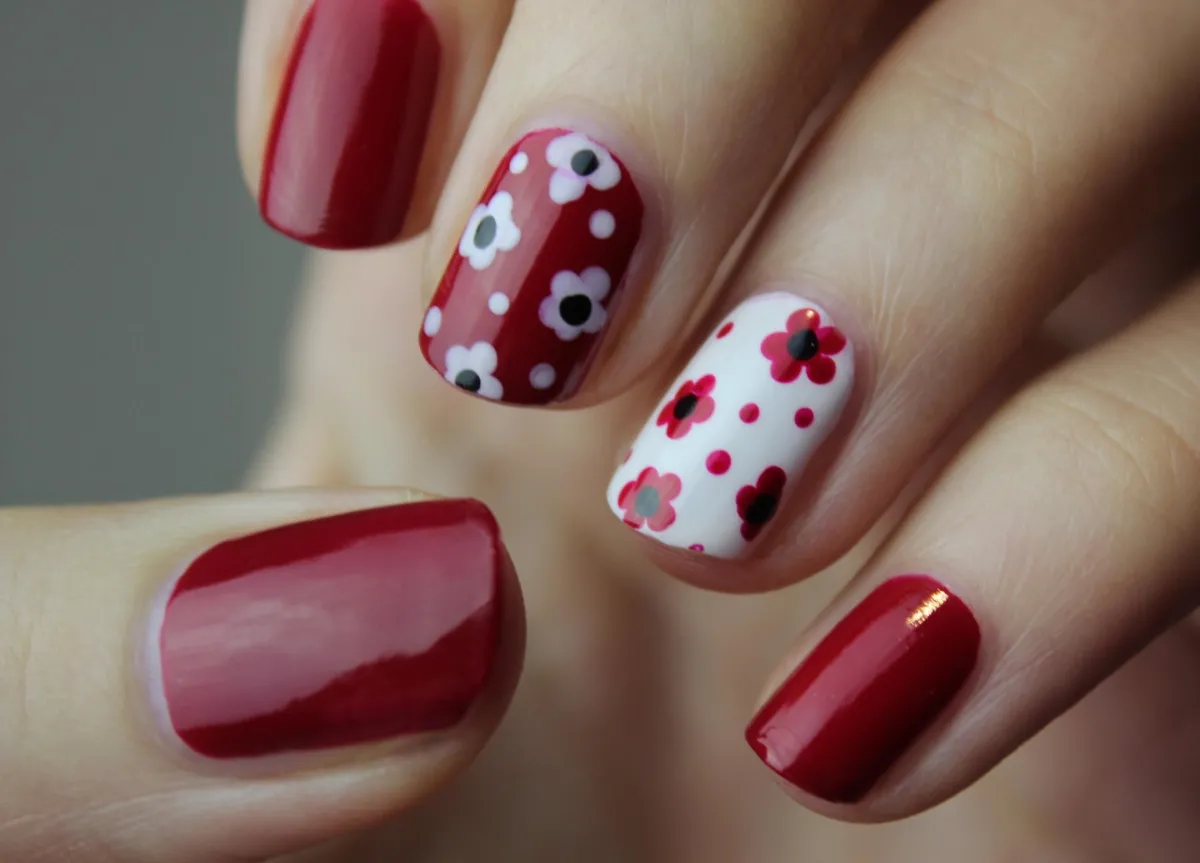
| Hand-painted art | Flowers, checks, characters, seasonal motifs | Playful, personal |
Syrup nails deserve a special mention. They are built with thin, translucent layers of coloured gel, so they look delicate and grow out gracefully, which makes them a favourite for people who want a polished look that does not shout. Magnetic gels became popular because they look luxurious with relatively simple technique.
Short nails are in
Many Koreans prefer short to medium nail lengths with round or soft square shapes. Short nails are practical for typing and daily chores, and gel art on short nails looks neat and modern. Long extensions are available, but they are more of a special-occasion choice.
Seasonal nail trends
Nail salons in Korea often release seasonal sample boards, much like cafés launch seasonal menus. Our seasonal skincare guide explains how the climate changes skin needs, and nails follow the calendar too.
- Spring: cherry blossom pink, pastel syrup colours, small flowers and light gradients.
- Summer: clear jelly nails, ocean blues, citrus colours, shells and bright pedicures for sandals.
- Autumn: burgundy, brown, khaki, mustard, checks and knit-inspired textures.
- Winter: deep reds, silver and gold, magnetic shimmer, snowflakes and festive parts for the end of the year.
Pedicures are especially popular before summer, when sandals come out. Many salons offer gel pedicures that last longer on toenails than on fingernails because toenails grow more slowly.
Visiting a nail salon in Korea
For visitors, getting nails done in Korea can be a fun experience. Many salons have photo menus, and some technicians speak basic English or use translation apps. Here is what to expect.
Booking
Most salons work by reservation, which can usually be made through map apps, messaging channels or social media. Walk-ins are possible at some places, but popular salons are often fully booked, especially on weekends and before holidays. When you book, it helps to mention whether you need removal of an existing gel set, because that takes extra time.
Choosing a design
Salons usually show a sample book or a monthly design board. You can also bring a photo of a design you like. Prices often depend on the complexity of the art, so a simple one-colour gel costs less than a design with hand-painted details or many parts.
Typical services
| Service | What it includes |
|---|---|
| Basic care | Shaping, cuticle tidying, finishing with oil |
| One-colour gel | Basic care plus a single gel colour |
| Art gel / monthly design | Gel with the salon's seasonal design |
| Gel removal | Filing and soaking off an existing set |
| Extensions | Lengthening with tips or sculpted gel |
| Pedicure | Foot care and polish or gel on toenails |
| Repair | Fixing a single broken or lifted nail |
Etiquette tips
- Arrive on time; appointments are often scheduled back to back.
- If you need to cancel, let the salon know as early as possible.
- Tell the technician if anything feels painful or too hot under the lamp.
- Tipping is not customary in Korea.
- Ask before taking photos of the salon interior; photos of your own nails are always fine.
Doing your nails at home, the Korean way
Home nail care has become a hobby in its own right, sometimes called "self-nail". The products are easy to find in health and beauty stores, convenience stores and online shops. If you are shopping in Korea, our guide to Korean beauty stores explains where nail products are usually displayed.
A simple home kit
- A fine nail file and a gentle buffer
- A wooden or silicone cuticle pusher
- Cuticle oil and hand cream
- Base coat and top coat (for regular polish)
- Semi-cured gel strips and a small lamp, if you want gel-like results
- Gentle remover and cotton pads
How to apply semi-cured gel strips
- Wash and dry your hands. Push back cuticles gently and wipe the nail with an alcohol pad so it is free of oil.
- Choose a strip that matches the width of your nail. If it is between sizes, pick the smaller one.
- Peel the strip, place it at the cuticle end, leaving a tiny gap from the skin, and press it down toward the tip.
- Smooth out air bubbles with a cuticle stick, pressing firmly along the sides.
- Fold the excess over the edge and file it off in a downward motion.
- Cure under the lamp for the time the brand recommends.
- Apply cuticle oil once you are finished.
The most common reason strips lift early is oil or moisture left on the nail, so the preparation step matters most.
Removing gel and strips safely
Removal is where most nail damage happens. Peeling off gel by force often takes the top layers of the natural nail with it, leaving white, rough patches. A little patience prevents that.
Gel polish
Professional removal is the safest option. At home, the usual method is to file away the shiny top layer, soak cotton in a remover suitable for gel, place it on each nail, wrap it with foil or clips and wait until the gel softens. Then push the softened gel away gently. If it does not lift easily, soak longer rather than scraping hard.
Semi-cured gel strips
Many strips can be removed by soaking your fingers in warm water or applying a little cuticle oil around the edges, then lifting the strip slowly from the side with a wooden stick. If it resists, use a remover recommended by the brand. Never pull a strip up quickly from the cuticle.
After removal
Wash your hands, apply cuticle oil and a rich hand cream, and give your nails a short rest. A nourishing base coat can help if your nails feel weak.
Hand care: the frame for your nails
A beautiful manicure looks even better on soft, well-cared-for hands. Korean hand care is simple and consistent rather than complicated.
- Hand cream after every wash: many people keep a small tube by the sink, in their bag and on their desk.
- Overnight care: on dry days, apply a thick layer of cream and wear cotton gloves to bed.
- Sun protection: the backs of the hands are exposed to the sun all day, so applying sunscreen there is a good habit.
- Gentle scrubs: an occasional mild scrub can smooth rough skin, as explained in our body care guide.
Hand creams in Korea come in many fragrances, from flowers and fruit to soft cotton or woody scents, and they are a popular small gift.
Reading nail product labels
As with skincare, it helps to know a few common terms on nail product labels. Our K-beauty ingredient dictionary covers skincare ingredients in more detail; for nails, look for:
- Nourishing oils such as jojoba, argan or sunflower oil in cuticle products.
- Vitamin E, often added to cuticle oils for conditioning.
- "Free from" labels: some polishes advertise that they are made without certain solvents or plasticisers. If you have sensitivities, read the full ingredient list rather than relying on a number on the front.
- Acetone vs acetone-free removers: acetone removes polish faster but can be more drying. Follow with oil and cream.
Always use nail products in a well-ventilated room, keep them away from flames and store them out of reach of children.
Common nail-care mistakes
1. Peeling off gel
It is tempting when an edge lifts, but it removes layers of your natural nail. Soak or visit a salon instead.
2. Skipping preparation
Oil and moisture on the nail are the main reasons polish chips and strips lift. A quick wipe makes a big difference.
3. Over-filing the nail surface
Light buffing helps adhesion, but heavy filing thins the nail. Be gentle.
4. Cutting cuticles too deeply
This can lead to soreness and irritation. Pushing back softened cuticles is usually enough.
5. Ignoring warning signs
Discolouration, lifting of the nail from the nail bed, pain or swelling are not cosmetic problems. See a doctor rather than hiding them under gel.
6. Never giving nails a break
Back-to-back gel sets for months can leave nails weak. Short breaks help you notice how your nails are doing.
Nail care for men
Nail care is not only for women. Many Korean men keep their nails short, clean and filed, and some salons offer basic care services for men. A simple routine of trimming, filing, cuticle oil and hand cream keeps hands looking neat, which matters in jobs that involve meeting people. If you are building a simple routine, our article on men's skincare shows the same minimalist approach for the face.
A simple weekly nail routine
If you want an easy plan, try this routine:
| When | What to do |
|---|---|
| Every day | Hand cream after washing, cuticle oil before bed |
| Twice a week | Check for snags and file them smooth |
| Once a week | Soften and push back cuticles after a shower |
| Every 2–4 weeks | Change polish or gel, removing gently |
| Between gel sets | A few days to two weeks with only oil or a nourishing base |
Budget and value: salon nails vs home nails
Whether salon or home nails make more sense depends on your lifestyle, your budget and how much you enjoy doing your own nails. Salon gel manicures cost more per set, but they include professional shaping, careful cuticle work and detailed art that is hard to reproduce at home. They also last longer when applied by an experienced technician. Home nails cost less per use, are flexible and can be changed whenever you like, but they require some practice and good removal habits.
Many people in Korea mix the two. They book a salon set for special occasions such as holidays, weddings or the end of the year, and use semi-cured gel strips or regular polish in between. Others keep their natural nails bare most of the time and focus on oil, hand cream and neat shaping. There is no single right answer. What matters is that your choice fits your daily routine and that you treat your natural nails gently whatever you choose.
How to make a manicure last longer
- Wear gloves for dishes, cleaning and gardening.
- Avoid using your nails as tools to open cans or peel stickers.
- Reapply a thin top coat every few days on regular polish.
- Apply cuticle oil daily, which keeps the area around the gel flexible.
- Repair a lifted edge early instead of waiting until the whole nail peels.
Nail art as a hobby and self-expression
For many people in Korea, nails are a small canvas. Some draw their favourite characters, recreate the colours of a drama poster or match their nails to a concert outfit. Others take nail art classes and earn qualifications as nail technicians. Social media is full of "nail diaries" where people post their monthly designs, and seasonal trends spread quickly through these posts.
If you want to try nail art at home, start with simple techniques: a single accent nail, a thin line with a striping brush or small dots made with a toothpick. Gradually you can try gradients with a sponge, small stickers and press-on parts. The point is to have fun and to treat your natural nails gently along the way.
Frequently asked questions
How long does a gel manicure last?
Usually about two to four weeks, depending on nail growth, daily activities and how well the gel was applied. As your nails grow, a gap appears near the cuticle, which is the usual sign it is time for a new set.
Are semi-cured gel strips the same as salon gel?
They use similar gel materials, but they are thinner and applied as stickers. They usually last a shorter time and are easier to remove, which makes them good for trying designs.
Can I do gel nails if my nails are weak?
Some people find that gel protects weak nails, while others find that frequent removal makes them weaker. Give your nails breaks, remove gel gently and talk to a professional if you are unsure.
Do I need to tip at a Korean nail salon?
No. Tipping is not part of Korean service culture. Prices are usually displayed in advance.
Is it safe to do my nails at home?
Yes, if you follow the product instructions, work in a ventilated space, keep products off your skin and remove them gently. Stop and seek advice if you notice irritation.
What should I do about discoloured or painful nails?
Do not cover them with polish. Changes in colour, thickness, pain or swelling should be checked by a dermatologist or doctor.
Final thought: small details, big confidence
Korean nail culture shows how a small detail can lift your whole look. Whether you love delicate syrup nails, enjoy a new design every season or simply keep your nails short and clean with a good hand cream, the principles are the same: start with healthy nails, choose products that suit your lifestyle, be patient with removal and listen to what your nails tell you. Well-cared-for hands are something you see every day, and that small daily pleasure is what Korean nail care is really about.