The Complete Guide to Korean Noodle Dishes: Naengmyeon, Kalguksu, Japchae, Jjajangmyeon, Kongguksu and More, with a Home Japchae Recipe
Korea has a rich noodle culture that goes far beyond instant ramyeon. This guide introduces the main types of Korean noodles and the classic dishes made with them, from icy naengmyeon and hand-cut kalguksu to glossy japchae and black-bean jjajangmyeon, explains when Koreans eat them and shows you how to make japchae at home.

Contents
- Why noodles matter in Korean food culture
- The main types of Korean noodles
- Naengmyeon: icy noodles for hot days
- Kalguksu: knife-cut noodles in warm broth
- Janchi guksu and bibim guksu: everyday thin noodles
- Japchae: glass noodles for festive tables
- Jjajangmyeon and jjamppong: Korean-Chinese favourites
- Kongguksu and other summer noodles
- A quick comparison: which noodle dish to try?
- Ordering noodles at a Korean restaurant
- How to make japchae at home
- Noodles and Korean seasons
- Frequently asked questions
- Final thoughts: a bowl for every mood
When people outside Korea think of Korean noodles, instant ramyeon is often the first thing that comes to mind. Ramyeon is certainly a big part of daily life in Korea, but it is only one small corner of a much larger noodle culture. Korea has noodles made from wheat, buckwheat, sweet potato starch and even acorn starch; noodles served in hot broth and in icy broth; noodles tossed in spicy sauce, stir-fried with vegetables or eaten as part of a festive meal. Some noodle dishes are tied to particular seasons, some to celebrations and some to a specific region or a type of restaurant.
This guide introduces the world of Korean noodle dishes in an easy and practical way. We start with the main kinds of noodles used in Korean cooking, then look at the classic dishes one by one, from naengmyeon and kalguksu to japchae and jjajangmyeon. We also explain when Koreans tend to eat each dish, share some useful ordering tips for restaurants and finish with a detailed japchae recipe that you can make in your own kitchen. If you would like to learn about instant noodles in depth, we have a separate guide to Korean ramyeon; here we focus on everything else.
Why noodles matter in Korean food culture
Rice is the centre of the traditional Korean meal, but noodles have their own special place. In the past, wheat flour was relatively precious in many parts of the Korean peninsula, so wheat noodles were often associated with special occasions. At weddings, birthdays and other celebrations, guests were served a bowl of noodles in warm broth. Because noodles are long, they came to symbolise a long life and a lasting relationship. This is why, even today, Koreans sometimes ask a couple who have been dating for a while, "When will you feed us noodles?" (국수 언제 먹여 줄 거야?), which is a playful way of asking when they will get married.
In modern Korea, noodles are everyday food. Office workers eat a quick bowl of kalguksu for lunch, families order jjajangmyeon on moving day, friends cool down with naengmyeon in summer and japchae appears on almost every holiday table. Noodles are often eaten at the end of a meal as well: after a Korean barbecue dinner, many people order a small bowl of naengmyeon to finish, and after a hot pot, noodles are added to the remaining broth.
The main types of Korean noodles
Before looking at the dishes, it helps to know the main noodle types. Korean noodle names usually describe what the noodle is made of or how it is made. The general word for noodles is guksu (국수), while myeon (면) is the Sino-Korean word used in many dish names.
| Noodle | Korean | Made from | Texture | Typical dishes |
|---|---|---|---|---|
| Somyeon | 소면 | Wheat flour | Very thin, soft | Janchi guksu, bibim guksu |
| Jungmyeon | 중면 | Wheat flour | Medium thickness, a little chewier | Kongguksu, warm noodle soups |
| Kalguksu noodles | 칼국수 면 | Wheat flour dough cut with a knife | Flat, soft, slightly uneven | Kalguksu |
| Naengmyeon noodles | 냉면 면 | Buckwheat and starch | Thin, very chewy | Mul naengmyeon, bibim naengmyeon |
| Dangmyeon | 당면 | Sweet potato starch | Glassy, springy, slippery | Japchae, stews, sundae filling |
| Memil guksu | 메밀국수 | Mostly buckwheat | Soft with a nutty taste | Cold buckwheat noodles with dipping sauce |
| Chinese-style wheat noodles | 중화면 | Wheat flour, often hand-pulled or machine-made | Thick, chewy | Jjajangmyeon, jjamppong |
A few other noodles appear in regional cooking, such as dotori guksu made with acorn starch and chik naengmyeon made with arrowroot. You will also see sujebi on many menus. It is not technically a noodle but hand-torn pieces of wheat dough cooked in broth, and it is so closely related to kalguksu that many restaurants serve both.
Naengmyeon: icy noodles for hot days
Naengmyeon (냉면) literally means "cold noodles". It is one of the most iconic Korean noodle dishes and is especially popular in summer, although many fans eat it all year round. The noodles are thin, long and remarkably chewy, made mostly from buckwheat combined with starch. They are so long and springy that restaurants often offer scissors so you can cut them into easier lengths.
Mul naengmyeon
Mul naengmyeon (물냉면) is served in a chilled, tangy broth, often made from beef stock, the juice of radish water kimchi (dongchimi) or a combination of both. Small ice crystals are sometimes floating on top. The noodles are topped with thin slices of beef, pickled radish, cucumber, Korean pear and half a boiled egg. At the table, people usually add a little vinegar and mustard to taste. The flavour is refreshing, light and slightly sour.
Bibim naengmyeon
Bibim naengmyeon (비빔냉면) uses the same noodles but replaces the broth with a spicy, sweet and tangy sauce based on gochujang or red chilli flakes. You mix everything together before eating. Many restaurants serve a small cup of warm beef broth on the side, which is pleasant to sip between spicy bites.
Pyongyang-style and Hamhung-style
Two famous regional styles come from cities in what is now North Korea. Pyongyang-style naengmyeon is known for its subtle, clean broth and buckwheat-rich noodles, while Hamhung-style is associated with chewier, starch-rich noodles and is often served bibim style, sometimes with raw fish marinated in spicy sauce. Both styles have devoted fans in Seoul, and specialist restaurants often focus on one of them.
Naengmyeon is also a classic way to finish a barbecue meal. After grilled meat, a few bites of cold, tangy noodles feel refreshing, which is why barbecue restaurants often list a smaller "after-meal" portion on the menu.
Kalguksu: knife-cut noodles in warm broth
Kalguksu (칼국수) means "knife noodles" because the dough is rolled out and cut into strips with a knife rather than pulled or extruded. The result is a flat, soft noodle with a slightly irregular shape. Kalguksu is cooked directly in the broth, so the starch from the noodles gives the soup a gentle, comforting thickness.
The broth varies widely. Popular versions include:
- Anchovy and kelp broth: the most common everyday version, light and savoury.
- Bajirak kalguksu: made with small clams, popular in coastal areas and especially in seaside towns near Incheon.
- Chicken kalguksu: a rich broth made from chicken, often with shredded meat on top.
- Jang kalguksu: a broth seasoned with doenjang or gochujang for a deeper flavour.
Kalguksu is usually served with a generous bowl of fresh kimchi, often a lightly fermented, garlicky version made to accompany noodles. Many people consider kalguksu the ideal food for a rainy day. It is also a popular lunch dish in traditional markets, where you can watch the noodles being cut by hand.
Janchi guksu and bibim guksu: everyday thin noodles
Janchi guksu: the celebration noodle
Janchi guksu (잔치국수) means "feast noodles". It is made with thin somyeon noodles in a clear, warm anchovy broth and topped with stir-fried zucchini, carrot, egg strips, seasoned seaweed and sometimes kimchi. A spoonful of soy sauce with chopped green onion, garlic and chilli is added for seasoning. It is simple, quick and comforting, and as its name suggests, it was traditionally served at weddings and celebrations. Today it is a cheap and cheerful meal found in snack bars, markets and home kitchens.
Bibim guksu: spicy mixed noodles
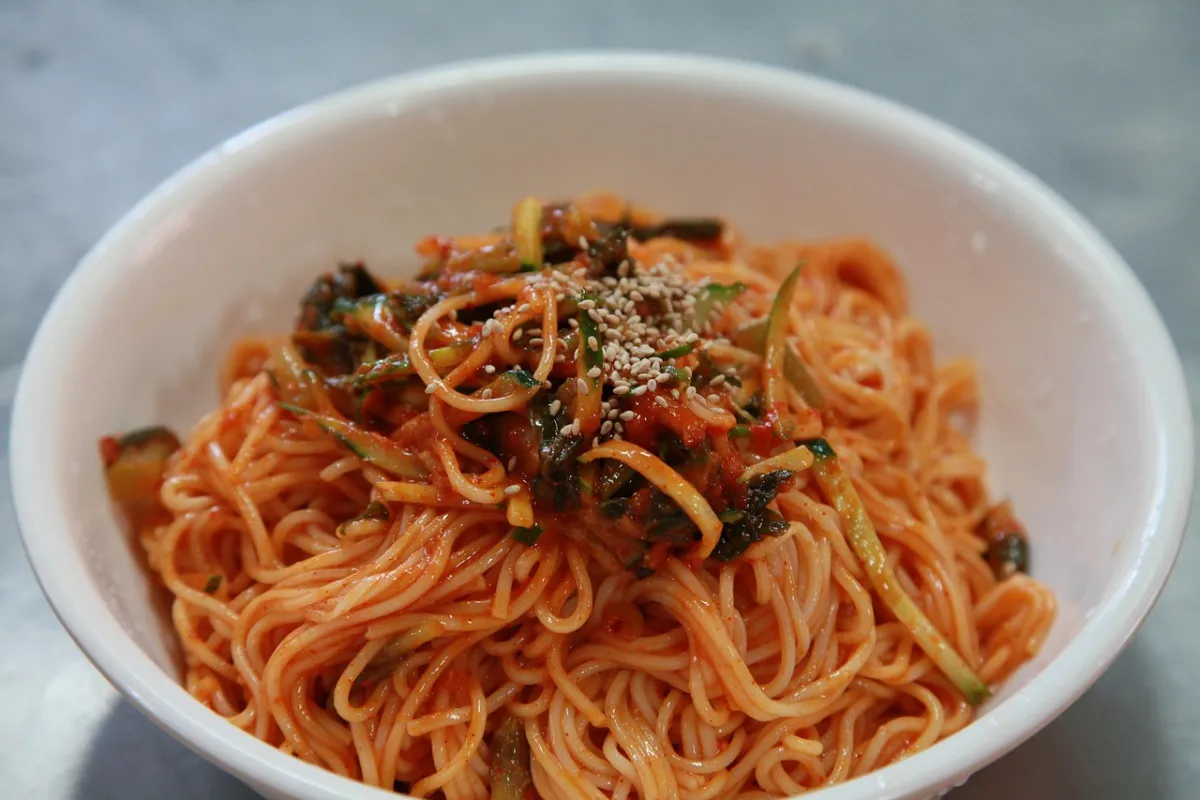
Bibim guksu (비빔국수) uses the same thin noodles, but they are rinsed in cold water and tossed with a sauce of gochujang, vinegar, sugar, sesame oil and garlic. Toppings often include kimchi, cucumber, lettuce and half a boiled egg. The taste is spicy, sweet and sour all at once, and it is especially popular in summer. Bibim guksu and janchi guksu are often sold side by side, so you can choose between a warm, mild bowl and a cold, spicy one.
Japchae: glass noodles for festive tables
Japchae (잡채) is one of the most beloved Korean dishes, both inside and outside Korea. It is made with dangmyeon, glassy noodles made from sweet potato starch, stir-fried with vegetables, mushrooms and often beef, then seasoned with soy sauce, sugar and sesame oil. The noodles are springy and slippery, and they soak up the savoury-sweet seasoning beautifully.
The name japchae originally referred to a dish of "mixed vegetables" (jap means mixed and chae means vegetables). Older recipes did not always contain noodles; the glass noodles became the main ingredient later. Today japchae is a fixture of holidays such as Seollal and Chuseok, birthday tables, family gatherings and buffets. Because it tastes good both warm and at room temperature, it is perfect for sharing.
A related dish is japchae bap, japchae served over rice, which you can find in some Korean-Chinese restaurants. Japchae is also a popular filling for fried dumplings and sometimes for street-food items. Later in this guide, you will find a detailed home recipe.
Jjajangmyeon and jjamppong: Korean-Chinese favourites
Korean-Chinese cuisine, known as junghwa yori, developed in Korea and has its own unique dishes that differ from food in China. Two noodle dishes are at the heart of it.
Jjajangmyeon
Jjajangmyeon (짜장면) consists of thick wheat noodles topped with a glossy black sauce made from fermented black bean paste (chunjang), stir-fried with pork, onion and sometimes zucchini and potato. The sauce is savoury and slightly sweet. Before eating, you mix the noodles and sauce thoroughly. It is usually served with yellow pickled radish (danmuji) and raw onion with a little chunjang for dipping.
Jjajangmyeon has a special place in Korean daily life. It is a classic delivery food, often ordered on moving day when the kitchen is still packed, after graduation ceremonies and on busy weekends. There is even an informal tradition called "Black Day" on 14 April, when some single people eat jjajangmyeon together in a humorous response to Valentine's Day and White Day.
Jjamppong
Jjamppong (짬뽕) is a spicy red noodle soup with seafood such as squid, mussels and shrimp, plus vegetables, cooked in a broth flavoured with chilli. It is hearty and warming. Choosing between jjajangmyeon and jjamppong is such a common dilemma that many restaurants offer jjamjjamyeon, a bowl divided in half so you can have both.
Kongguksu and other summer noodles
Kongguksu (콩국수) is a summer dish of wheat noodles served in a cold, creamy broth made from ground soybeans. The broth is nutty and mild, and it is usually topped with cucumber and sometimes tomato or sesame seeds. Depending on the region and personal taste, people season it with salt or, in some areas, with sugar. Kongguksu is a seasonal speciality, so many restaurants only offer it during the warmer months.
Other refreshing summer choices include memil guksu, cold buckwheat noodles served with a chilled dipping sauce and grated radish, and chogye guksu, cold noodles in a tangy broth with shredded chicken. In hot weather, you will also find many restaurants offering cold versions of bibim guksu and naengmyeon.
A quick comparison: which noodle dish to try?
| Dish | Temperature | Flavour | Spice level | Best for |
|---|---|---|---|---|
| Mul naengmyeon | Icy cold | Tangy, light | Mild | Hot summer days, after barbecue |
| Bibim naengmyeon | Cold | Sweet, sour, spicy | Medium to hot | Spice lovers |
| Kalguksu | Hot | Savoury, comforting | Mild | Rainy days, a filling lunch |
| Janchi guksu | Warm | Light, clean | Mild | A quick, simple meal |
| Bibim guksu | Cold | Sweet and sour, spicy | Medium | A refreshing snack |
| Japchae | Warm or room temperature | Savoury-sweet | None | Holidays, parties, sharing |
| Jjajangmyeon | Hot | Rich, savoury, slightly sweet | None | Delivery, family meals |
| Jjamppong | Hot | Seafood, chilli | Hot | Cold weather, spicy cravings |
| Kongguksu | Cold | Nutty, creamy | None | Summer lunches |
Ordering noodles at a Korean restaurant
Noodle restaurants in Korea are usually casual and quick. A few tips will make your visit easier:
- Look for the speciality. Many restaurants focus on one dish, such as naengmyeon or kalguksu. The restaurant's name often tells you what it does best.
- Use the scissors. If staff bring scissors with naengmyeon, they may ask whether you want the noodles cut. Saying "잘라 주세요" (please cut them) is perfectly normal.
- Adjust the seasoning. Vinegar, mustard, soy sauce and chilli are often on the table so you can season your bowl to your liking.
- Ask about portions. Some restaurants offer a large portion (곱빼기, gopbaegi) for a small extra charge, especially at Korean-Chinese restaurants.
- Slurping is fine. Eating noodles with a little sound is common and not considered rude in casual restaurants, although it is polite not to splash.
- Mind allergies. Korean noodles often contain wheat, buckwheat, soy, egg or seafood-based broths. If you have food allergies or dietary restrictions, ask staff about the ingredients before ordering, and follow the advice of your doctor if you have a medical condition.
How to make japchae at home
Japchae looks impressive but is not difficult to make. The secret is to cook each ingredient separately so that every colour and texture stays distinct, then combine everything at the end. This recipe serves about four people as a side dish or two as a main dish.
Ingredients
- 200 g dangmyeon (Korean sweet potato starch noodles)
- 150 g beef (sirloin or another tender cut), thinly sliced, or firm tofu for a vegetarian version
- 5 to 6 dried or fresh shiitake mushrooms, sliced
- 1 onion, thinly sliced
- 1 carrot, cut into thin matchsticks
- 1 small bunch of spinach (about 150 g)
- 1 red or yellow bell pepper, thinly sliced (optional)
- 2 eggs (optional, for egg strips)
- 2 cloves garlic, minced
- Cooking oil, salt and toasted sesame seeds
Seasoning sauce
- 4 tablespoons soy sauce
- 2 tablespoons sugar (or to taste)
- 2 tablespoons sesame oil
- 1 teaspoon minced garlic
- A pinch of black pepper
Step-by-step method
- Soak the noodles. Soak the dangmyeon in warm water for about 30 minutes, or follow the instructions on the package. This shortens the cooking time later.
- Marinate the beef. Mix the beef with 1 tablespoon of soy sauce, 1 teaspoon of sugar, a little garlic and a few drops of sesame oil. Set aside for 15 minutes.
- Blanch the spinach. Boil the spinach for about 30 seconds, rinse it in cold water and squeeze out the water. Season it with a pinch of salt and a few drops of sesame oil.
- Make egg strips (optional). Separate the yolks and whites, fry each thinly in a lightly oiled pan over low heat, then roll and slice into thin strips.
- Stir-fry the vegetables separately. In a little oil, stir-fry the onion, carrot, bell pepper and mushrooms one by one, adding a pinch of salt to each. Keep them slightly crisp and set each aside on a large plate.
- Cook the beef. Stir-fry the marinated beef until just cooked through.
- Cook the noodles. Boil the soaked noodles for about 5 to 6 minutes until soft and springy. Drain well and cut them a few times with kitchen scissors so they are easier to mix and eat.
- Season the noodles. While the noodles are still warm, toss them with the seasoning sauce. Some cooks briefly stir-fry the noodles in the sauce to help them absorb the flavour.
- Combine everything. In a large bowl, mix the noodles with all the vegetables, mushrooms and beef. Use your hands (with clean kitchen gloves) or tongs to mix gently but thoroughly.
- Taste and finish. Adjust with more soy sauce, sugar or sesame oil if needed. Sprinkle with toasted sesame seeds and top with egg strips.
Tips for better japchae
- Do not overcook the noodles. Dangmyeon becomes mushy if boiled too long. Taste a strand: it should be soft but still bouncy.
- Season while warm. Warm noodles absorb the sauce much better than cold ones.
- Keep colours bright. Cooking the vegetables separately keeps the green, orange, red and brown colours vivid.
- Make it vegetarian. Replace beef with tofu or extra mushrooms; the dish remains delicious.
- Storing leftovers. Japchae can be kept in the refrigerator for a day or two in a sealed container. The noodles harden when cold, so reheat gently in a pan with a splash of water or warm briefly in the microwave.
Noodles and Korean seasons
Like many parts of Korean cuisine, noodle dishes follow the seasons. In summer, cold noodles such as naengmyeon, kongguksu and bibim guksu fill restaurant menus, and some restaurants post signs announcing that their summer noodles have "started". In autumn and winter, warm bowls of kalguksu, janchi guksu and jjamppong become more popular, especially on chilly or rainy days. Japchae, meanwhile, follows the calendar of holidays and celebrations rather than the weather.
There is even a Korean saying that winter is the true season for naengmyeon. In the past, cold noodles were traditionally eaten in winter in northern regions, served with icy dongchimi broth in a warm room heated through the floor. Today most people associate naengmyeon with summer, but some enthusiasts still enjoy it in the coldest months.
Frequently asked questions
What is the difference between guksu and myeon?
Both mean noodles. Guksu is the native Korean word, used in names such as janchi guksu and kongguksu, while myeon is the Sino-Korean word, used in names such as naengmyeon and jjajangmyeon. In everyday speech, people also use myeon to talk about noodles in general.
Are Korean glass noodles gluten-free?
Dangmyeon is traditionally made from sweet potato starch, which does not contain gluten. However, some products may contain other ingredients or be produced in facilities that handle wheat, and sauces such as soy sauce often contain wheat. If you need to avoid gluten for health reasons, check labels carefully and consult a doctor or dietitian for personal advice.
Why are naengmyeon noodles so chewy?
Naengmyeon noodles combine buckwheat with starch, often from sweet potato or potato, and are pressed through a noodle machine. This combination gives them their famous elastic texture. Noodles with a higher proportion of buckwheat tend to be softer and break more easily.
Is jjajangmyeon Chinese or Korean?
It has Chinese roots, but the version eaten in Korea developed locally and is now considered a Korean-Chinese dish with its own distinct taste. The sauce, ingredients and serving style differ from noodle dishes with similar names in China.
Can I make kalguksu noodles at home?
Yes. Mix plain flour with water and a pinch of salt, knead into a firm dough, rest it for about 30 minutes, then roll it thin, dust with flour, fold and cut into strips. Cook the fresh noodles directly in your broth. Ready-made fresh kalguksu noodles are also sold in Korean supermarkets.
What should I eat with Korean noodles?
Kimchi is the most common partner, especially with kalguksu and janchi guksu. Korean-Chinese noodles come with pickled yellow radish and onion. Many noodle restaurants also offer dumplings (mandu), which go well with almost any noodle dish.
Final thoughts: a bowl for every mood
Korean noodle dishes offer something for every season, every mood and every occasion. There is icy naengmyeon for scorching summer afternoons, soothing kalguksu for rainy days, festive janchi guksu and japchae for celebrations, and comforting jjajangmyeon for busy evenings at home. Each bowl tells a small story about Korean history, regional cooking and everyday life. Next time you visit a Korean restaurant or a market in Korea, look beyond the familiar ramyeon and try a noodle dish you have never had before, or bring a little of that culture into your own kitchen by making a colourful plate of japchae.