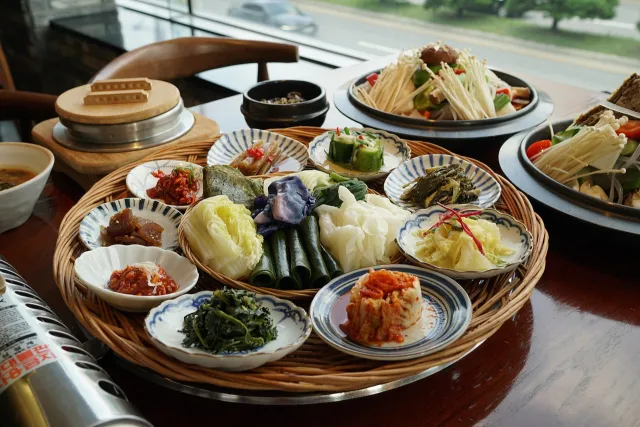
Guk, Tang, Jjigae and Jeongol Explained: The Differences Between Korean Soups and Stews, Classic Dishes and How to Cook Them at Home
A Korean meal almost always comes with something hot and brothy. But what is the difference between guk, tang, jjigae and jeongol? This guide explains how to tell them apart by broth, seasoning and cooking style, introduces classics such as seaweed soup, seolleongtang, kimchi jjigae and budae jjigae, and shares stock-making basics and restaurant tips.

Contents
- The differences at a glance
- Guk: the everyday soup served with rice
- Tang: deep, long-simmered broths
- Jjigae: less broth, more flavour
- Jeongol: the hot pot shared at the table
- The foundation of flavour: Korean stocks
- Basic principles for cooking at home
- Ordering soups and stews in a Korean restaurant
- Seasons and soups
- Enjoying soups and stews in a lighter way
- A regional tour of Korean soups
- Gukbap: the culture of soup and rice in one bowl
- What to serve alongside
- Storing and reheating leftovers
- Common mistakes when cooking Korean stews for the first time
- Frequently asked questions
- Final thoughts: Korean dining in a single spoonful
For many Koreans, a meal is not quite complete without three things: rice, side dishes and something hot to spoon. In the morning it might be a simple bowl of clear soup. At lunch it might be a bubbling earthenware pot of stew placed in the middle of the table. On a cold winter evening it might be a wide hot pot simmering on a portable burner while friends and family sit around it and help themselves. Soups and stews appear at every time of day and in every season, and they are among the most comforting foods in Korean cuisine.
Yet when visitors look at a Korean menu, they often find the names confusing. Why is one dish called guk, another tang, a third jjigae and a fourth jeongol? Are they all just "soup"? Even many Koreans find it surprisingly hard to explain the difference when a foreign friend asks.
In this guide we look at the four main categories of Korean soups and stews, explain how they differ in the amount of broth, the strength of seasoning and the way they are cooked and served, and introduce classic dishes in each group. We also cover the basic stocks that give these dishes their flavour, simple principles for cooking them at home, tips for ordering in restaurants and a few ideas for enjoying them in a lighter way.
The differences at a glance
Before going into detail, here is a simple overview. The boundaries are not always strict, and you will find dishes that blur the lines, but this table captures the general idea.
| Type | Broth | Seasoning | Classic examples |
|---|---|---|---|
| Guk (국) | Plenty of broth, fewer solids | Relatively mild | Seaweed soup, bean sprout soup, soybean paste soup |
| Tang (탕) | Plenty of broth, long-simmered | Often adjusted at the table with salt | Seolleongtang, galbitang, samgyetang |
| Jjigae (찌개) | Less broth, many solids | Rich and salty | Kimchi jjigae, doenjang jjigae, sundubu jjigae |
| Jeongol (전골) | Moderate, cooked at the table | Medium | Mushroom, dumpling and beef hot pots |
Guk: the everyday soup served with rice
Guk is the most basic Korean soup. It has a generous amount of broth, a relatively small amount of solid ingredients and a gentle seasoning. Guk is usually served in an individual bowl placed next to each person's bowl of rice, and it is eaten throughout the meal rather than as a separate course. Many Koreans like to alternate between a spoonful of rice and a spoonful of soup, or even to put a little rice into the soup.
Guk can be divided broadly into two styles. Clear soups (맑은국) are seasoned with salt or soup soy sauce and have a light, transparent broth. Examples include kongnamul-guk (soybean sprout soup), mu-guk (radish soup) and miyeok-guk (seaweed soup). Soybean paste soups (토장국) are made by dissolving doenjang, Korean fermented soybean paste, into the broth, which gives a cloudier, earthier flavour. Spinach doenjang soup and mallow soup are popular examples.
Some guk carry special meaning. Seaweed soup is traditionally eaten on birthdays and by mothers after giving birth, while rice cake soup, tteokguk, is eaten on Lunar New Year's Day to mark the passing of another year. Bean sprout soup is often enjoyed as a light, warming dish on chilly mornings.
Tang: deep, long-simmered broths
Tang is sometimes used as a more formal word for guk, and the two overlap. In everyday use, however, tang usually refers to soups made by simmering bones or meat for a long time to create a rich, concentrated broth. Tang is often served as a complete one-bowl meal in specialist restaurants.
Seolleongtang and gomtang are classic examples. Both are made by simmering beef bones and meat for many hours. Seolleongtang typically has a milky white broth, while gomtang is often clearer. The broth itself is usually served almost unseasoned, and diners add salt, pepper and chopped spring onions at the table to suit their own taste. Thin wheat noodles or rice are often added to the bowl.
Other well-known tang include galbitang, a clear soup made with beef short ribs; samgyetang, a whole young chicken stuffed with sticky rice, garlic, jujubes and ginseng, traditionally eaten on the hottest days of summer; gamjatang, a hearty, spicy pork bone stew with potatoes; and maeuntang, a spicy fish soup often served at seaside restaurants.
Jjigae: less broth, more flavour
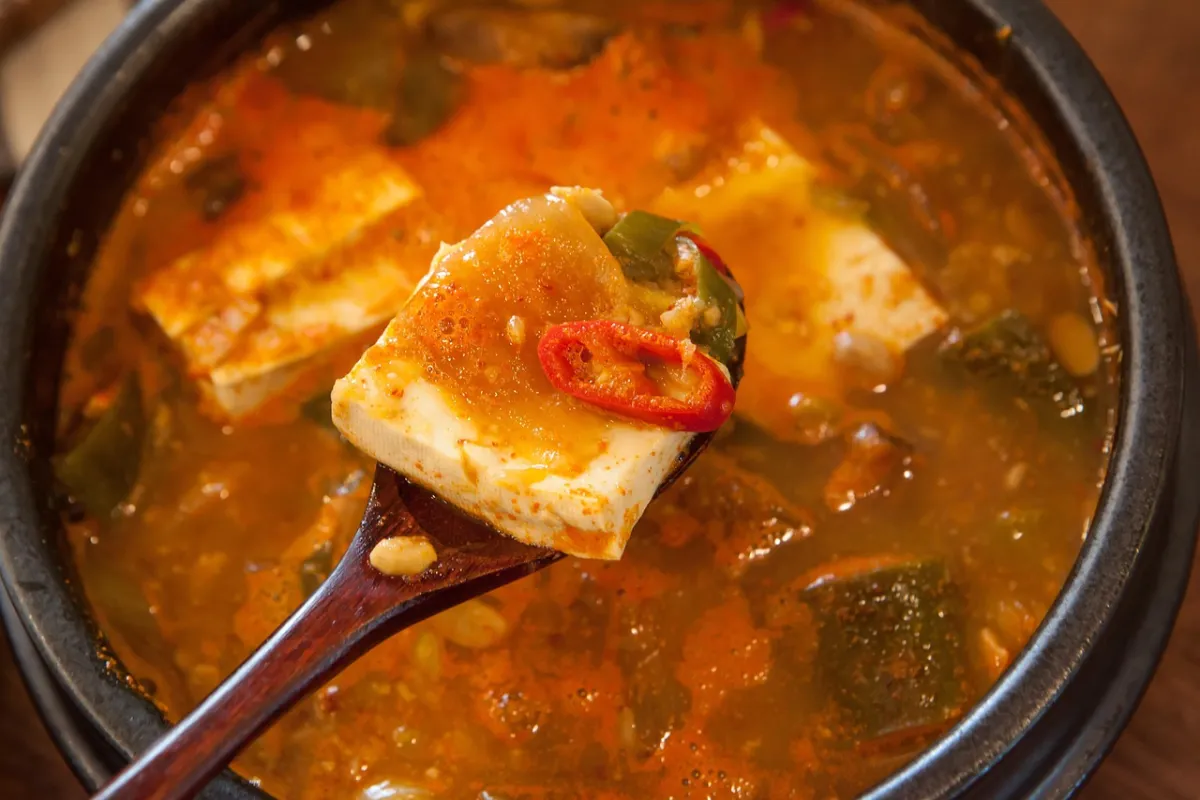
Jjigae has less broth than guk, a larger proportion of solid ingredients and a stronger, saltier seasoning. Because the flavour is so concentrated, jjigae is meant to be eaten in small spoonfuls alongside plenty of rice rather than drunk like a soup. It is often brought to the table still bubbling in a ttukbaegi (earthenware pot) or a small metal pot, placed in the centre and shared by everyone.
Kimchi jjigae is perhaps the most beloved stew in Korea. Well-fermented, sour kimchi is stir-fried with pork, then simmered with stock and tofu until the flavours blend. Doenjang jjigae, made with soybean paste, vegetables and tofu, is a staple of home cooking. Sundubu jjigae is a spicy stew made with silky soft tofu and often finished by cracking a raw egg into the hot pot. Budae jjigae, or "army stew", combines ham, sausages, baked beans, instant noodles and kimchi, and has its roots in the years after the Korean War. Gochujang jjigae uses red pepper paste for a sweet and spicy flavour.
Jjigae is one of the most satisfying parts of a Korean meal. Many Koreans say that a good bowl of jjigae can make an entire bowl of rice disappear in minutes.
Jeongol: the hot pot shared at the table
Jeongol is a hot pot dish cooked at the table. Ingredients such as thinly sliced meat, mushrooms, vegetables, tofu and dumplings are arranged attractively in a wide, shallow pot, often in neat sections of different colours. Stock is poured over them, and the pot is set on a portable burner in the middle of the table, where it simmers while everyone eats.
Because it is beautiful to look at and naturally sociable, jeongol is a popular choice for gatherings, family dinners and entertaining guests. Popular varieties include beoseot jeongol (mushroom hot pot), mandu jeongol (dumpling hot pot), gopchang jeongol (beef intestine hot pot) and beef hot pots with plenty of vegetables.
A jeongol meal often has a second act. When most of the ingredients have been eaten, noodles such as kalguksu are added to the remaining broth, or rice is stirred in with egg, seaweed and sesame oil to make a kind of porridge or fried rice. Many Koreans consider this final step the best part of the meal.
The foundation of flavour: Korean stocks
Most Korean soups and stews start with a stock. You do not need to make every stock from scratch, but understanding the basics helps you see why these dishes taste the way they do.
- Anchovy and kelp stock: The most common stock for guk and jjigae. Remove the heads and dark innards from large dried anchovies, toast them briefly in a dry pan to remove any fishy smell, then simmer them with a piece of dried kelp for about 10 to 15 minutes. Take the kelp out early, as it can become slimy and bitter if boiled too long.
- Beef bone and beef stock: Used for seolleongtang, tteokguk and galbitang. Soak the bones in cold water to remove blood, blanch them briefly and discard that first water to remove impurities, then simmer for a long time on low heat, skimming off fat and foam.
- Vegetable stock: Made with radish, onion, the white part of spring onions and dried shiitake mushrooms. It has a clean, gentle flavour and suits vegetarian versions of many dishes.
- Rice water: The cloudy water from the second rinse of rice is often used in doenjang jjigae. It adds a subtle body and helps the soybean paste blend smoothly.
Basic principles for cooking at home
You do not need special equipment to make Korean soups and stews. A medium pot and a few pantry staples are enough. Keep these simple principles in mind:
- Season at the end: For guk, avoid salting heavily at the start. As the soup simmers, it reduces and the flavour concentrates, so taste and adjust the seasoning just before serving.
- Build flavour first in jjigae: For kimchi jjigae, stir-fry the kimchi and meat in a little oil before adding stock. This deepens the flavour and brings out the savoury, slightly caramelised notes.
- Add delicate ingredients last: Tofu, spring onions and leafy greens only need a few minutes. Add them near the end so they keep their shape and freshness.
- Layer ingredients in jeongol: Put ingredients that take longer to cook, such as root vegetables and meat, into the broth first, and add quick-cooking items like leafy greens and enoki mushrooms later.
- Skim the foam: When the broth first comes to the boil, a grey foam often rises to the surface. Skimming it off gives a cleaner taste and a clearer broth.
Ordering soups and stews in a Korean restaurant
Soups and stews are everywhere in Korea, from small neighbourhood restaurants to famous specialist shops that have served the same dish for decades. A few tips can make ordering easier.
In seolleongtang and gomtang restaurants, the broth usually arrives almost unseasoned. Look for salt, pepper and chopped spring onions on the table and season your bowl to taste. Kimchi and radish kimchi, kkakdugi, are usually served alongside, and some people like to add a little of the kimchi juice to the soup.
Many restaurants serve stews such as kimchi jjigae or budae jjigae only for two or more people, because they are cooked in a shared pot. If you are dining alone, look for places that offer single portions or a set meal, often called baekban, which includes rice, a stew and several side dishes.
When sharing a pot of jjigae or jeongol, it is common today to use a ladle or serving spoon to transfer portions into your own small bowl, rather than eating directly from the shared pot. Earthenware pots stay extremely hot for a long time, so never touch them with bare hands and be careful with the first spoonful.
Seasons and soups
Korean soups and stews follow the seasons. In winter, rich bone broths and bubbling hot pots are especially popular. In early spring, soups with fresh greens such as shepherd's purse and mugwort appear. On the hottest days of summer, many Koreans eat samgyetang, following the idea of "fighting heat with heat", and chilled soups such as cucumber cold soup offer a refreshing alternative. In autumn, mushroom hot pots and radish soups make the most of the harvest.
Enjoying soups and stews in a lighter way
Korean soups and stews are warm, filling and often packed with vegetables, tofu and other wholesome ingredients. At the same time, many are fairly high in salt because of soy sauce, soybean paste, kimchi and other seasonings. If you are watching your salt intake, a few simple habits can help: eat more of the solid ingredients and leave some of the broth, season lightly at home and add extra vegetables. Anyone with specific dietary needs or health concerns should seek advice from a doctor or a registered dietitian.
A regional tour of Korean soups
Like much of Korean cuisine, soups and stews vary noticeably from region to region, and many travellers plan their trips around a famous local bowl.
In Busan, the signature dish is dwaeji gukbap, a pork and rice soup with a milky broth made from pork bones. It arrives lightly seasoned, and diners add salted shrimp, chilli paste and seasoned chives to suit their taste. Many locals swear by it as a hearty breakfast or a late-night meal.
In Jeonju, a city celebrated for its food, kongnamul gukbap is the classic morning dish. It is a hot soybean sprout soup with rice, often served with a soft poached egg in a separate small bowl, which you can mix with a few spoonfuls of the broth and some seaweed. It is especially popular as a light, warming breakfast.
The southern provinces are known for chueotang, a thick soup made from loach fish ground with soybean paste and greens, while the coastal areas of the southwest serve maesaengi-guk, a silky soup made with fine green seaweed that is famous for staying hot for a very long time. In the mountainous province of Gangwon, you can try gamja ongsimi, a soup filled with chewy dumplings made from grated potato. And in Seoul, historic restaurants serving gomtang and seolleongtang have been feeding the city for generations.
Trying the local soup is one of the easiest ways to experience the character of a region, and the restaurants that serve these dishes are often simple, affordable and full of local diners.
Gukbap: the culture of soup and rice in one bowl
Gukbap literally means "soup rice", and refers to dishes in which rice is served in, or added to, a bowl of hot soup. The style is thought to have developed in traditional markets, where busy traders and travellers needed a quick, filling and inexpensive meal. A large pot of soup could be kept simmering all day, and each customer could be served in moments.
That practical spirit lives on today. Gukbap restaurants are some of the most welcoming places in Korea for solo diners, and many open early in the morning or stay open late into the night. For many Koreans, a hot bowl of gukbap carries a feeling of comfort and reassurance, the kind of simple meal you want after a long day, on a cold morning or when you are feeling a little low.
What to serve alongside
A Korean soup or stew is rarely eaten on its own. At home, it is typically served with a bowl of steamed rice and a few banchan, small side dishes such as kimchi, seasoned vegetables, stir-fried anchovies or rolled omelette. Mild soups pair nicely with spicier side dishes, while a fiery stew is often balanced with gentle, refreshing banchan such as seasoned bean sprouts or a simple cucumber salad. If you are cooking a Korean meal for the first time, one soup or stew, rice and two or three side dishes make a complete and satisfying table.
Storing and reheating leftovers
Soups and stews are often made in large batches, and many people find that stews like kimchi jjigae taste even better the next day. To store leftovers safely, let them cool, transfer them to a sealed container and refrigerate them promptly, then eat them within a short time. When reheating, bring the soup back to a full boil. Stews with plenty of tofu and vegetables tend to become saltier and thicker as they reduce, so add a little water or stock and taste before serving. Leafy greens and tofu can become soft, so you may wish to add a fresh handful of spring onions just before eating.
Common mistakes when cooking Korean stews for the first time
Korean soups and stews are forgiving, but a few common slips can make the difference between a flat pot and a delicious one.
- Using fresh kimchi for kimchi jjigae: The best kimchi stew is made with well-fermented, noticeably sour kimchi. Freshly made kimchi lacks the depth and tang that give the dish its character. If your kimchi is young, a small splash of kimchi juice and a little extra cooking time can help.
- Boiling doenjang for too long: Soybean paste has a delicate aroma that fades with prolonged boiling. Dissolve it into the stock partway through cooking rather than at the very start, and let the stew simmer gently rather than at a hard, rolling boil.
- Adding too much water: Jjigae should be thicker and more concentrated than guk. Start with less liquid than you think you need; you can always add a little more later, but a watery stew is hard to rescue.
- Stirring tofu too much: Soft tofu breaks easily. Cut it into pieces, slide it into the pot and move it gently with a spoon instead of stirring vigorously.
Keeping these points in mind will help even your first attempt taste closer to what you would find in a Korean home kitchen.
Frequently asked questions
Is there a strict rule separating guk and tang?
Not really. The two words overlap, and usage varies. In general, tang tends to describe long-simmered, richer broths and soups sold as a complete one-bowl meal in restaurants, while guk describes lighter everyday soups served alongside rice.
Can I eat jjigae on its own like a soup?
You can, of course, eat it however you like. However, jjigae is seasoned strongly so that it pairs well with rice, so most Koreans eat it in small spoonfuls together with rice rather than on its own.
Which dish should a beginner try first?
For mild flavours, seolleongtang or galbitang are excellent starting points, since you can season them yourself at the table. If you enjoy spicy food, kimchi jjigae and sundubu jjigae are classic choices that most visitors love.
Can vegetarians enjoy Korean soups and stews?
Yes. Using vegetable stock with tofu, mushrooms and vegetables, you can make vegetarian versions of doenjang jjigae, mushroom hot pot and many guk. In restaurants, however, anchovy or meat stock is very common even in dishes that look vegetarian, so it is a good idea to ask before ordering.
What is the best pot for making jjigae at home?
A ttukbaegi earthenware pot keeps stews hot for a long time and gives an authentic feel, but any small, heavy-bottomed pot will work perfectly well.
Final thoughts: Korean dining in a single spoonful
Guk, tang, jjigae and jeongol have different names, textures and moods, but they share the same role at the centre of the Korean table: bringing warmth and bringing people together over rice. Once you understand the differences, Korean menus become easier to read and home cooking becomes more fun. Why not start with a simple pot of bean sprout soup or kimchi jjigae this evening? It is one of the easiest and most rewarding ways to bring a taste of everyday Korean life into your own kitchen.