K-Pop Fan Support Culture Explained: Birthday Subway Ads, Birthday Cafes, Coffee Trucks, Rice Wreaths, Donations in an Idol's Name, Fan Fundraising, Agency Gift Rules and Healthy Fandom Etiquette
In K-pop, fans do not just listen and buy albums. They rent subway billboards for an idol's birthday, send coffee trucks to filming sets, donate rice wreaths to charities and organise projects with hundreds of other fans. This guide explains how fan support culture works, who organises it, how fundraising is handled, what agencies allow and how to take part in a healthy, responsible way.


Contents
- What "Support" Means in K-Pop Fandom
- From Personal Gifts to Public Projects
- Birthday Subway Ads and Billboards
- Birthday Cafes
- Coffee Trucks and Food Trucks
- Rice Wreaths and Other Donations
- Donations in an Idol's Name
- Music Show and Comeback Support
- Concert and Tour Support Events
- Debut Anniversaries and Special Days
- Who Organises Support: Fan Sites and Fan Unions
- How Fundraising Works
- Agency Rules and Gift Policies
- Joining Support as an International Fan
- Etiquette and Healthy Fandom
- Useful Korean Terms
- Common Mistakes
- Frequently Asked Questions
- Final Thoughts
Walk through a busy Seoul subway station and you may see a giant poster with an idol's smiling face and a message such as "Happy Birthday, our sunshine". It is not an advertisement from a record label. It was paid for by fans. A few streets away, a cafe might be decorated with photos of the same idol, handing out free cup sleeves to anyone who orders a drink. Somewhere else, a truck serving free coffee is parked outside a drama set, with a banner thanking the staff for taking care of the cast.
All of these are examples of what Korean fans call support (서포트). Fan support culture is one of the most visible and creative parts of K-pop fandom, and it can be surprising for people who are new to it. This guide explains what support means, how it developed, the most common types of projects, who organises them, how money is collected and reported, what agencies allow, and how international fans can join in responsibly. For the basic vocabulary of fandom, our K-pop fandom glossary is a useful companion to this article.
What "Support" Means in K-Pop Fandom
In K-pop, support refers to organised actions by fans to celebrate, encourage or promote an artist. Some projects are aimed at the artist directly, such as a birthday message. Others are aimed at the people around them, such as staff on a filming set. Many are public, such as advertisements in stations or donations to charity in the artist's name.
The older term for fan gifts was jogong (조공), a word that originally referred to tribute paid to a royal court. Fans used it half jokingly for presents sent to idols. Today many fans prefer the more neutral word "support", partly because the culture has shifted from expensive personal gifts to public and charitable projects. You will still see both words used in fan communities.
Support is voluntary. No fan is required to take part, and many people enjoy K-pop without ever joining a project. For those who do, support is a way to express affection, connect with other fans and feel part of a community.
From Personal Gifts to Public Projects
In the early days of idol fandom, support often meant gifts delivered to the artist: letters, food, clothing and other personal items. As fandoms grew larger, these gifts became more elaborate, and there were concerns about pressure on fans and about how much artists could actually accept.
Over time, fan support moved in new directions. Fans began sending meals and snacks to staff, renting advertising spaces to celebrate birthdays and anniversaries, and making donations to charities in their idol's name. These projects are visible, can involve thousands of people, and benefit others besides the artist. They also reflect a desire to show that the fandom is mature and positive.
Agencies also became more involved. Many now publish clear guidelines about what they will accept, and some accept only letters. This has encouraged fans to focus on public and charitable forms of support.
Birthday Subway Ads and Billboards
One of the most recognisable forms of support is the birthday advertisement. Fans rent advertising spaces in subway stations, on digital screens near busy intersections, inside buses or on cafe screens, and display a design celebrating the artist's birthday or debut anniversary. Some fan groups also place ads in other countries, so the same idol may be celebrated in several cities at once.
Popular locations include stations near entertainment agencies, large transfer stations and areas known for K-pop shopping. Fans often visit these ads to take photos and share them online, turning them into small pilgrimage spots. Our guide to K-pop places in Seoul explains which neighbourhoods are popular with fans.
Subway advertising spaces follow rules set by the transport operators and advertising agencies. In recent years, some operators have restricted or changed the rules for fan-funded ads, so organisers must check current conditions before planning a project. As a visitor, simply enjoy looking at the ads and take photos without blocking other passengers.
Birthday Cafes
A birthday cafe (생일카페, often shortened to 생카) is a cafe that fans rent or decorate for a few days to celebrate an idol's birthday. The walls are covered with photos and banners, and customers who order a drink receive themed items such as cup holders, stickers, photo cards made by fans or small printed posters. Some cafes run "first come, first served" gifts or special menus named after the idol.
Birthday cafes are usually organised by fan sites or groups of fans, who pay the cafe owner or agree to a minimum number of drinks. Visitors do not need to belong to any fan club. You simply order something, receive the items and enjoy the atmosphere. They are a relaxed way for international fans in Korea to experience fandom culture. Our guide to fan meetings, fansigns and fan clubs also mentions birthday cafes as part of the wider fan event calendar.
Because items are made by fans rather than the agency, they are considered unofficial goods. Organisers usually give them away for free with a purchase. Selling unofficial goods that use an artist's image can raise legal and ethical issues, so many fan groups avoid it.
Coffee Trucks and Food Trucks
When an idol is filming a drama, a variety show or a music video, fans sometimes send a coffee truck (커피차) or a food truck (밥차, 간식차) to the set. The truck serves free drinks or meals to the cast and crew, and it usually carries a banner with the artist's photo and a message such as "Please take good care of our idol" or "Thank you for your hard work".
This form of support is popular because it benefits the whole team, not only the artist. It also creates a warm moment that often appears in photos posted by actors and staff. Other celebrities and colleagues sometimes send coffee trucks to each other as a sign of friendship, which has made the custom even more visible.
Organising a truck requires cooperation with the production company and the agency, since the truck needs a time and place on set. Fan groups usually contact the agency first and follow its instructions.
Rice Wreaths and Other Donations
At concerts, fan meetings and drama press events, you may see rows of decorative stands holding bags of rice. These are rice wreaths (쌀화환). Instead of flower wreaths, which are thrown away after an event, fans send rice that is later donated to charities, food banks or welfare organisations in the artist's name. Each wreath usually carries a ribbon showing the fandom's name and the amount of rice.
Rice wreaths became popular because they combine celebration with charity. Organisers often share certificates or confirmation from the receiving organisation after the event, showing where the donation went. Some fandoms send other items in the same way, such as noodles, coal briquettes for heating or supplies for animal shelters.
Donations in an Idol's Name
Many fandoms celebrate birthdays and anniversaries by donating money to charities in the artist's name. Common causes include children's welfare, education, disaster relief, environmental projects, animal welfare and support for patients. Sometimes fans choose a cause the idol has mentioned in interviews, or one connected to a song or a message the artist shared.
These projects can make a meaningful difference, and many organisations publicly thank fandoms for their contributions. If you are considering joining a donation project, check that the receiving organisation is a registered charity and that the organisers will publish proof of the donation.
Music Show and Comeback Support
Comebacks are an especially busy time for support. During music show recordings, fans sometimes prepare lunchboxes or snack packs for the staff and fans waiting in line, coordinated with the agency. Fan groups also organise streaming and voting guides that explain how to support a new release on charts, and they share schedules so fans know when performances will air. Our guide to comebacks and music shows explains how these activities fit into a group's promotional cycle.
Chart support should always follow the rules of each platform. Manipulating charts with fake accounts or automated programs is not allowed and can lead to penalties. Healthy support means listening, buying and voting as a real person, within your means. Each platform publishes its own rules, and fan groups that organise streaming guides usually remind fans to follow them.
Concert and Tour Support Events
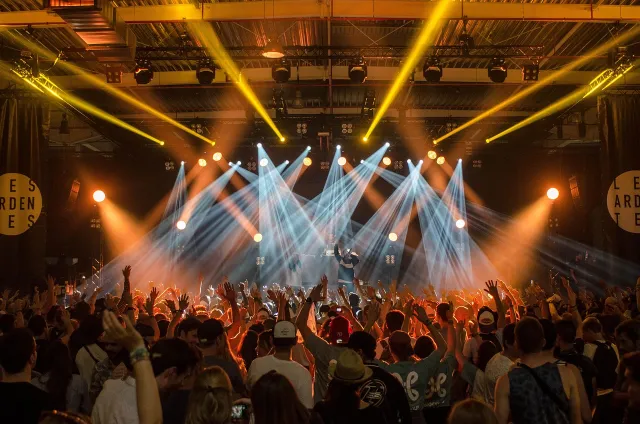
Concerts are another major occasion for fan projects. Before a show, fan groups often announce a slogan event or banner event. Volunteers hand out printed slogans with a short message, and at an agreed moment during the concert, often during a particular song or the encore, the audience lifts them up at the same time. For the artist on stage, seeing a whole stadium hold up the same message can be a very emotional moment, and these scenes are often shared widely afterwards.
Other common concert projects include free fan-made items distributed outside the venue, such as stickers, small photo cards and hand towels, and coordinated colour events in which fans set their lightsticks or phone lights to a particular colour during a specific song. Because large crowds gather around concert venues, organisers usually work with security staff and avoid blocking entrances.
If you are attending a concert for the first time, it is worth checking fan accounts a few days before the show to see if an event is planned, so you know when to raise your slogan or change your light. Our first K-pop concert guide covers tickets, identity checks and venue etiquette in more detail.
Debut Anniversaries and Special Days
Birthdays are not the only dates fans celebrate. A group's debut anniversary is often the biggest day of the fan calendar. Fans organise anniversary ads, trending hashtags, donation projects and online events, and many groups release special content or hold fan gatherings around the same date. Other special days include the anniversary of a first music show win, the day the fandom name was announced and the release dates of important albums.
Fans also organise support when an artist begins or completes mandatory military service, debuts as a solo artist, stars in a drama or musical, or returns after a break. Projects for these occasions often focus on encouragement, such as messages printed on banners or a coffee truck sent to a musical theatre. Planning these projects well in advance allows organisers to coordinate with agencies and venues and to give fans enough time to join if they wish.
Who Organises Support: Fan Sites and Fan Unions
Support projects are usually organised by experienced fans. A few common types are:
- Fan sites and "homma" (홈마) – fans who run accounts dedicated to one artist, often sharing high-quality photos from events. Many of them also organise birthday projects.
- Fan unions (연합) – coalitions of several fan sites and communities that work together on large projects such as rice wreaths or major ads.
- Project teams – temporary groups formed for one event, such as a single birthday or anniversary.
- Official fan clubs – sometimes involved in projects coordinated with the agency, especially for concerts.
Good organisers publish clear plans, budgets and timelines, and they communicate with the agency when a project involves the artist or a filming location.
How Fundraising Works
Large projects are usually funded by many fans contributing small amounts. The process typically includes:
- Announcement (공지) – the organiser explains the project, the goal, the deadline and how the money will be used.
- Collection (모금, 입금) – fans send money to a designated account or payment link and fill out a form with their name or nickname.
- Progress updates – the organiser shares how much has been collected.
- Settlement report (정산) – after the project, the organiser publishes a detailed report with receipts showing exactly how the money was spent and what happened to any leftover funds.
Transparency is essential. Unfortunately, there have been cases where fundraisers misused money or disappeared. Before contributing, check whether the organiser has a history of completed projects with public settlement reports. Never send more than you can comfortably afford to lose.
Agency Rules and Gift Policies
Most agencies have rules about what fans can send. Common points include:
- Some agencies accept only handwritten letters and refuse all other gifts.
- Food gifts are often not accepted for safety and hygiene reasons.
- Expensive luxury gifts are usually discouraged or refused.
- Coffee trucks, food trucks and lunchbox support for staff must be arranged in advance.
- Ads and projects should not use images or logos in ways that break the agency's rights.
Agencies usually announce these rules on their official fan community pages. Following them protects both the artist and the fans, and shows respect for the agency's decisions.
Joining Support as an International Fan
You do not need to live in Korea to take part in fan support. International fans contribute to fundraisers, organise projects in their own cities and join global donation campaigns. Some fandoms run ads in several countries for the same birthday, coordinated by local fan groups.
If you want to participate from abroad, start by following well-known fan sites or fan unions for your favourite artist. Read their announcements carefully, check whether international payments are accepted and look for previous settlement reports. Language barriers can make it harder to understand details, so translation tools and fan translators can help. You can also support in simple ways that cost nothing, such as sharing official content, writing letters or encouraging other fans.
If you collect official merchandise as well, our guide to official K-pop merch and lightsticks explains the difference between official goods and fan-made items.
Etiquette and Healthy Fandom
Fan support works best when it is kind, voluntary and sustainable. A few principles help:
- Spend within your means. Support should be a joy, not a financial burden. There is no minimum amount that makes someone a "real" fan.
- Do not pressure others. Fans contribute in different ways. Time, creativity and kindness count as much as money.
- Respect privacy. Support should never involve following artists in their private lives, visiting their homes or disturbing their families.
- Respect public spaces. When visiting ads or cafes, do not block passageways, make noise or leave rubbish behind.
- Follow agency rules. If an agency says it does not accept gifts, respect that decision.
- Be careful online. Avoid sharing personal financial information in public spaces and be cautious with unfamiliar payment links.
Useful Korean Terms
- 서포트 (seopoteu) – support project.
- 조공 (jogong) – an older word for gifts to an idol.
- 생일카페 / 생카 (saengil kape) – birthday cafe.
- 커피차 (keopicha) – coffee truck.
- 밥차 (bapcha) – food truck for meals.
- 쌀화환 (ssalhwahwan) – rice wreath.
- 모금 (mogeum) – fundraising.
- 정산 (jeongsan) – settlement report.
- 홈마 (homma) – fan site master who runs an artist-focused account.
- 연합 (yeonhap) – fan union or coalition.
Common Mistakes
- Joining fundraisers without checking. Contributing to an organiser with no history or no settlement reports is risky.
- Buying unofficial goods believing they are official. Fan-made items are not produced by the agency. Know what you are buying.
- Sending gifts the agency does not accept. Items may be returned or discarded. Check the latest guidelines first.
- Feeling pressured to spend. Healthy fandom does not measure love in money.
- Treating ad locations as private property. Stations and streets are shared spaces. Be considerate when taking photos.
Frequently Asked Questions
Do idols actually see fan support projects?
Often, yes. Many idols mention birthday ads, coffee trucks or donations in live streams, posts or interviews. However, artists cannot see or respond to everything, and support should not depend on a reaction.
Is it legal for fans to put up subway ads?
Fan ads are placed through official advertising channels and must follow the rules of transport operators and advertising agencies. These rules can change, so organisers need to check current conditions.
Can anyone visit a birthday cafe?
Yes. You usually just order a drink and receive the free items while they last. You do not need to be a member of a fan club.
What is a rice wreath?
It is a decorative stand holding bags of rice instead of flowers. After the event, the rice is donated to charities in the artist's name.
How can I tell if a fundraiser is trustworthy?
Look for organisers with completed projects, clear announcements and detailed settlement reports with receipts. Be cautious with new accounts and unclear payment instructions.
Are coffee trucks only sent by fans?
No. Actors, idols and other celebrities often send coffee trucks to friends and colleagues working on a new drama, film or musical. Fans adopted the custom and made it one of the most popular forms of support, but it is also a common way for people in the entertainment industry to encourage each other.
Do I have to join support projects to be a real fan?
No. Listening to music, watching content, writing kind messages and respecting the artist are all valid ways to be a fan.
Final Thoughts
Fan support culture shows how creative and organised K-pop fandoms can be. A birthday ad in a subway station, a coffee truck on a filming set or a row of rice wreaths outside a concert hall are all ways of saying "we are cheering for you", while also sharing kindness with staff, strangers and people in need. The best support is voluntary, transparent and respectful of the artist, the agency and other fans. Whether you contribute to a large project, visit a birthday cafe while travelling in Seoul or simply enjoy the photos online, understanding this culture helps you see the warmth and community behind K-pop fandom.