K-Pop Choreography Explained: Point Dances, Formations, Choreographers, Dance Practice Videos, Short-Form Dance Challenges, Fancams and How Fans Can Join In Safely
K-pop is a music genre you watch as much as you hear. This guide explains how K-pop choreography is built, what a "point dance" is, why formations and synchronisation matter, who the choreographers behind the stages are, how dance practice videos and fancams changed fandom, how short-form dance challenges became a promotion tool, and how fans can learn and share dances respectfully.

Contents
- Why choreography is central to K-pop
- The building blocks of a K-pop routine
- Point dances and killing parts
- Formations, line changes and the centre
- Synchronisation: the famous "knife-like" group dance
- Who creates K-pop choreography?
- Dance practice videos
- Fancams, facecams and focus cams
- Short-form dance challenges
- Relay dances and special performances
- How to learn K-pop choreography
- Posting your own dance videos
- Famous types of choreography moves
- K-pop choreography and dance culture
- Watching stages like an expert
- The relationship between singing and dancing
- Dance challenges around the world
- Concert choreography vs music show choreography
- Frequently asked questions
- Final thought: music you can feel in your body
Ask someone what makes K-pop different from other pop music, and the answer is often the same: the dancing. A K-pop song is rarely released on its own. It arrives with a full performance, carefully designed choreography, a music video, stage versions for TV shows and, increasingly, a short dance clip built for social media. Fans do not just listen to a new song; they learn its moves, watch every angle of the stage and share their own versions online.
This guide looks behind the scenes of K-pop choreography. We explain how a routine is built, what fans mean by a "point dance", why formations and synchronisation are so important, who the choreographers are, and how dance practice videos, fancams and short-form dance challenges became part of every comeback. We also share practical tips for fans who want to learn dances themselves and post them respectfully. If you are new to dancing, our beginner's guide to K-pop dance covers is a good companion to this article.
Why choreography is central to K-pop
From the early idol groups of the 1990s, dance has been at the heart of K-pop. Agencies trained performers to sing and dance at the same time, and groups competed to present the most memorable stage. Over the decades, choreography became a kind of signature. Many fans can recognise a song from a single move, even without sound.
There are several reasons choreography matters so much:
- Music shows: K-pop songs are promoted through weekly live music programmes, where the stage performance is the main event. Our guide to comebacks and music shows explains how these broadcasts work.
- Group identity: a group's dance style, whether powerful, elegant, playful or theatrical, becomes part of its concept and image.
- Fan participation: memorable moves invite fans to copy them, which spreads the song further.
- Visual storytelling: choreography can express the story of the lyrics, from heartbreak to confidence.
The building blocks of a K-pop routine
A typical K-pop routine is made of several layers that work together. Understanding them makes watching stages much more interesting.
| Element | What it means | What to look for |
|---|---|---|
| Point dance | The signature move linked to the chorus or hook | A simple, repeatable movement that fans can copy |
| Formations | The positions of members on stage | Lines, triangles, V-shapes, circles |
| Line changes | How members move between formations | Smooth transitions so the singer is always in front |
| Synchronisation | Members moving with the same timing and angles | Arms at the same height, steps on the same beat |
| Dance break | An instrumental section focused on dancing | More complex, powerful choreography |
| Intro and ending poses | The opening and final positions | Striking images for cameras and photos |
| Facial expression | Expressions that match the song's mood | Often called "facial acting" by fans |
Point dances and killing parts
The point dance, called 포인트 안무 in Korean, is the most recognisable move in a song. It usually appears in the chorus, repeats several times and is simple enough for anyone to try. Think of a distinctive hand gesture, a playful step or a shoulder movement that matches a catchy lyric.
A related term is the "killing part" (킬링 파트), the moment in a song or performance that grabs attention the most. It could be a high note, a memorable line, a facial expression or a short move. When a killing part and a point dance overlap, the result often becomes the clip everyone shares.
Why point dances are designed to be easy
Point dances are intentionally approachable. Choreographers know that fans, children and even other celebrities will try them. A move that can be learned in a minute spreads quickly, while the full routine remains challenging enough to impress. This balance between accessibility and difficulty is one of the secrets of K-pop's popularity.
Formations, line changes and the centre
In a group of five, seven or even more members, choreography must solve a practical puzzle: everyone needs space, the person singing should be visible, and the shape of the group should look good from the front and from above. Formations solve this.
When a member sings their line, they usually move to the front or centre. As the next member's part begins, the group shifts smoothly, often in just a few beats. Fans sometimes call this the "centre" position, which is closely linked to the roles described in our guide to K-pop group positions. Watching a performance from a wide camera angle reveals how carefully these movements are planned.
Common formation shapes
- Straight line: powerful and clean, often used in choruses.
- V or triangle: highlights one member at the front.
- Diagonal: creates depth for cameras.
- Circle or cluster: used for intros, endings or playful sections.
- Wave and canon: members perform the same move one after another, creating a ripple effect.
Synchronisation: the famous "knife-like" group dance
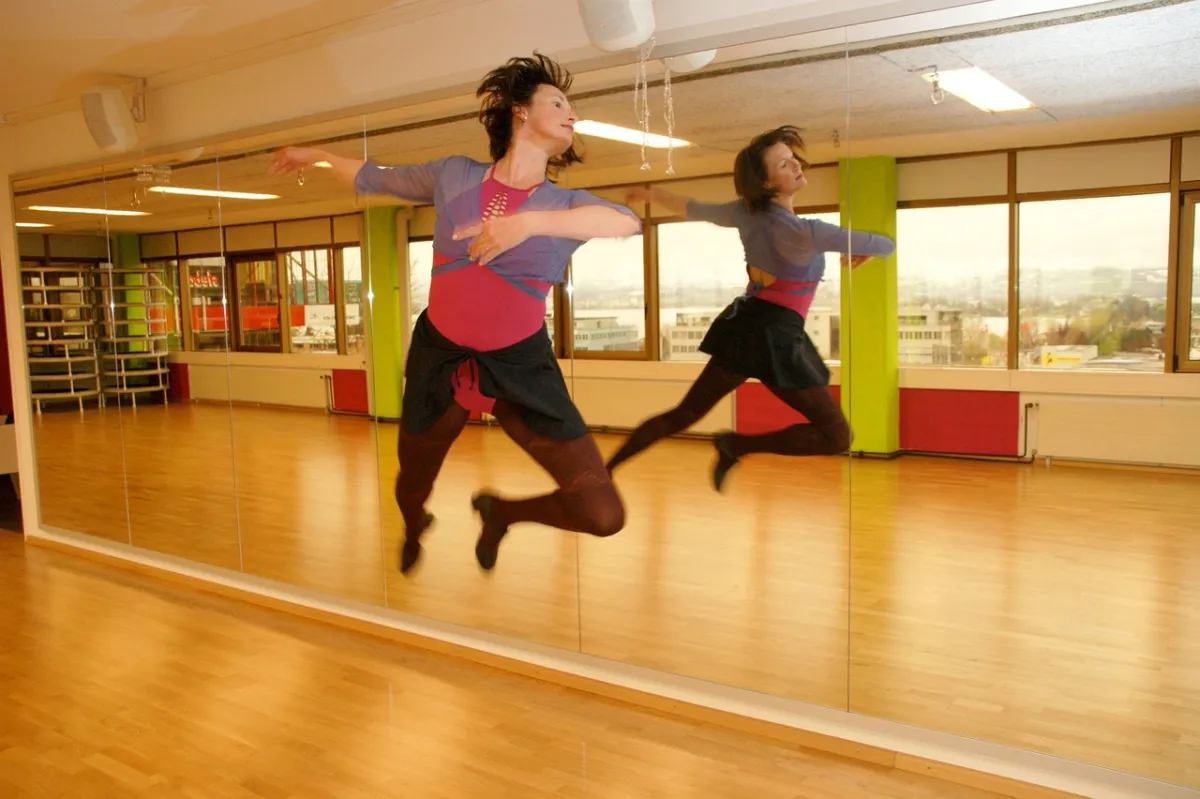
Korean fans use the expression 칼군무 ("knife group dance") to praise choreography performed with extremely precise synchronisation. Arms reach the same height, heads turn at the same moment and steps land exactly on the beat. Achieving this takes long hours of practice in front of mirrors, with members checking angles and timing again and again.
Not every group aims for perfect sync, though. Some concepts emphasise individuality, freestyle sections or a relaxed, natural feel. Both approaches are valid; they simply express different styles.
Who creates K-pop choreography?
K-pop choreography is usually created by professional choreographers and dance teams, sometimes with input from the artists themselves. The process often looks like this:
- Brief: the agency shares the song, concept and mood with one or more choreographers.
- Drafts: choreographers create sample routines, sometimes in competition with other teams.
- Selection: the agency and artists choose the routine or combine ideas from several drafts.
- Adjustment: the choreography is adapted to the members' strengths, the number of members and live singing.
- Training: members practise intensively, often for weeks, before the release.
- Stage versions: the routine is adjusted for different stage sizes, camera angles and performances.
Some idols are skilled choreographers in their own right and create parts of their group's routines, especially for B-side tracks, solo stages or concert performances. Choreographers have become better known to fans in recent years, thanks partly to dance competition programmes and social media.
Performance directors
Beyond choreography, a performance director looks at the whole picture: how the stage looks on camera, how outfits move, where props are used and how the performance connects with the music video. This role helps ensure that each stage tells a consistent story. Our article on K-pop music videos shows how choreography and visuals work together on screen.
Dance practice videos
A few days or weeks after a comeback, many groups release a dance practice video. These are usually filmed in a practice room with a fixed camera, often with the members wearing casual clothes. The simple setting shows the choreography clearly, without fast editing or stage effects.
Dance practice videos are popular for several reasons:
- Learning: they show the full routine from a stable angle, ideal for fans learning the dance.
- Honesty: fans enjoy seeing the members' skills without heavy editing.
- Variations: some groups release special versions, such as a fixed-camera version, a fun version with jokes, or a version focused on the outfit or the formation.
Mirrored videos
Fans and channels often create mirrored versions of dance practice videos, flipped horizontally so that learners can follow as if looking into a mirror. Many official channels now share mirrored clips as well.
Fancams, facecams and focus cams
A fancam is a video that follows a single member throughout a performance. Originally, fancams were filmed by fans at events, but broadcasters and agencies now release official individual cams for music shows. These videos let fans watch one member's movements and expressions from start to finish.
| Type | What it shows |
|---|---|
| Individual fancam (직캠) | One member for the entire stage |
| Facecam | A close-up of a member's face and expressions |
| Full cam | The whole group from a wide, fixed angle |
| Vertical cam | Filmed in portrait format for smartphones |
| Fan-filmed fancam | Filmed by fans at events where filming is allowed |
Fancams have helped some performers become widely known, as a single viral clip can draw attention to a member or a song. For fans, they are also a way to appreciate the details of each member's dancing.
Filming fancams respectfully
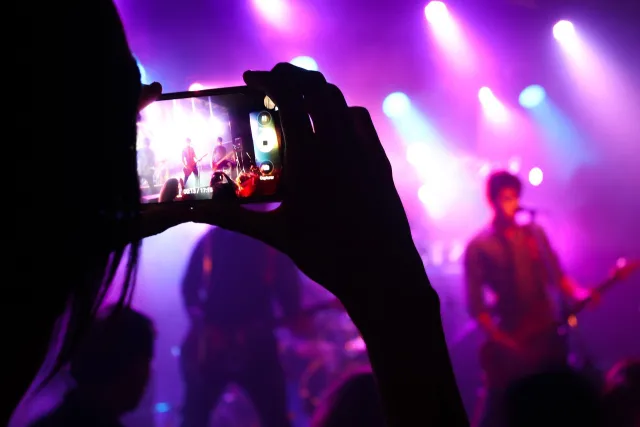
If you film at an event, always follow the event's rules. Some concerts and shows prohibit filming entirely; others allow phones but not professional cameras. Do not block other people's view, do not use flash and never film members in private settings. Respecting these rules protects artists and keeps events enjoyable for everyone.
Short-form dance challenges
In recent years, short-form video platforms have transformed K-pop promotion. Around a comeback, artists often post a short clip of the point dance, usually 15 to 30 seconds long, and invite others to join in. These are known as dance challenges.
A typical challenge works like this:
- The group releases the song with a clear, catchy point dance.
- Members film short clips of that section, often with other artists.
- Fans, dancers and other celebrities post their own versions using the same audio and a hashtag.
- The trend spreads, introducing the song to people who might not otherwise hear it.
Why collaborations matter
One of the most common types of challenge is a collaboration clip, where an idol films the dance with a member of another group. These clips are enjoyable for fans of both artists and help introduce each group to a new audience. Around big comebacks, it is common to see many challenge clips with friends from other groups, labelmates and dancers.
Challenges and charts
A popular challenge can increase interest in a song, which may show up in streaming numbers. However, challenges alone do not decide success; the song itself, the performances and many other factors all play a role. Our guide to K-pop charts and streaming explains how songs are measured.
Relay dances and special performances
Beyond challenges, there are many other dance-focused formats that fans enjoy:
- Relay dance: members dance one section each in turn, passing the camera to the next person.
- Random play dance: songs play in random order and anyone who knows the choreography jumps in. These events are popular in parks and public squares around the world.
- Special stages: at year-end festivals, idols perform new versions of their choreography or cover other artists' dances.
- Performance versions: some groups release special performance videos with new outfits or locations.
- Dance cover contests: fan groups and agencies host contests where dancers perform covers.
How to learn K-pop choreography
If watching stages makes you want to dance, here is a step-by-step approach that works for many learners.
1. Start with the point dance
Learn the chorus first. It repeats several times, so once you know it, you can dance along to a large part of the song.
2. Use a mirrored video
Mirrored videos let you follow the movements naturally, so your right hand matches the dancer's right hand on screen.
3. Slow it down
Most video players allow you to reduce the speed. Practise at half or three-quarter speed, then increase it gradually.
4. Count the beats
Dancers usually count in eights. Breaking a section into counts makes it easier to memorise.
5. Practise in short sessions
Short, regular practice is more effective than one long session. Twenty minutes a day can lead to steady progress.
6. Film yourself
Recording your practice helps you see what to adjust. Compare your angles and timing with the original.
7. Take care of your body
Warm up before dancing, stretch afterwards, wear suitable shoes and practise on a non-slip surface. Stop if you feel pain, and seek advice from a medical professional if pain continues.
Posting your own dance videos
Sharing your dance online can be a fun way to connect with other fans. A few tips help keep it positive:
- Credit the original: mention the artist, song and, where known, the choreographer.
- Use platform audio when possible: many short-form platforms provide licensed music for challenges.
- Respect copyright: uploading full songs or official footage without permission can lead to removal. Follow each platform's rules.
- Protect your privacy: avoid showing your home address, school uniform or other identifying details if you are young or prefer anonymity.
- Be kind: everyone starts as a beginner. Encourage others rather than comparing harshly.
Famous types of choreography moves
K-pop choreography uses a wide vocabulary of movements. Some common types include:
| Move type | Description |
|---|---|
| Hand and finger choreography | Detailed gestures that match lyrics, easy to copy |
| Isolation | Moving one body part while keeping others still |
| Wave | A flowing movement passing through the arms or body |
| Popping and locking | Sharp hits and freezes borrowed from street dance |
| Floor work | Moves performed close to the ground |
| Acrobatics | Flips and lifts, usually in special stages |
| Prop choreography | Using chairs, microphones, jackets or other items |
K-pop choreography and dance culture
K-pop choreography draws from many dance styles: hip-hop, jazz, contemporary, house, waacking, voguing and more. Many choreographers come from street dance backgrounds, and dance competition programmes have made them better known to the public. This exchange works both ways: K-pop introduces global audiences to dance styles, and dance culture continues to shape K-pop performances.
Dance studios in Seoul and other cities offer K-pop classes for beginners, and some cater to tourists. If you visit Korea, taking a one-day class can be a memorable experience. Always check the studio's booking rules and level descriptions in advance.
Watching stages like an expert
Once you know what to look for, every performance becomes richer. Try watching the same stage several times with a different focus each time:
- First watch: enjoy the overall performance and the song.
- Second watch: follow the formations and line changes.
- Third watch: focus on one member's fancam.
- Fourth watch: notice details like facial expressions, outfits and camera work.
You will start to notice how the choreography highlights each member, how the dance break builds energy and how the ending pose is timed for the cameras. Learning a few fan terms helps too; our K-pop fandom glossary explains many of them.
The relationship between singing and dancing
One of the most impressive aspects of K-pop is that performers often sing live while dancing. To make this possible, choreographers design routines that allow singers to breathe during their parts. Members who are singing may have simpler moves, while others perform more demanding steps around them. During difficult dance breaks, the music is usually instrumental so that no one needs to sing.
Many groups use backing tracks with pre-recorded vocals for support during intense sections, especially at music shows and outdoor festivals. This is a common practice in large-scale pop performances worldwide. What matters most to fans is the energy and sincerity of the performance.
Dance challenges around the world
K-pop dance challenges are not limited to Korea. Fans in Europe, the Americas, Southeast Asia and the Middle East join the same challenges, sometimes within hours of a song's release. Dance cover groups in different countries film their versions in famous landmarks, and random play dance events bring together hundreds of people in public squares. This global participation is part of what makes K-pop feel like a shared culture rather than a one-way broadcast.
For many fans, learning choreography is also a way to make friends. Dance classes, cover teams and online communities connect people who might never have met otherwise. Even if you dance alone in your room, you are part of a much larger group of people learning the same moves at the same time.
Concert choreography vs music show choreography
The same song can look quite different depending on where it is performed. On a music show, the stage is relatively small, the performance lasts only a few minutes and every movement is planned around multiple cameras. The choreography is usually performed exactly as designed, with the strongest focus on clean formations and close-up moments.
At a concert, the stage is much larger and the audience may be tens of thousands of people, many of them far from the performers. Choreographers often adapt routines with wider movements, extended dance breaks, runway sections and moments where members spread out across the stage to greet fans. Some concerts include remixed versions of older songs with completely new choreography, which become highlights that fans talk about for years. Watching both versions of the same song is a great way to see how flexible K-pop choreography can be.
Frequently asked questions
What is the difference between a point dance and a killing part?
A point dance is the signature move, usually in the chorus. A killing part is the most memorable moment of a song or performance, which can be a move, a vocal line or an expression.
Do K-pop idols create their own choreography?
Most title track choreography is created by professional choreographers, but some idols contribute ideas or create parts of routines, especially for B-sides and solo stages.
Why are fancams so popular?
They allow fans to watch one member throughout an entire stage, appreciating details that might be missed in a regular broadcast.
Can I post a dance challenge with the original song?
Most short-form platforms provide licensed audio for challenges. Use the platform's tools and follow its rules rather than uploading music files yourself.
Is K-pop dancing good exercise?
Dancing can be an enjoyable way to stay active. Warm up properly, start slowly and consult a medical professional if you have health concerns or feel pain.
How long does it take to learn a full routine?
It depends on the difficulty and your experience. Beginners may take several days or weeks, while experienced dancers can learn a routine much faster.
Final thought: music you can feel in your body
K-pop choreography turns songs into experiences. A point dance gives everyone a way to join in, formations reveal the teamwork behind every stage, dance practice videos show the hours of effort, and challenges connect fans and artists around the world. Whether you are watching from the sofa, filming a challenge with friends or learning a full routine in a studio, choreography invites you to take part in the music, not just listen to it.