The Ultimate Guide to Korean Street Food: From Tteokbokki and Fish Cakes to Bungeoppang and Hotteok
Korean street food from market alleys and busy street stalls is one of the great joys of travel. We cover the classic dishes and how they taste, seasonal snacks, the best street food districts, and tips and etiquette for buying from stalls.

Contents
- The appeal of Korean street food
- The classics: the snack bar trio
- Street food with broth
- Sweet street snacks
- Street food that makes a filling meal
- Street food by season
- Where to find the best street food
- Tips for buying from stalls
- If you have dietary restrictions
- Street food and hygiene
- Street food Korean
- Pojangmacha: the restaurants that open at night
- Trending street snacks
- Tips for a street-food crawl
- Homemade hotteok
- A short history of Korean street food
- Regional street-food specialties
- Fish-cake broth and street-food culture
- Street food in dramas and variety shows
- Frequently asked questions
- Final thought: Korea's flavours on the street
The tastes you remember most from a trip to Korea often come not from fine restaurants but from the street: fish-shaped bungeoppang that warm your hands on a winter day, tteokbokki and fish cake broth eaten standing up on the way home from work, mung bean pancakes fresh off the griddle in a market alley. Korean street food is cheap, fast and, above all, a direct window into Koreans' everyday lives.
Standing in front of the stalls in Myeongdong or a market, faced with dishes you've never seen, it's hard to know where to start. In this guide we introduce the classic Korean street foods and how they taste, the snacks that change with the seasons, the best street food districts and useful tips for buying from stalls. We don't recommend reading it hungry.
The appeal of Korean street food
Korea's street food culture has thrived for generations in markets, nightlife districts, outside schools and around subway stations. Snack bars and stalls outside schools hold childhood memories for many Koreans — pooling pocket money to share tteokbokki with friends is a feeling shared across generations.
Above all, street food is accessible. A few thousand won buys a meal or a filling snack, and food arrives almost as soon as you order, so it's no burden even on a busy trip. Hopping between stalls to sample a little of everything — a "mukbang tour" — has become a popular part of travelling in Korea.
The classics: the snack bar trio
Tteokbokki
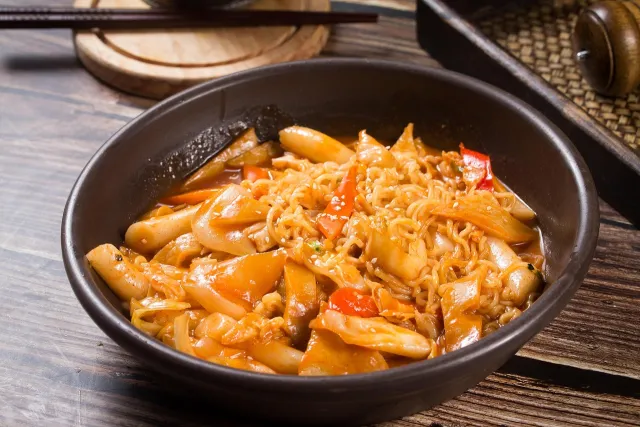
The very symbol of Korean street food: chewy cylindrical rice cakes simmered in gochujang sauce, both spicy and sweet. Stalls keep a huge griddle of tteokbokki bubbling and serve it in a cup or on a plate when you order, often with fish cakes and boiled eggs. Spice levels vary by stall, so try a little first if you're new to it.
Sundae
A Korean sausage made by stuffing pig intestine with glass noodles, vegetables and blood, then steaming it. It's chewy and mild, eaten dipped in salt or seasoned salt — or in some regions in ssamjang or chilli sauce. Stalls sometimes add sliced pork liver and lung; if you don't want offal, just say "sundaeman juseyo" (sundae only, please).
Twigim
Battered and fried squid, sweet potato, gimmari (glass noodles rolled in seaweed), vegetables and dumplings. Delicious on their own, but the Korean way is to dip them in tteokbokki sauce. Gimmari soaked in tteokbokki sauce is a combination countless Koreans adore.
Ordering tteokbokki, sundae and twigim together is nicknamed tteoksuntwi — the most basic snack bar combo of all.
Street food with broth
Eomuk (fish cake)
Fish cakes made from ground fish are threaded onto long skewers and kept in steaming broth. You stand at the stall, pick up skewers one at a time, and ladle broth into a paper cup yourself. Payment is often settled at the end by counting your skewers. A cup of hot fish cake broth on a cold day is practically the taste of a Korean winter. Busan is famous as the home of fish cake, with many shops selling them in all shapes and flavours.
Rice cake and chicken skewers
Rice cakes skewered, fried or grilled and brushed with sweet sauce — tteokkochi — are a classic after-school snack. Grilled chicken skewers, dakkochi, come with a choice of sauces such as spicy or soy.
Sweet street snacks
Hotteok
Dough made from glutinous rice or wheat flour is filled with brown sugar, cinnamon and nuts, then pressed flat on a griddle. Bite in and melted brown sugar syrup oozes out — careful, it's hot. Busan's ssiat hotteok is famous for being split open after cooking and stuffed with sunflower seeds, peanuts and other nuts.
Bungeoppang
Batter and sweet red bean paste baked in a fish-shaped mould, the quintessential winter street snack. These days you'll also find fillings such as custard cream, pizza and sweet potato. When the cold winds arrive, people are so delighted that they even use map apps to share where bungeoppang stalls are. Whether to eat it head first or tail first is a long-running joke debate among Koreans.
Gyeranppang (egg bread)
An oval of sweet bread batter baked with a whole egg on top — sweet bread and savoury egg in perfect balance. Especially popular at Myeongdong's stalls.
Dalgona
A nostalgic treat made by melting sugar, puffing it up with baking soda, then pressing it flat and stamping a shape into it. It was famous as a game — snap out the shape without breaking it and you got another one free — and gained worldwide attention after appearing in Squid Game. Tourist spots offer dalgona-making experiences.
Bingsu and ice cream
In summer, bingsu — finely shaved ice topped with red beans, fruit and condensed milk — is hugely popular. On the street you'll also see photogenic desserts such as towering swirl ice creams.
Street food that makes a filling meal
Gimbap
Rice and fillings rolled in seaweed and sliced — Koreans' go-to quick meal. In markets, finger-sized mayak gimbap, "addictive gimbap", is famous: once you start, you can't stop. It's eaten dipped in mustard sauce.
Bindaetteok
Ground mung beans mixed with bean sprouts, fernbrake and pork, then fried thick in oil. The bindaetteok alley in Seoul's Gwangjang Market is especially famous, and pairing a freshly fried pancake with makgeolli is the classic way to enjoy it.
Korean hot dogs
Korean "hot dogs" are sausages or cheese wrapped in batter and deep-fried, known abroad as Korean corn dogs. The Korean way is to roll them in sugar and add ketchup or mustard, and variations abound — coated in potato cubes, made with rice-flour batter and more.
Tornado potato
A whole potato cut into a long spiral, threaded onto a skewer, fried and dusted with seasoning. Fun to look at and very popular at tourist spots.
Street food by season
| Season | Signature snacks |
|---|---|
| Spring | Strawberry desserts; limited-edition cherry blossom treats |
| Summer | Bingsu, slushies, ice cream, fruit cups |
| Autumn | Roasted chestnuts, grilled corn |
| Winter | Bungeoppang, hotteok, roasted sweet potatoes, fish cake broth, egg bread |
Winter is Korean street food's golden season. Roasted sweet potato stalls with drum ovens and bungeoppang stalls pop up everywhere, and the streets come alive with people walking along clutching warm snacks.
Where to find the best street food
Myeongdong, Seoul
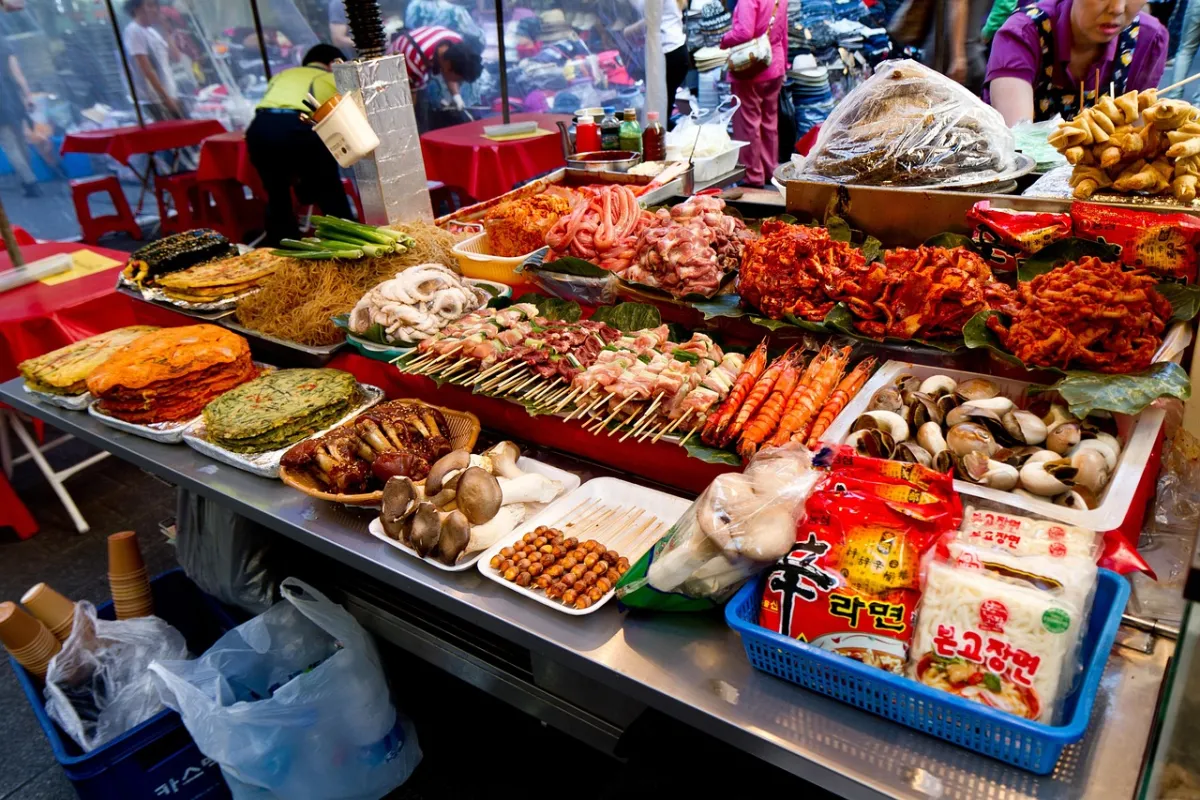
The street food district most visited by foreign tourists. From late afternoon, stalls line the middle of the street, with photogenic options such as grilled lobster, cheese hot dogs and strawberry rice cakes. Prices are a little higher than elsewhere, but you can try a huge variety in one place.
Gwangjang Market, Seoul
A traditional market with more than a century of history, where you can eat bindaetteok, mayak gimbap, yukhoe and knife-cut noodles at stalls in the middle of the market. It's become widely known abroad through Netflix documentaries and more.
Namdaemun Market, Seoul
A huge traditional market with hotteok, a braised hairtail alley, a knife-cut noodle alley and much more — great for combining shopping with eating.
Tongin Market, Seoul
A small market near Gyeongbokgung, famous for its lunchbox experience — buying brass coins to fill a tray with small portions from different stalls — and oil-fried tteokbokki.
BIFF Square and Kkangtong Market, Busan
Try Busan's own street foods: ssiat hotteok, bibim dangmyeon and fish cakes. Kkangtong Market sometimes hosts a night market in the evening.
Dongmun night market, Jeju
A night market serving street food with a Jeju twist: black pork skewers, abalone gimbap, tangerine juice and more.
Tips for buying from stalls
- Carry cash: many stalls take cards now, but small ones may accept cash only. Plenty of 1,000-won notes makes life easy.
- Point and order: pointing and saying "igeo juseyo" (this, please) or "igeo hana juseyo" (one of these, please) is all you need.
- Share: in a group, buy one of each and share to taste more.
- Eating standing up: standing at the stall to eat is perfectly normal, and some foods, like fish cakes, are eaten right there and paid for afterwards.
- Dispose of rubbish: put skewers and cups in the bins provided at the stall or take them with you. Public bins are scarce, so carry a small bag.
If you have dietary restrictions
Korean street food often contains pork, seafood or meat stock. If you're vegetarian or avoid certain foods, ask before ordering. Tteokbokki sauce may include fish cake or anchovy stock, and hot dog sausages and sundae use pork. Hotteok, bungeoppang with red bean, roasted sweet potatoes and chestnuts, and egg bread are relatively easy choices. If you have allergies, ask about ingredients — for example, "ttangkong deureogayo?" (does it contain peanuts?).
Street food and hygiene
Most Korean street food is cooked on the spot and served hot, so it's generally safe to eat. Still, choose busy stalls with fresh-looking ingredients, and in summer opt for cooked rather than raw food. Most markets and street food areas have public toilets and places to wash your hands.
Street food Korean
| Situation | Phrase |
|---|---|
| Ordering | Igeo hana juseyo (one of these, please) |
| Asking the price | Igeo eolmayeyo? (how much is this?) |
| Asking about spice | Mani maewoyo? (is it very spicy?) |
| Taking away | Pojanghae juseyo (to go, please) |
| Eating here | Yeogiseo meogeulgeyo (I'll eat here) |
| More fish cake broth | Gungmul jom deo juseyo (a little more broth, please) |
| Praising the food | Jeongmal masisseoyo! (it's really delicious!) |
Pojangmacha: the restaurants that open at night
You've probably seen K-drama characters sitting on plastic stools under an orange tent, clinking soju glasses. That's a pojangmacha. Originally roadside tent stalls selling simple drinking snacks and alcohol, they've long been loved as places where office workers and friends wind down after the day and open up about what's on their minds.
Classic pojangmacha dishes include eomuk-tang (fish-cake soup), dakbal (spicy chicken feet), odolppyeo (crunchy pork cartilage), gyeran-mari (rolled omelette), udon and grilled kkomjangeo (hagfish). These days indoor bars recreating the pojangmacha atmosphere outnumber street tents, but in some areas tent pojangmacha still light up every night. Some don't display prices, so check before ordering — and go with a group so you can share several dishes, which is the best way to enjoy one.
Trending street snacks
Korean street-snack trends change fast. Here are some that have become hugely popular with young people in recent years. Trends can shift quickly, so check social media around the time you travel.
| Snack | Characteristics |
|---|---|
| Tanghulu | Fruit on skewers coated in sugar syrup that hardens into a glassy shell — the crack of the candy and the tang of the fruit make the appeal. |
| Croffle | Croissant dough pressed in a waffle iron: crisp outside, soft inside, served with ice cream or syrup. |
| Yakgwa | A traditional confection of flour dough with honey and sesame oil, fried and soaked in rice syrup. It's had a revival among younger generations and been reinvented in many desserts. |
| Tornado potato | A potato cut into a spiral, skewered, deep-fried and dusted with various seasonings. |
Tips for a street-food crawl
- Share: the key to a street-food crawl is sharing with companions and tasting a little of many things rather than filling up on one.
- Bring cash and card: many stalls now take cards or mobile payments, but some are still cash only. Carry plenty of 1,000- and 5,000-won notes.
- Wet wipes and tissues: many foods come with sticky sauces, so wet wipes are handy.
- Check where to eat: some markets and streets ask visitors not to eat while walking. Eat in the space provided in front of the stall, and return rubbish to the vendor or put it in designated bins.
- Go in the evening: many stalls are busiest from late afternoon into the night. Arrive around sunset for the widest choice.
Homemade hotteok
Hotteok, the classic winter street snack, can be made at home too. Enjoy the taste of hot sugar syrup oozing from a freshly cooked pancake in your own kitchen.
Ingredients (6–8 pancakes)
- Dough: 2 cups plain flour, 3/4 cup lukewarm milk or water, 1 tbsp sugar, 1 tsp instant yeast, 1/2 tsp salt, 1 tbsp cooking oil
- Filling: 4 tbsp brown sugar, 1/2 tsp ground cinnamon, 2 tbsp chopped nuts
Method
- Mix all the dough ingredients and knead until stretchy, then cover and leave somewhere warm for about an hour until doubled in size.
- Combine the brown sugar, cinnamon and nuts for the filling.
- Oil your hands, take a piece of dough slightly larger than a ping-pong ball, flatten it, add a spoonful of filling and pinch it closed into a ball.
- Place it in a generously oiled pan; after about 30 seconds, when the underside has set, flip it and press it flat with a hotteok press or spatula.
- Cook over low heat until golden on both sides. The sugar filling is extremely hot, so let it cool a little before eating.
A short history of Korean street food
The shape of today's Korean street food has its roots in the hard years after the Korean War. When food was scarce, wheat flour arriving as American aid became the base of cheap, filling food, and hotteok, noodles and pulppang made from flour batter filled markets and alleys. In the 1970s and 80s, snack bars in front of schools and pojangmacha tents multiplied, and tteokbokki, sundae and eomuk became everyday snacks for ordinary people. It was also around this time that tteokbokki, originally seasoned with soy sauce, spread in the bright red gochujang version we know today. Even as the economy grew, street food never disappeared; instead it kept evolving, adding new items such as gyeranppang, tornado potatoes and cheese hot dogs. A single plate of tteokbokki carries decades of Korean life.
Regional street-food specialties
Street food has its own regional character, too. In Busan, don't miss ssiat hotteok at BIFF Square in Nampo-dong: crisp, oil-fried hotteok split open and stuffed generously with sunflower and pumpkin seeds, blending nutty and sweet. Busan is also famous as the city of fish cakes, and you can taste freshly fried eomuk at Busan Station and markets all over the city. In Daegu, try napjak-mandu, flat pressed dumplings fried until crisp; at the night market of Jeonju's Nambu Market, you'll find all kinds of fusion street food. Incheon's Chinatown, known as the birthplace of jajangmyeon, is also famous for snacks such as oven-baked dumplings and hollow gonggal-ppang. When you choose where to travel, look up the local signature snacks as well and your trip will taste far better.
Fish-cake broth and street-food culture
Standing in front of a stall on a cold winter day, eating skewered eomuk, is a familiar scene for Koreans. The fun part is that customers buying fish cakes can freely ladle hot broth into a paper cup. Customers often keep their empty skewers aside and pay by counting them at the end. This system, in which the owner trusts customers to report the number themselves, reflects the warmth and mutual trust of street-food culture. When you order tteokbokki, it's also common to dip sundae or twigim in the tteokbokki sauce or mix them together — and this way of combining foods is one of the key secrets to enjoying Korean street food.
Street food in dramas and variety shows
Street food also appears often in Korean dramas and variety shows. Scenes of a protagonist sharing soju with a friend at a pojangmacha after a hard day, or a couple sharing a bag of bungeoppang on a winter street, stir a sense of familiarity in viewers. Thanks to these scenes, more and more overseas visitors head to markets and street stalls to taste the food they saw on screen. The moment you take a real bite of something you've only watched on TV, the drama scene will feel a little closer.
Frequently asked questions
How much does street food cost?
Mostly a few thousand won. Tourist hotspots are a bit pricier; neighbourhood markets and snack bars near schools are usually cheapest. Prices vary by region and over time.
When do stalls open?
Market stalls open during the day, while stalls in busy districts such as Myeongdong usually run from late afternoon into the night. Seasonal stalls such as bungeoppang and roasted sweet potato appear only in winter.
What should I try first?
For a first taste, we recommend tteokbokki and fish cakes, plus hotteok or bungeoppang depending on the season — the foundations of Korean street food and its best-loved snacks.
Final thought: Korea's flavours on the street
Korean street food isn't fancy, but it holds the comfort and memories of people living busy lives: office workers sipping fish cake broth at a stall on the way home, students sharing tteokbokki after school, couples strolling with a paper bag of bungeoppang. The moment you eat street food, you become part of that scene too.
On your next trip to Korea, spend one evening touring markets and stalls instead of a restaurant. A taste of Korean everyday life for a few thousand won will stay with you for a long time.