A Guide to Hanok Stays and Temple Stays: A Night in a Traditional House, Rest at a Mountain Temple, from Booking to Etiquette
The deepest way to experience Korean tradition is to spend a night inside it. We cover what hanok stays are like and where to find them, how to sleep in an ondol room, temple stay programmes and daily schedules, how to book and what to bring, and the etiquette to follow.

Contents
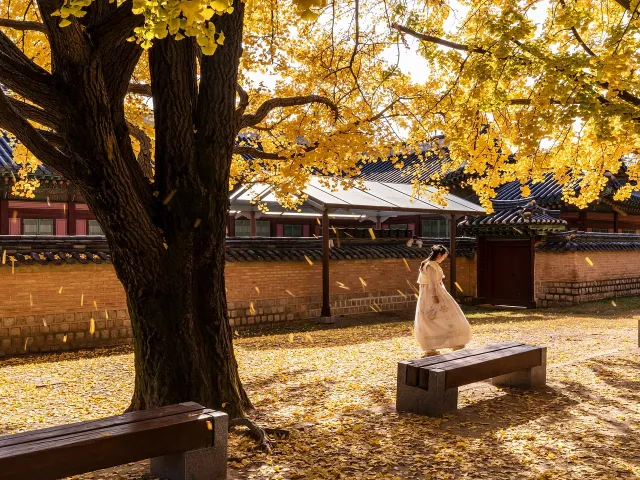
Visiting palaces and hanok villages is a great part of a trip to Korea, but the deepest way to feel Korean tradition is to spend a night inside those spaces yourself. A hanok stay means falling asleep in a warm ondol room beneath wooden pillars and a tiled roof, then greeting the morning sun as it falls on the courtyard. A temple stay means starting your day to the sound of dawn chanting at a mountain temple.
Both let you experience a slow, deep Korea, completely different from busy city travel. In this guide we cover what hanok stays and temple stays are like, recommended areas, how to book and what to bring, and the etiquette you need to know.
What is a hanok stay?
A hanok is a traditional Korean house, built from natural materials such as wood, earth, stone and paper and designed for living with the changing seasons. A hanok stay means sleeping in one — anything from a renovated old hanok run as a guesthouse to a luxury hanok hotel newly built in the traditional style.
Hanok structure and features
- Ondol: Korea's distinctive heating system, which sends heat beneath the floor to warm the whole room. Even in winter the floor is toasty, and you sleep snugly under the quilts. Most modern hanok accommodation uses boiler-based ondol.
- Daecheong maru: a wide wooden-floored space between rooms that stays cool in summer as breezes pass through.
- Madang: the open courtyard at the heart of the house, letting in sky, sunlight and wind.
- Hanji windows: doors and windows covered with hanji, traditional Korean paper, which lets in soft light.
- Tiled roofs and eaves: beautiful upward-curving eaves designed to block summer sun and let in winter sun.
Where to find hanok stays
| Area | Characteristics |
|---|---|
| Bukchon, Seoul | A dense cluster of hanok between Gyeongbokgung and Changdeokgung — great for combining city sightseeing with a hanok experience |
| Seochon, Seoul | A quiet neighbourhood west of Gyeongbokgung with lane cafés and galleries |
| Jeonju Hanok Village | A large village of hundreds of hanok; Jeonju is also famous as a food city, home of Jeonju bibimbap |
| Gyeongju | Staying in a hanok among ancient tombs and ruins, with many options around Hwangnidan-gil and Gyochon Village |
| Hahoe Village, Andong | A UNESCO World Heritage traditional village where you can stay in homestays in a village where people still live |
| Elsewhere | Gangneung, Suncheon, Asan's Oeam Village and more each have distinctive hanok accommodation |
City hanok stays offer easy access to sights, while hanok in rural traditional villages offer a quieter, more tranquil atmosphere.
Living in a hanok
Sleeping on the floor
Most traditional hanok accommodation has you sleep on a yo (floor mattress) and quilts laid on the floor rather than in a bed. It may feel unfamiliar at first, but sleeping on a warm ondol floor is surprisingly comfortable. If you have back or knee problems, many places also offer rooms with beds, so check before booking.
Taking off shoes
In a hanok, you take off your shoes on the stepping stone before stepping up onto the maru or into a room. Indoors you go in socks or bare feet.
Bathrooms and facilities
Some renovated old hanok have bathrooms outside the room or shared bathrooms. If you need a private bathroom, check when booking. More and more hanok accommodation now offers private bathrooms and modern amenities.
Sound and temperature
Built of wood and paper, hanok carry sound easily, so keep quiet at night. Indoor temperatures are also easily affected by the weather outside, so bring mosquito protection in summer and warm sleepwear in winter.
Things to enjoy
Many hanok stays offer traditional tea, hanbok experiences, tea ceremonies, traditional crafts and Korean-style breakfasts. Simply sitting on the maru gazing at the sky beyond the eaves, or stargazing in the courtyard, makes for special time.
What is a temple stay?
A temple stay is a programme in which you stay at a traditional Korean temple and experience monastic life. It began in earnest around the 2002 World Cup co-hosted by Korea and Japan, to introduce Korean Buddhist culture to foreign visitors, and is now run at many temples nationwide. Anyone can take part regardless of religion, and many come simply for rest and meditation away from daily life.
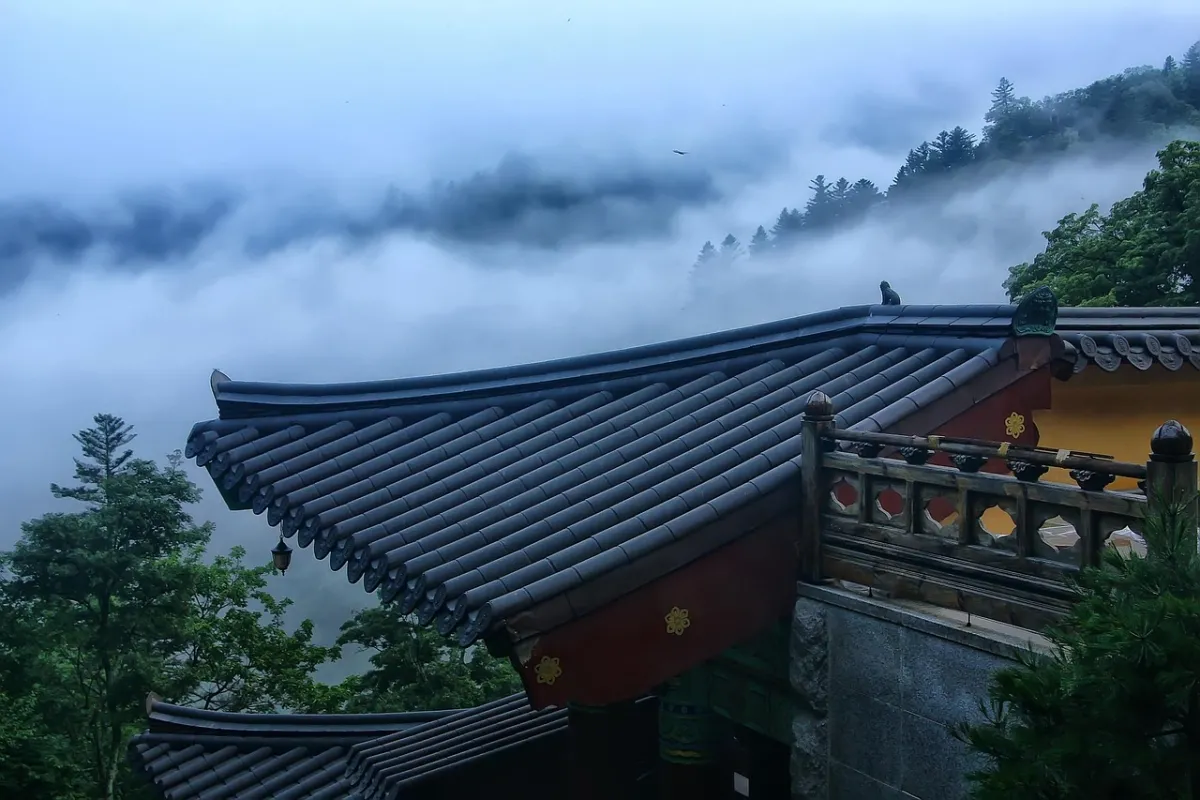
Most of Korea's mountain temples sit deep in the mountains amid beautiful scenery. Several have been inscribed on the UNESCO World Heritage list as "Sansa, Buddhist Mountain Monasteries in Korea".
Types of temple stay
| Type | Features | Best for |
|---|---|---|
| Relaxation | Free time to rest, walk and meditate, apart from set services and meals | Those seeking quiet rest |
| Experience | Taking part in set programmes: services, meditation, monastic meals, 108 bows, tea ceremony | Those wanting to experience Buddhist culture in depth |
| Day programme | A few hours of temple culture without an overnight stay | Travellers short on time |
Two days and one night is typical, and some temples offer longer programmes. Some provide guidance in foreign languages, so international visitors can join with ease.
A day at a temple stay (experience programme example)
| Time | Activity |
|---|---|
| Afternoon | Arrival, changing into practice clothes, temple etiquette briefing, temple tour |
| Early evening | Dinner (gongyang), evening service |
| Evening | Seon meditation, tea with a monk, lotus lantern making and more |
| Night | Early lights-out (usually around 9 p.m.) |
| Dawn | Early rising (usually around 3–4 a.m.), dawn service, 108 bows |
| Morning | Breakfast (baru gongyang), communal work (cleaning together), forest walk |
| Late morning | Sharing reflections, departure |
Key temple stay experiences
Yebul (Buddhist service)
A ceremony paying respect to the Buddha. The sound of the wooden moktak and the great temple bell ringing out in the pre-dawn darkness, along with the monks' chanting, is often the most memorable moment of a temple stay.
108 bows
A practice of bowing 108 times, symbolising letting go of the 108 defilements; some participants thread a bead onto a string with each bow. It's physically demanding, but many people find their minds clear afterwards. If your knees hurt, you don't have to push yourself.
Baru gongyang (monastic meal)
The monks' traditional way of eating. You put only as much food as you'll eat into four bowls (baru), leave nothing, and after eating clean the bowls with water and a piece of kimchi, then drink the water too. It's a practice teaching the value of food and gratitude. Temple food is vegetarian, using no meat and none of the five pungent vegetables such as garlic and spring onion.
Chamseon (meditation)
Sitting quietly, focusing on the breath and looking into the mind. You start with short sessions, and a monk guides you on posture and method.
Tea with a monk
Time to drink tea and talk with a monk. Being able to share life's worries and questions freely makes it a memorable part of the stay for many participants.
Booking and what to bring
Booking
- Hanok stays: book through accommodation booking sites or the property's official website. Information on hanok accommodation certified by official tourism bodies is also useful.
- Temple stays: the official Templestay website lets you search by region, temple, programme type and foreign-language support, and book.
- Peak seasons: autumn foliage season and holidays fill up early, so book ahead.
What to bring for a temple stay
- Toiletries and a towel (provision varies by temple)
- Comfortable socks (most temples provide practice clothes)
- A layer suited to the season (mountains are colder than cities, especially at dawn)
- Personal medication
- A torch (temple grounds can be dark at night)
Etiquette at temples and hanok
Temple etiquette
- Dress: avoid revealing clothes and wear the practice clothes provided.
- Quiet: temples are places of practice. Don't talk loudly, especially at night and dawn.
- Hapjang: when you meet a monk or others, greet them with hapjang, a light bow with palms pressed together.
- In the worship hall: enter through a side door rather than the central one, and remove your shoes. Photography is often prohibited inside.
- No alcohol or smoking: both are banned on temple grounds, and don't bring in meat.
- Respect monks' spaces: don't enter areas marked "no entry".
Hanok etiquette
- The hanji on doors and windows tears easily, so handle it gently.
- Move heavy luggage carefully to avoid scratching wooden floors and pillars.
- Soundproofing is minimal, so keep quiet late at night.
- Follow the rules on smoking and cooking indoors.
Frequently asked questions
Can I join a temple stay if I'm not Buddhist?
Of course. Temple stays are cultural programmes open to anyone regardless of religion, and how much you join in the rituals is often left to you.
Is it okay if I don't speak Korean?
Some temples run foreign-language programmes, so check for language support when booking. Hanok accommodation that hosts many foreign guests can often communicate in English.
Can I bring children?
Some temple stay programmes welcome families, and there are family-friendly hanok stays too. Dawn schedules can be hard on children, so consider a relaxation programme.
Final thoughts
Waking up in a hanok's ondol room, the dawn bell at a mountain temple — these are experiences no photo can fully capture, a Korea you feel with body and mind. Amid a busy itinerary, slow down for a day and experience first-hand the way of life and spirit Koreans have carried on for so long.
In the clear dawn air of a mountain temple, or gazing at the moon hanging from the eaves, you may well see Korea through entirely new eyes.