The Complete Guide to Seoul's Five Grand Palaces: Gyeongbokgung, Changdeokgung, Changgyeonggung, Deoksugung and Gyeonghuigung, with Tips and Free Entry in Hanbok
The palaces of the Joseon dynasty are the heart of Seoul, a capital for 600 years. We cover each palace's history and highlights, the guard-changing ceremony and Changdeokgung's Secret Garden, night openings, combination tickets, free entry in hanbok, a one-day route and etiquette.

Contents
- What makes the Joseon palaces special?
- Gyeongbokgung: Joseon's main palace
- Changdeokgung and the Secret Garden: a palace at one with nature
- Changgyeonggung: a palace for the queen dowagers
- Deoksugung: a palace marked by modern history
- Gyeonghuigung: a quiet palace for a stroll
- The five palaces compared
- Visiting tips
- Suggested one-day route
- Etiquette
- A quick history of the Joseon palaces
- Finding the hidden symbols
- Jongmyo and the royal tombs: World Heritage to pair with the palaces
- Renting hanbok without regrets
- The most photogenic palace spots
- Stories of kings and queens in the palaces
- Museums inside the palaces
- Special palace programmes
- Deepen your palace walk with a guide
- The palaces through the seasons
- How the palaces change through the day
- Exploring the palaces by wheelchair or with a stroller
- Frequently asked questions
- Final thoughts
Seoul is a modern city of skyscrapers and glittering shopping streets, yet in its centre the palaces of the Joseon dynasty still stand as they did 600 years ago. Walk along Gwanghwamun Square and a majestic palace gate appears, with Bugaksan mountain spreading behind it like a folding screen. Skyscrapers and traditional architecture in a single frame — that's Seoul's special charm.
Seoul has five palaces: Gyeongbokgung, Changdeokgung, Changgyeonggung, Deoksugung and Gyeonghuigung. In this guide we cover each palace's character and highlights, visiting tips and how to get in free by wearing hanbok. Opening hours, fees and closing days can change, so check each palace's official information before you go.
What makes the Joseon palaces special?
The Joseon dynasty (1392–1897) made Hanyang — today's Seoul — its capital and built several palaces. Besides the main palace where the king lived and governed, there were secondary palaces the king could move to in case of fire or war. That's why several palaces cluster close together in Seoul.
Korean palaces prized harmony with nature: positioned with mountains behind and water in front, with buildings laid out to follow the terrain, and gardens and ponds within the grounds. Look out too for dancheong, the vividly coloured decorative painting, and rooflines whose eaves curve gently up towards the sky.
Gyeongbokgung: Joseon's main palace
Built in 1395 as Joseon's first main palace, Gyeongbokgung is the largest and most iconic of Seoul's palaces. Burned during the Imjin War in the late 16th century, it lay in ruins for a long time before being rebuilt in the 19th century, and many buildings were damaged during the Japanese colonial period. Today, long-running restoration work is gradually bringing back its former appearance.
Highlights
- Gwanghwamun: the main gate, one of the buildings that symbolise Seoul.
- Geunjeongjeon: the throne hall where coronations and important state ceremonies were held. In its courtyard, rows of stone markers indicate the ranks of officials.
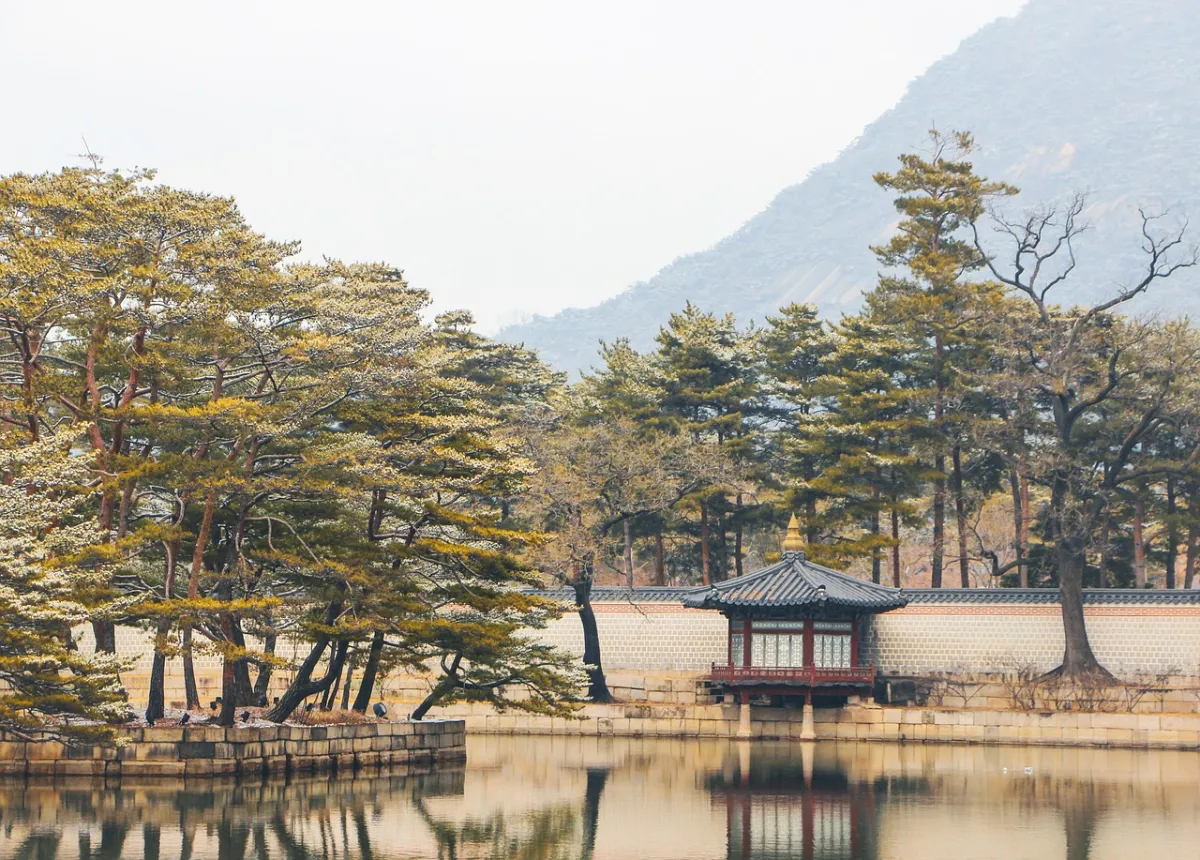
- Gyeonghoeru: a huge pavilion built over a pond, where the king received foreign envoys and held banquets. Its reflection in the water makes it the palace's best photo spot.
- Hyangwonjeong: a hexagonal pavilion in the middle of a pond in the north of the palace, picture-perfect with its bridge.
- National Palace Museum and National Folk Museum: located in and around the palace, easy to combine.
Gatekeeper changing ceremony
In front of Gwanghwamun, a ceremony re-enacts the changing of the Joseon-era royal gatekeepers. Gatekeepers and soldiers in colourful traditional dress perform the ritual to the beat of drums — especially popular with foreign visitors. Check official information for times and days.
Changdeokgung and the Secret Garden: a palace at one with nature
Built in 1405 as a secondary palace, Changdeokgung effectively served as the main palace for a long time after the Imjin War. Its buildings, arranged naturally along the terrain, earned it UNESCO World Heritage status in 1997. If Gyeongbokgung is orderly and grand, Changdeokgung is natural and elegant.
Highlights
- Donhwamun: one of the oldest surviving palace main gates.
- Injeongjeon: the throne hall, which still shows traces of modern additions such as electric lights and curtains.
- Nakseonjae: modest buildings left unpainted, where the last descendants of the Joseon royal family lived.
The Secret Garden (Huwon)
A vast garden behind the palace where kings and the royal family relaxed. Its harmony of woods, ponds and pavilions is considered the essence of the traditional Korean garden. The area around Buyongji, a square pond with a pavilion, is especially famous and stunning in autumn foliage season. To protect it, the garden is often open only on guided tours at set times with reservations, and numbers are limited, so book ahead in peak season.
Moonlight tour
At certain times of year, a "moonlight tour" lets visitors stroll Changdeokgung at night carrying traditional lanterns. It's very popular and hard to book.
Changgyeonggung: a palace for the queen dowagers
Adjoining Changdeokgung, this palace was built to house senior royal women. During the colonial period it suffered the indignity of being turned into a zoo and botanical garden called "Changgyeongwon", before being restored to its palace form.
- Myeongjeongjeon: one of the oldest surviving throne halls of the Joseon palaces.
- The Great Greenhouse: a Western-style glass greenhouse built in the early 20th century, whose white iron frame makes it a popular photo spot.
- Chundangji: a quiet pond, lovely for a stroll.
Changdeokgung and Changgyeonggung are connected through gates such as Hamyangmun, making them easy to visit together. Changgyeonggung has periods of night opening when you can see the illuminated greenhouse and pond.
Deoksugung: a palace marked by modern history
In front of City Hall, Deoksugung is a unique palace where traditional palace buildings stand alongside Western-style stone buildings. It was where Emperor Gojong lived during the Korean Empire period (1897–1910), and it vividly reflects the upheavals of Korea's modern history.
- Daehanmun: the main gate, where a gatekeeper changing ceremony is also held.
- Junghwajeon: the throne hall.
- Seokjojeon: a Western-style stone building reminiscent of a Greek temple, now a museum of the Korean Empire. Interior visits may require reservations.
- Jeonggwanheon: a building blending Eastern and Western styles, where Gojong is said to have enjoyed coffee.
- MMCA Deoksugung: an art museum inside the palace hosting modern art exhibitions.
Deoksugung stone-wall road
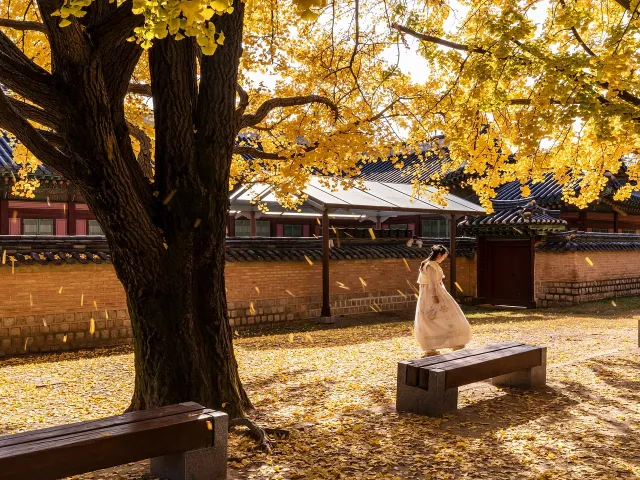
A walking path along the stone wall surrounding Deoksugung, considered one of Seoul's most romantic streets. In autumn, yellow ginkgo leaves carpet the path. The nearby Jeongdong-gil, lined with modern buildings, churches and museums, is perfect to walk at the same time.
Deoksugung often stays open late, so it's great to visit after work or at dusk to enjoy the illuminated palace together with the city at night.
Gyeonghuigung: a quiet palace for a stroll
Next to the Seoul Museum of History, most of Gyeonghuigung's buildings were demolished or moved during the colonial period, and only part has been restored. It's small, but with few tourists it's a lovely place to stroll quietly and soak up the palace atmosphere. It's usually free to enter, so it's easy to drop by.
The five palaces compared
| Palace | Character | Don't miss |
|---|---|---|
| Gyeongbokgung | The largest, most iconic main palace | Geunjeongjeon, Gyeonghoeru, gatekeeper ceremony |
| Changdeokgung | Harmony with nature; UNESCO World Heritage | Secret Garden (reservation), Nakseonjae, moonlight tour |
| Changgyeonggung | Connected to Changdeokgung; Western greenhouse | Great Greenhouse, Chundangji, night opening |
| Deoksugung | Traditional and modern architecture side by side | Seokjojeon, stone-wall road, night views |
| Gyeonghuigung | Quiet and peaceful | A relaxed stroll, Seoul Museum of History |
Visiting tips
Combination ticket
If you plan to see several palaces, a combination ticket covering the main palaces and Jongmyo Shrine within a set period is economical. Check official information for where to buy and what's included.
Free entry in hanbok
Wearing hanbok gets you into Seoul's main palaces free (check official guidelines for details). There are many hanbok rental shops around Gyeongbokgung and Changdeokgung, renting by the hour. Strolling the palaces in hanbok and taking photos has become a popular part of a Seoul trip. When renting, check the return time and choose hanbok suited to the season (in winter, thicker fabric or an outer layer).
Closing days
Each palace closes on a different day of the week. Gyeongbokgung and Changdeokgung, for example, close on different days, so check if you plan to visit both on the same day.
Free guided tours
Several palaces offer free guided tours in Korean and foreign languages at set times. Touring with a guide helps you understand the stories behind each building far more deeply. Audio guides and official apps are also available.
Night openings
During certain periods, such as spring and autumn, special night openings are held at palaces including Gyeongbokgung and Changgyeonggung. Illuminated palaces have a completely different atmosphere from daytime. They're popular and often require advance booking.
Suggested one-day route
| Time | Route |
|---|---|
| Morning | Rent hanbok → Gyeongbokgung (time it for the gatekeeper ceremony) → National Palace Museum |
| Lunch | Eat in Seochon or Samcheong-dong |
| Afternoon | Stroll Bukchon Hanok Village → Changdeokgung and Secret Garden (at your reserved time) → Changgyeonggung's Great Greenhouse |
| Evening | Deoksugung at night → stone-wall road → dinner around City Hall and Gwanghwamun |
Seeing everything in one day is a packed schedule, so focusing on two palaces depending on your energy and interests is also a good idea.
Etiquette
- Don't climb on, lean on or touch heritage buildings.
- Don't enter restricted areas.
- As a rule, don't eat inside the palaces except in designated areas.
- Drone photography isn't allowed without permission, and tripods may be restricted, so check.
- Be considerate of other visitors and keep your voice down.
A quick history of the Joseon palaces
Knowing the broad sweep of the Joseon dynasty before you visit brings each palace's story to life.
| Period | Key events |
|---|---|
| 1392 | King Taejo (Yi Seong-gye) founds the Joseon dynasty. |
| 1395 | Gyeongbokgung, the main palace, is completed in Hanyang (today's Seoul). |
| 1405 | Changdeokgung is built as a secondary palace. |
| 1592 | Seoul's palaces burn during the Imjin War (Japanese invasions). |
| 17th century onwards | Changdeokgung, restored first, serves as the de facto main palace for a long period. |
| 1867 | Gyeongbokgung is rebuilt under the regent Heungseon Daewongun. |
| 1897 | King Gojong proclaims the Korean Empire, and Deoksugung (then Gyeongungung) becomes its centre. |
| 1910 | With the loss of sovereignty, many palace buildings are damaged or relocated. |
| 1990s onwards | Large-scale restoration continues, centred on Gyeongbokgung. |
The palaces you see today were rebuilt after war, damage and restoration. Comparing restored buildings with older ones adds another layer to a palace walk.
Finding the hidden symbols
Palace decorations and structures carry wishes for the royal family's wellbeing and authority. Look for these symbols as you walk, and the same palace will look different.
- Haechi: the mythical creature seated in front of Gyeongbokgung's Gwanghwamun gate, a symbol of justice able to tell right from wrong. It was also believed to ward off fire.
- Japsang: rows of small clay figures perched on the ends of palace roofs. Modelled on characters from Journey to the West and others, they were meant to stop evil spirits from entering.
- Pumgyeseok (rank stones): two rows of stone markers in the main hall's courtyard, showing officials where to stand by rank during royal audiences.
- Bakseok: the uneven paving stones of the courtyard, deliberately left rough to reduce glare from sunlight and help rainwater drain.
- Deumeu: wide bronze vessels in front of buildings. Filled with water, they were said to frighten away the fire spirit when it saw its own reflection.
Jongmyo and the royal tombs: World Heritage to pair with the palaces
If the palaces were where kings lived, Jongmyo is the shrine housing the spirit tablets of Joseon's kings and queens. Its long, unadorned main hall shows a majestic yet restrained beauty, and it's a UNESCO World Heritage Site. Around the first Sunday of May each year, the royal ancestral rite Jongmyo Jerye is re-enacted, and its accompanying music, Jongmyo Jeryeak, is on UNESCO's Intangible Cultural Heritage list.
The Royal Tombs of the Joseon Dynasty are also World Heritage. Seolleung and Jeongneung, right in the middle of Seoul's Gangnam, let you explore royal tombs along forest paths in the heart of the city, making them a popular walk. Coming upon centuries-old tombs among tall buildings is a uniquely Seoul experience.
Renting hanbok without regrets
- Rent near the palace: there are plenty of hanbok rental shops around Gyeongbokgung and Changdeokgung. Choosing one close to the palace means less time walking around in unfamiliar clothes.
- Check the rental period: rentals usually run for a few hours, with longer periods costing more. Three to four hours is enough for one palace and a stroll nearby.
- Think about the season: choose light, breathable fabrics in summer, and lined hanbok with fur accessories in winter.
- Pack light: hanbok have almost no pockets, so carry just your phone and transport card in a small pouch bag and leave the rest of your things at the shop.
- Footwear: palaces have many dirt and stone paths, so wear comfortable shoes. Shops sometimes lend traditional embroidered shoes, but they can be uncomfortable for long walks.
The most photogenic palace spots
| Spot | Palace | Best time |
|---|---|---|
| Gyeonghoeru Pavilion | Gyeongbokgung | Around sunset and during night openings, when it's reflected in the pond |
| Hyangwonjeong Pavilion | Gyeongbokgung | Autumn foliage and snowy winter days |
| Buyongji Pond | Changdeokgung Secret Garden | Spring greenery and foliage season |
| Daeonsil (Grand Greenhouse) | Changgyeonggung | When soft afternoon light streams through the glass |
| Seokjojeon Hall | Deoksugung | Afternoons, when Western-style and traditional buildings appear together, and at night |
Popular spots get crowded in the afternoon, so arrive right after opening for quieter photos. It's polite to keep shoots short so you don't block other visitors.
Stories of kings and queens in the palaces
Every palace building holds stories of real historical figures. Walk with those stories in mind and even empty halls feel alive.
- Gyeongbokgung and King Sejong: King Sejong, who created Hangul, ruled from Gyeongbokgung. The Jiphyeonjeon, where scholars carried out research, stood within the palace, and today a statue of Sejong stands in Gwanghwamun Square in front of it.
- Geoncheonggung and Empress Myeongseong: deep inside Gyeongbokgung, Geoncheonggung was where King Gojong and Empress Myeongseong lived — and the tragic site of the empress's assassination by Japanese agents in 1895.
- Changgyeonggung and Crown Prince Sado: Changgyeonggung is known as the place where King Yeongjo locked his son, Crown Prince Sado, in a rice chest, where he died — a tragedy that has inspired countless films and dramas.
- Deoksugung and King Gojong: after proclaiming the Korean Empire, Gojong lived at Deoksugung and pursued modernisation. Seokjojeon, the palace's Western-style building, symbolises the changes of this era.
- Changdeokgung: with a beautiful layout that follows the natural terrain, it's the only Seoul palace inscribed as a UNESCO World Heritage Site.
Museums inside the palaces
If you have time after exploring the palaces, visit the museums in or near them. Inside Gyeongbokgung, the National Palace Museum of Korea displays Joseon royal artefacts — royal seals, garments and items from court life — up close. In the same grounds, the National Folk Museum of Korea shows the lives and seasonal customs of ordinary people, a fascinating contrast to the palace. Permanent exhibitions at both are often free, making them good places to rest on rainy days or in the midday heat.
Special palace programmes
Palaces host special seasonal programmes. Gyeongbokgung's night openings, when you can stroll the illuminated palace, are hugely popular. There are also experience programmes combining royal cuisine, traditional performances and a night walk through the palace, letting you imagine a Joseon royal evening. These run only during set periods and sell out fast, so check official booking information as soon as your dates are fixed — sometimes there's a separate booking channel for foreigners.
Deepen your palace walk with a guide
Palaces offer free guided tours at set times, including in English, Chinese and Japanese. Walking with a guide reveals small decorations and hidden stories you'd miss on your own. If the times don't suit you, try an audio-guide app on your phone or rent an audio guide.
The palaces through the seasons
The same palace looks completely different from season to season — which is why many Seoulites revisit the same palace each time the season turns.
In spring, plum, cornelian cherry and cherry blossoms bloom at Changgyeonggung and Deoksugung, framed by the old palace walls. In summer, the dense forest of Changdeokgung's Secret Garden casts deep shade and lotus leaves fill the ponds. Autumn is the palaces' most dazzling season, as red and yellow leaves settle over tiled roofs and painted dancheong, creating scenes like paintings. When snow falls in winter, white snow piles on black roof tiles, revealing a quiet, refined beauty; Gyeongbokgung in the snow is a scene many photographers wait all year for.
If your trip is short, choose the one palace that best suits the season and explore it slowly. Lingering in a single place without rushing is how you'll feel most deeply the beauty of the time and seasons a palace holds.
How the palaces change through the day
The same palace shows a completely different face depending on when you visit. Early in the morning, just after opening, there are few visitors, so you can feel as if you're walking the silent palace almost alone, and take photos at leisure. Midday brings lively crowds of tour groups and travellers in hanbok, and around sunset the glow over the tiled roofs bathes the palace in warm light. Some palaces open at night during certain periods, and illuminated halls create a mysterious atmosphere quite different from daytime. Visiting the same palace twice at different times is a great idea.
Exploring the palaces by wheelchair or with a stroller
As historic buildings, the palaces have many thresholds, steps and gravel paths, but more of them now have ramps and barrier-free routes. Some lend wheelchairs and strollers at the ticket office or information centre, so ask in advance. Check the barrier-free route on the palace website before you go, and you can see the main halls along paths that are easy to get around.
Frequently asked questions
How long does one palace take?
Allow two to three hours for Gyeongbokgung, two to three hours for Changdeokgung including the Secret Garden, and about an hour each for Deoksugung and Changgyeonggung.
Which palace should I visit first?
For a first visit, Gyeongbokgung, Seoul's signature palace; if you love nature and gardens, Changdeokgung's Secret Garden.
Is it okay on a rainy day?
Many people actually love the palaces in the rain for their atmosphere. If you're renting hanbok, though, consider the weather.
Final thoughts
Seoul's palaces aren't just old buildings; they hold 500 years of Joseon history, the pain of the modern era and the efforts of those who have protected and restored them. Strolling the palaces that stand quietly amid forests of skyscrapers, you feel anew the depth of the city that is Seoul.
If you go to Seoul, spend a day walking slowly through the palaces in hanbok. The sky framed by curving eaves, a pavilion reflected in a pond and ginkgo leaves on a stone-wall road will stay with you for a long time.