The Complete Guide to Korean BBQ and Bulgogi: Samgyeopsal vs Galbi vs Bulgogi, How BBQ Restaurants Work and How to Make a Lettuce Wrap
Meat sizzling on a grill in the middle of the table — that's Korean BBQ. We explain the differences between samgyeopsal, galbi and bulgogi, how to order and grill, how to wrap ssam, the side dishes and a bulgogi recipe to make at home.

Contents
Ask people what you absolutely must experience in Korea and many will say "grilling meat at a Korean BBQ restaurant". Meat sizzles on the grill in the middle of the table, and you wrap a piece in lettuce with ssamjang and garlic and pop it in your mouth in one go. Korean BBQ isn't just a meal; it's a culture of grilling, sharing and talking together.
Walk into a BBQ restaurant for the first time, though, and you'll be full of questions: what's on the menu, who does the grilling, why are there scissors, how do you eat the side dishes? In this guide we cover the classic Korean BBQ dishes and how they differ, how BBQ restaurants work, how to make a lettuce wrap and a bulgogi recipe to make at home.
What makes Korean BBQ distinctive
The defining feature of Korean BBQ is that diners grill the meat themselves at the table. Each table has a charcoal or gas grill with an extractor hood above to draw off smoke. Meat generally comes either unmarinated or marinated in a soy-based sauce.
The other feature is ssam, wraps. Grilled meat is wrapped in leafy vegetables such as lettuce or perilla leaves with ssamjang, garlic and chilli. Rich meat and fresh vegetables balance each other, so you don't feel weighed down even after eating a lot. Add side dishes such as kimchi, pajeori (seasoned spring onion salad) and pickles, and the spread is complete.
The classic dishes and how they differ
Pork
| Dish | Cut and characteristics |
|---|---|
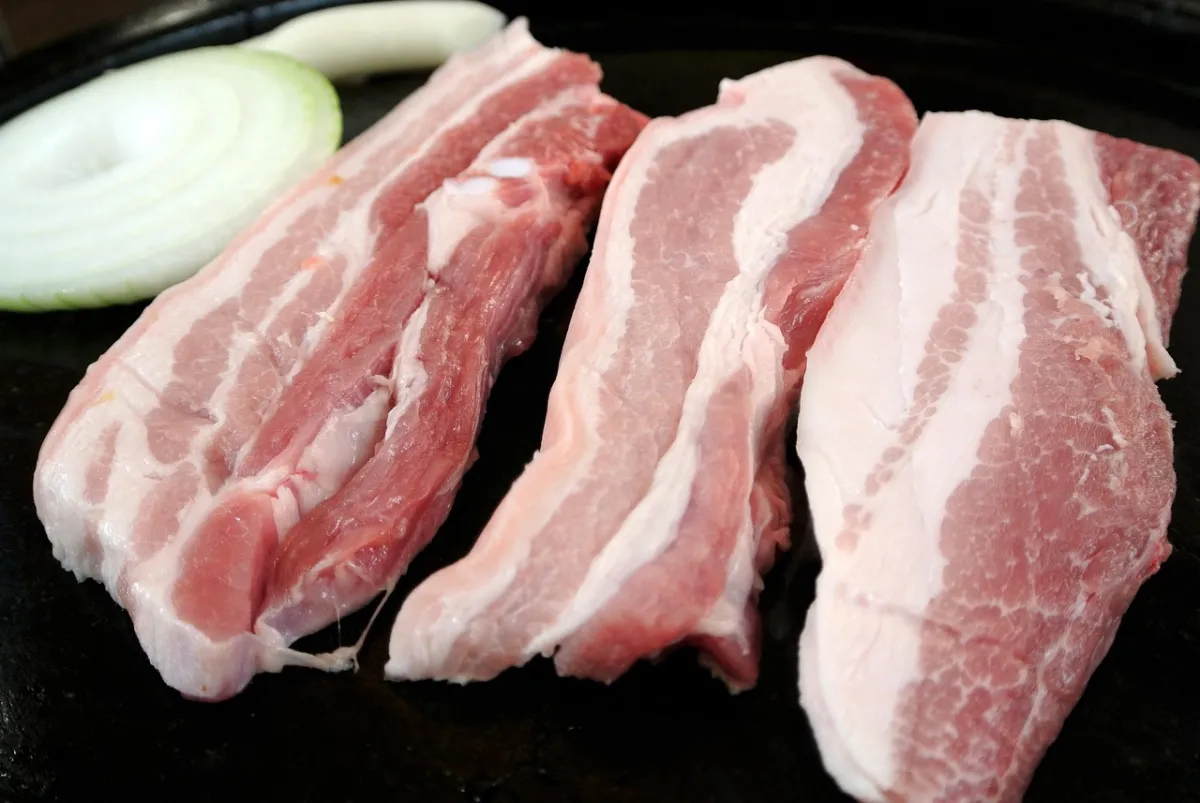
| Samgyeopsal | Pork belly with three layers of fat and meat. Koreans' favourite meat, grilled until crisp and dipped in sesame oil with salt or ssamjang. |
| Moksal | Pork neck/shoulder, leaner and chewier than belly. |
| Hangjeongsal | Pork jowl, with evenly distributed fat and a springy texture. |
| Dwaeji galbi | Pork ribs marinated in sweet soy sauce, loved by children and adults alike. |
| Gabeurisal / galmaegisal | Special cuts yielding only a small amount per animal, popular for their chewy texture. |
Beef
| Dish | Cut and characteristics |
|---|---|
| Deungsim | Sirloin with good marbling, delicious with just a touch of salt. |
| Galbisal / saeng galbi | Meat from around the ribs, known for its juiciness. |
| Yangnyeom galbi (beef ribs) | Beef short ribs marinated in soy sauce, Asian pear and garlic — a classic premium dish. |
| Chadolbaegi | Thinly sliced brisket that cooks almost the moment it hits the grill, with a rich flavour. |
| Bulgogi | Thinly sliced beef marinated in sweet soy sauce and cooked on a griddle or in a hot pot. |
Korean-raised beef, hanwoo, is high quality but expensive. Many restaurants use imported beef, so check the origin on the menu — Korean restaurants are required to display it.
Other favourites
- Dakgalbi: chicken marinated in gochujang and stir-fried with vegetables and rice cakes on a big iron pan — the speciality of Chuncheon. Frying rice in the leftover sauce at the end is a must.
- Gopchang / makchang: grilled beef or pork intestines, savoury and chewy, with many devoted fans.
- Grilled duck: a lighter option with a clean flavour.
Is bulgogi barbecue?
Bulgogi means "fire meat" and is known abroad almost as a synonym for Korean BBQ. In Korea, however, bulgogi is more often eaten as a brothy bulgogi hot pot or cooked on a griddle than grilled yourself. The cuts people grill at BBQ restaurants are mainly samgyeopsal, galbi and sirloin. Bulgogi is rather a signature dish of Korean restaurants and a familiar dish often made at home. Its sweet-savoury flavour also makes it the easiest Korean dish for foreigners to enjoy on first encounter.
How BBQ restaurants work
1. Ordering
Meat is usually ordered by the portion (inbun). A portion varies by restaurant but is typically 150–200 g. Some places require a minimum of two portions. It's normal to order one portion per person at first and add more if needed.
2. Side dishes and set-up
Once you order, basic sides arrive: lettuce, perilla leaves, ssamjang, garlic, chillies, kimchi, spring onion salad and more. Many restaurants refill sides for free, and some have a self-service side dish bar.
3. Grilling
Depending on the restaurant, staff may grill for you or you grill yourself. Upscale places and beef specialists often have staff do it. When grilling yourself, remember:
- Put meat on only once the grill is properly hot.
- Don't flip too often; turn when one side is golden.
- Cook samgyeopsal until the outside is crisp. Pork must be cooked all the way through.
- Beef sirloin and chadolbaegi cook quickly, so don't overdo them.
- Marinated meat burns easily, so watch the heat.
4. Scissors and tongs
The tool that surprises first-timers is the scissors. Hold large pieces of meat with tongs on the grill and cut them into bite-sized pieces with scissors. Faster and handier than a knife, scissors are used in Korean restaurants for cutting not only meat but also naengmyeon and kimchi.
5. Changing the grill plate
If the grill plate gets charred or greasy, ask staff "bulpan jom gara juseyo" and they'll swap it for a fresh one.
How to make a lettuce wrap (ssam)
- Place a lettuce or perilla leaf on your palm. Two layered leaves work too.
- Add a piece of grilled meat, dipped lightly in sesame oil and salt or ssamjang if you like.
- Top with a little ssamjang and, to taste, grilled or raw garlic, chilli and spring onion salad.
- Add a little rice to make it more filling.
- Fold the leaf around it and eat it in one bite. One bite is the Korean way; make it too big and it's hard to eat.
Grill garlic next to the meat and it loses its bite and turns nutty. Kimchi grilled on the plate also becomes tangy and savoury.
Sides and finishing touches
Doenjang jjigae
Ordering rice and doenjang jjigae (soybean paste stew) partway through the meat is the classic Korean way. A spoonful of earthy stew after rich meat refreshes your palate.
Naengmyeon
Many people finish with cold naengmyeon noodles. The naengmyeon BBQ restaurants serve as a "dessert" is often a smaller, cheaper portion. Choose between brothy mul naengmyeon and spicy bibim naengmyeon.
Fried rice
At dakgalbi and some BBQ restaurants, staff finish by frying rice on the grill with seaweed flakes and sauce. Rice slightly crisped onto the pan is a treat.
Gyeranjjim
Steamed egg puffed up in an earthenware pot is a soft side that goes well with spicy food and meat.
BBQ and drinking culture
Korean BBQ restaurants are also the classic venue for work dinners and get-togethers. Samgyeopsal with soju — samsso — is an iconic pairing for Korean office workers and friends. There's some etiquette when drinking: pour for elders holding the bottle with both hands, and receive your glass with both hands. When drinking in front of elders, it's polite to turn your head slightly away. Of course, if you don't drink, soft drinks or water are perfectly fine.
Homemade bulgogi recipe (serves 2–3)
Ingredients
- 400 g thinly sliced beef (for bulgogi)
- ½ onion, 1 spring onion (or leek), a little carrot, a handful of mushrooms
- Marinade: 4 tbsp soy sauce, 1½ tbsp sugar, 3 tbsp Asian pear juice or grated pear, 1 tbsp minced garlic, 1 tbsp sesame oil, a little black pepper, sesame seeds
Method
- Lightly blot the beef with kitchen paper to remove excess blood.
- Mix all the marinade ingredients. Pear tenderises the meat and adds natural sweetness; if you have none, a little apple or kiwi works.
- Toss the meat in the marinade and refrigerate for at least 30 minutes, ideally a few hours.
- Cut the vegetables into bite-sized pieces.
- Stir-fry the meat and vegetables in a hot pan over high heat until the meat is cooked and the sauce has reduced slightly.
- Finish with sesame oil and sesame seeds and serve with rice. It's also delicious wrapped in lettuce.
Add a little more liquid and glass noodles and simmer it, and you have Seoul-style bulgogi hot pot.
BBQ restaurant Korean
| Situation | Phrase |
|---|---|
| Ordering | Samgyeopsal i-inbun juseyo (two portions of samgyeopsal, please) |
| Ordering more | Il-inbun deo juseyo (one more portion, please) |
| Side refill | Sangchu jom deo juseyo (more lettuce, please) |
| Changing the grill | Bulpan jom gara juseyo (please change the grill plate) |
| Meal dishes | Doenjang jjigae-rang gonggitbap hana juseyo (doenjang stew and a bowl of rice, please) |
| Paying | Gyesanhae juseyo (the bill, please) |
Frequently asked questions
Can I go to a BBQ restaurant alone?
Many places used to require at least two portions, but solo BBQ restaurants and places that allow single-portion orders are increasingly common.
Won't my clothes smell?
They easily can. Many BBQ restaurants provide plastic bags for coats or storage inside the seats.
Are there halal or vegetarian options?
Ordinary BBQ restaurants make it difficult, but some areas such as Itaewon in Seoul have halal-certified Korean restaurants. Vegetarians can look for places offering grilled mushrooms or tofu dishes.
Final thoughts
The real flavour of Korean BBQ lies less in the meat than in the time spent together: one person grilling, another wrapping ssam and passing it over, glasses clinking as everyone shares the day's stories. That warm scene is why Koreans love BBQ restaurants.
If you go to Korea, be sure to open the door of a BBQ restaurant at least once. Along with the sizzle of the grill, you'll experience Korean warmth — jeong — at its most delicious.