Food in Korean Dramas Explained: Ramyeon Invitations, Chimaek Nights, Soju Tents, Family Tables, Convenience Store Meals, Royal Kitchens and What Every Eating Scene Really Means
Korean dramas are full of eating scenes, from late-night ramyeon and fried chicken to crowded family dinners and quiet meals at a convenience store. This guide explains why food plays such a big role in K-dramas, what the most common food scenes mean, which cultural rules they reveal and how to enjoy the same dishes at home or in Korea.

Contents
- Why food matters so much in Korean dramas
- "Have you eaten?": food as a language of care
- Ramyeon: the most famous drama meal
- Chimaek: fried chicken and beer
- Soju, pojangmacha tents and late-night honesty
- Convenience store meals and the reality of busy lives
- The family dinner table
- Food in historical dramas
- Street food and dating scenes
- Eating alone, eating while sad, eating while angry
- Feeding someone: ssam, the "ah" moment and sharing
- Jajangmyeon, seaweed soup and other symbolic dishes
- Product placement: why some brands appear so often
- Reading food scenes as cultural clues
- How to recreate drama meals at home
- Trying drama-style food in Korea
- Frequently asked questions
- Final thought: every meal tells a story
If you have watched a few Korean dramas, you have probably noticed something: the characters eat. A lot. They slurp ramyeon straight from the pot, share fried chicken on a rooftop, sit in a plastic tent with a green bottle of soju, argue over a crowded family dinner table and eat triangle kimbap alone in a convenience store at midnight. For many international viewers, these scenes are the first contact with Korean food, and plenty of people have searched for a recipe right after an episode ended.
Eating scenes in K-dramas are not filler. They carry emotion, show relationships, reveal social rules and often move the story forward. Who pays, who cooks, who pours the drink, who eats alone and who is finally invited to the table can tell you as much as any dialogue. This guide looks at the most common food scenes in Korean dramas, explains what they usually mean and gives you practical ideas for enjoying the same dishes yourself.
We will focus on patterns and culture rather than spoilers, so you can read this whether you are new to K-dramas or have watched hundreds of episodes.
Why food matters so much in Korean dramas
Food is central to everyday life in Korea, and dramas reflect that. Meals are traditionally shared: rice and soup for each person, and a set of side dishes in the middle of the table for everyone. Eating together is a basic way of building closeness, and the Korean word sikgu (식구), often used for family members, literally means "people who eat together".
There are also practical reasons. Eating scenes are easy to film, they give actors something natural to do with their hands, and they create relaxed moments between dramatic plot points. A tense office drama can suddenly soften when two colleagues share a bowl of noodles after a long day. Writers use meals to slow the pace, let characters talk honestly and show the audience that a relationship has changed.
Finally, food is visual and universal. Even if you do not understand every cultural reference, you can feel the comfort of a hot bowl of soup on a cold night or the joy of a table full of dishes. That emotional clarity is one reason eating scenes travel so well to international audiences.
"Have you eaten?": food as a language of care
One of the most common lines in Korean dramas is bap meogeosseo? (밥 먹었어?), "Have you eaten?". It is often used almost like a greeting, and it rarely means the speaker only wants information about your lunch. It is a way of saying "I care about you" or "Are you okay?" without saying it directly.
You will hear many variations. A mother on the phone asks whether her adult child is eating properly. A senior colleague tells a tired junior, "Let's eat first." A character who wants to make up after a fight says, "Let's get a meal sometime" (eonje bap han beon meokja), which can be a sincere invitation or a polite way to end a conversation, depending on the tone. When someone cooks for another person without being asked, it is almost always a sign of affection, guilt, gratitude or apology.
Understanding this helps you read scenes more deeply. When a character refuses food, it often signals emotional distress. When someone who has been cold finally sits down and eats with the others, the conflict is usually starting to heal. Many of these social signals are explained further in our guide to culture codes in Korean dramas.
Ramyeon: the most famous drama meal
If one food represents K-drama eating scenes, it is instant ramyeon. Characters cook it late at night, after a breakup, during a study session or when they have no money left. It is cheap, fast and comforting, which makes it perfect shorthand for ordinary life.
A few details appear again and again. Ramyeon is often eaten straight from a small yellow aluminium pot, and the pot lid is used as a plate to cool the noodles. People add an egg, a slice of cheese or a handful of spring onions. Someone always seems to say that ramyeon tastes better when someone else makes it, or when you steal a bite from another person's pot.
There is also the famous line "Ramyeon meokgo gallae?" ("Do you want to eat some ramyeon before you go?"). It became widely known through the 2001 Korean film One Fine Spring Day, and since then it has been repeated and parodied in countless dramas and variety shows. In context, it is a flirtatious invitation to stay longer, not just an offer of noodles. When you hear it in a romance, you can be fairly sure the relationship is entering a new stage.
If ramyeon scenes make you hungry, our guide to Korean ramyeon explains the main types, how Koreans cook and upgrade instant noodles and which toppings are most popular.
Chimaek: fried chicken and beer
Fried chicken and beer, known together as chimaek (chicken + maekju, beer), is another drama staple. It appears at celebrations, during sports broadcasts, on rooftops after work, at the Han River and in cosy living-room scenes between friends or couples. Ordering chicken by phone or delivery app is such a normal part of Korean life that it rarely needs explanation in a script.
Chimaek scenes usually signal relaxation and friendship. Characters loosen up, talk about their bosses, share secrets or watch a match together. The type of chicken can even say something about the characters: a classic crispy fried chicken feels nostalgic and simple, while sweet and spicy sauced chicken often appears in lively group scenes. Splitting the order "half and half", one half fried and one half sauced, is a common compromise.
To understand the dish and the culture behind it, read our guide to Korean fried chicken and chimaek.
Soju, pojangmacha tents and late-night honesty
Few images are more recognisable than a character sitting under an orange plastic tent with a green soju bottle, a plate of grilled fish cakes or stir-fried squid and a heavy heart. These street-side tents are called pojangmacha, and in dramas they are the place for confessions, tears, reunions and life advice from a kind stranger or an older friend.
Real pojangmacha still exist, though many have become indoor bars styled like the classic tents. In dramas, the setting represents honesty: the outside world has gone home, the food is simple and people say what they have been holding back all day.
Drinking scenes also show Korean etiquette. Younger people often turn their head away from elders when they drink, pour with two hands or support their pouring arm with the other hand, and do not pour their own glass. When an older person offers a drink, the younger person holds the glass with both hands. A character who ignores these rules may be rude, very close to the others or deliberately making a point.
A sensible note: dramas sometimes make heavy drinking look harmless or funny. In real life, the legal drinking age in Korea is 19, many people enjoy soju in moderation and nobody should feel pressured to drink. Non-alcoholic drinks are perfectly normal at Korean gatherings today.
Convenience store meals and the reality of busy lives
Korean convenience stores appear constantly in dramas, especially in stories about students, young workers and people with little money. Characters eat triangle kimbap, cup ramyeon, sausages, lunch boxes or banana milk at the small tables by the window. Part-time workers stand behind the counter during night shifts, and many meet-cute moments happen at the till.
These scenes often show loneliness or financial pressure, but they can also be warm. Two characters sharing cheap food at a convenience store table can feel more intimate than a fancy restaurant date. The store is also a symbol of modern Korean city life: open around the clock, bright, efficient and never far away.
If you visit Korea, trying a "convenience store meal" is an easy and affordable way to recreate this kind of scene. Hot water for cup noodles is usually available inside the store, and you can heat lunch boxes in the microwave.
The family dinner table
Family dramas, especially long weekend dramas, often build their key scenes around the dinner table. Everyone sits on the floor or around a table with rice, soup and many side dishes. Grandparents sit in the most respected positions, the youngest members wait for the eldest to start eating, and arguments break out between bites.
The table shows family hierarchy and emotional temperature. Who sets the table, who serves the rice and who is missing are all clues. A seat left empty for someone who has not returned home can say more than a monologue. When a new partner is invited to eat with the family for the first time, it is a major test, and viewers know to pay attention to every comment about the food.
The many small side dishes you see are called banchan. They are refilled and shared, and they vary from season to season. Watching family meals is a good way to learn table customs, such as waiting for elders, not lifting the rice bowl to your mouth and using a spoon for rice and soup. Our article on Korean table manners explains these customs in detail.
Food in historical dramas
Historical dramas, known as sageuk, use food in their own way. Royal kitchens, palace banquets, medicinal soups and simple meals in a farming village all show social class and the rhythm of life in the Joseon period. A king's meal is shown as an elaborate arrangement of many dishes, while a poor family shares a small bowl of millet or barley.
The most famous example is Dae Jang Geum (2003), a historical drama about a young woman who works in the royal kitchen and later becomes a physician. Its detailed cooking scenes helped many viewers around the world discover Korean royal cuisine and the idea that food and health are closely linked in traditional Korean thinking.
In sageuk, food can also be dangerous. Poisoned soup, tasters who check the king's meals and plots in the kitchen are common story elements. If you want more background on the Joseon setting, read our guide to Korean historical dramas.
Street food and dating scenes
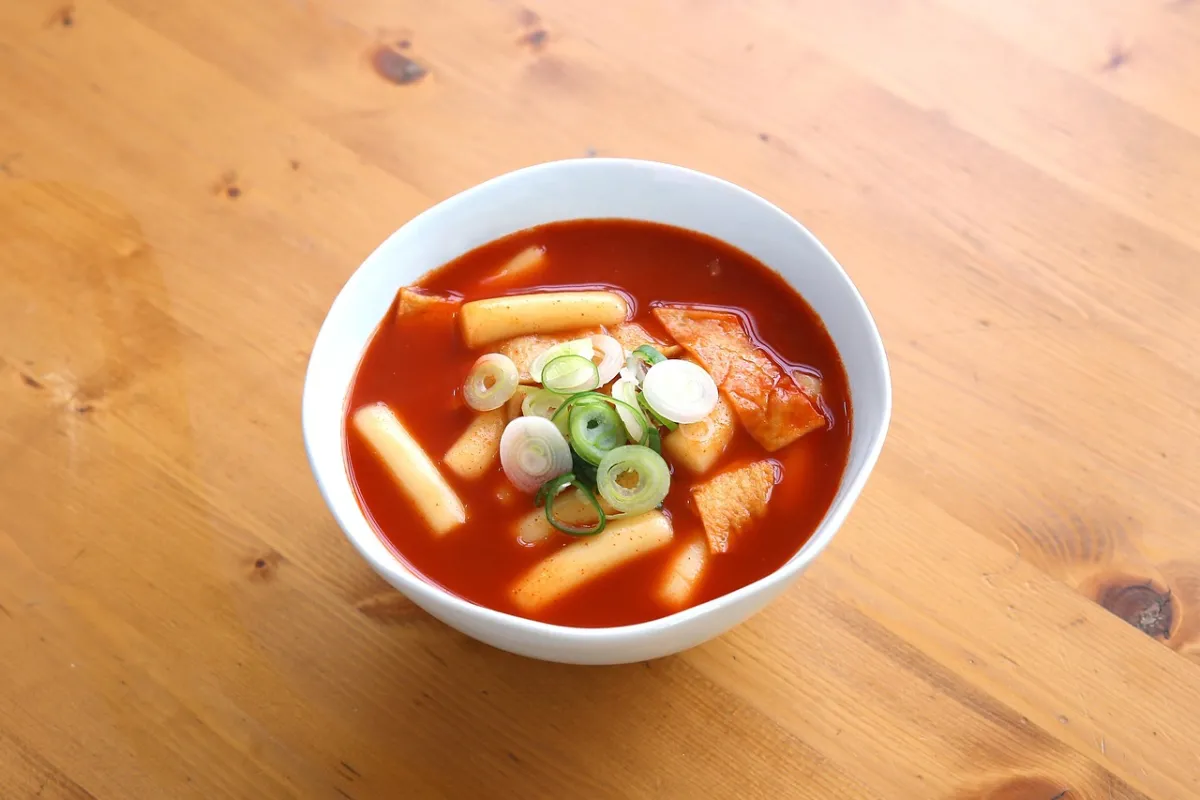
Dates in K-dramas often include street food rather than expensive restaurants. Couples share tteokbokki from a stall, warm their hands with sweet hotteok pancakes in winter, eat skewered fish cakes and sip the hot broth from paper cups, or try a new snack at a festival. These scenes show that the relationship is relaxed and playful.
Street food scenes also often contain small gestures of care: one character blowing on hot food before handing it over, wiping sauce from the other's mouth or giving them the last piece. Viewers learn to watch the hands, because romance in K-dramas often happens through these small, quiet actions.
Our Korean street food guide introduces the most popular snacks, where to find them and how to order.
Eating alone, eating while sad, eating while angry
Korean has a word for eating alone: honbap (혼밥). Dramas use honbap scenes to show isolation, independence or quiet recovery. A character who always ate alone and finally has someone sitting across the table is a classic sign of growth.
There are also emotional eating scenes that feel very specific to K-dramas. After a breakup, a character might mix a huge bowl of bibimbap with gochujang and eat it furiously while crying. Someone angry might stab at their food or eat in complete silence. These moments can be funny and sad at the same time, and they feel honest because many people really do turn to food when emotions run high.
Another familiar image is the character who cannot eat at all because of grief or stress, followed by a friend who cooks rice porridge or soup to help them recover. Simple, gentle food often appears as a symbol of healing.
Feeding someone: ssam, the "ah" moment and sharing
When a character wraps grilled meat in a lettuce leaf with garlic and sauce and puts it directly into another person's mouth, it is a sign of affection, playfulness or teasing. This wrap is called ssam, and making one for someone else is a small act of care that appears in romances, family scenes and friendships alike.
The "say ah" moment, where one character feeds another with chopsticks or a spoon, is often used for romantic tension or comedy. Sharing from the same pot, drinking from the same can or taking food from someone's plate also signals closeness. In more formal relationships, characters are careful about these gestures, so when they start doing them it means the distance between them has shrunk.
Barbecue scenes deserve a special mention. The person who grills the meat at the table is often the most junior or the most caring person in the group, and dramas sometimes use the tongs as a quiet indicator of who looks after whom.
Jajangmyeon, seaweed soup and other symbolic dishes
Some dishes carry specific meanings in Korean life, and dramas use them knowingly.
- Jajangmyeon: noodles in black bean sauce, a Korean-Chinese dish often ordered for delivery. It is associated with moving day, because people order it while surrounded by boxes, and with childhood treats and graduation days. It also appears in jokes about Black Day on April 14, when single people are said to eat jajangmyeon together.
- Miyeokguk (seaweed soup): traditionally eaten on birthdays and by mothers after giving birth. When a character makes seaweed soup for someone's birthday, it is a deeply personal gesture, and when nobody makes it, the scene can be quietly heartbreaking.
- Tteokguk (rice cake soup): eaten on Lunar New Year. Characters joke that eating a bowl makes you a year older.
- Samgyetang: chicken soup with ginseng, often eaten on the hottest days of summer to restore energy.
- Kimchi: making kimchi together in autumn, known as gimjang, shows family and community bonds, and a parent's kimchi often symbolises home.
Recognising these dishes adds a new layer to scenes that might otherwise look like ordinary meals.
Product placement: why some brands appear so often
If you notice that characters frequently visit the same sandwich chain, drink the same brand of coffee or order chicken from the same franchise, you are seeing product placement, called PPL in Korea. Korean dramas often rely on sponsorship to cover production costs, and food and drink brands are among the most common sponsors.
PPL scenes can be very obvious, with a character suddenly explaining the benefits of a menu item, and fans sometimes joke about them. They can also be smoothly integrated into ordinary life. Either way, they are a business reality of the industry. Our article on how Korean dramas are made explains the production system in more detail.
When you plan to recreate a drama meal, remember that you do not need a specific brand. The cultural experience comes from the dish and the setting, not the logo.
Reading food scenes as cultural clues
Once you start paying attention, food scenes reveal many details about Korean society:
- Who pays: traditionally the older or more senior person pays, and fights over the bill are a sign of politeness, not anger.
- Who starts eating: younger people wait for elders to lift their spoons first.
- Who pours: younger people pour drinks for seniors, and no one fills their own glass.
- Where people sit: the seat furthest from the door is often offered to the most senior person.
- What is cooked: home-cooked meals show care, while delivery food often shows busy or lonely lives.
- Who is invited: being asked to a family meal is a sign of acceptance.
These patterns are not absolute rules, and modern Korean life is more relaxed than many dramas suggest, but they help explain why certain scenes feel tense or emotional.
How to recreate drama meals at home
You do not need to travel to Korea to enjoy the food you see on screen. Many drama dishes are simple to make with a few Korean pantry staples: gochujang, doenjang, soy sauce, sesame oil, garlic, spring onions and rice. A few ideas:
- Late-night ramyeon: cook instant noodles, add an egg and spring onion, and eat from the pot using the lid as a plate.
- Chimaek night: order or make fried chicken, add pickled radish cubes and a cold drink of your choice.
- Street food date: make tteokbokki with rice cakes, fish cakes and gochujang sauce.
- Family dinner: rice, a simple soup or stew and three or four small banchan such as kimchi, seasoned spinach and fried egg rolls.
- Birthday soup: cook miyeokguk for someone on their birthday.
Pair your meal with an episode and you have a small K-drama night at home. Many fans say watching an eating scene while eating the same dish is one of the most enjoyable ways to experience the shows.
Trying drama-style food in Korea
If you travel to Korea, you can easily find the kinds of places you see on screen: neighbourhood chicken restaurants, tent-style bars, convenience stores with window tables, traditional markets with tteokbokki stalls and family restaurants serving set meals with banchan.
A few practical tips: many small restaurants require you to order at least two portions of grilled meat, water and side dishes are usually free and refillable, tipping is not expected and some places have a self-service corner for extra banchan. Convenience stores are open all night in most cities and are a safe, convenient option for a late snack.
Some restaurants and cafés that appeared in popular dramas display photos or signs mentioning it. Remember that these are working businesses, so be respectful of staff and other customers when taking photos.
Frequently asked questions
Why do Korean drama characters eat so often?
Because shared meals are central to Korean life and relationships. Eating scenes also give writers a natural way to show emotions, bring characters together and slow the pace between dramatic moments.
What does "Do you want to eat ramyeon before you go?" mean?
It is a well-known flirtatious line, popularised by the 2001 film One Fine Spring Day. In a romantic scene, it is an invitation to stay longer rather than a simple offer of food.
Why do characters eat ramyeon from the pot lid?
The lid cools the noodles quickly and means fewer dishes to wash. It is a common, casual habit that makes the scene feel real and homely.
What is a pojangmacha?
A street-side tent bar serving simple food and drinks, usually at night. In dramas, it is often the setting for honest conversations, confessions and emotional moments.
Why do younger characters turn away when drinking?
Turning the head away from an older or more senior person while drinking is a traditional sign of respect in Korean drinking etiquette.
What is the soup characters eat on birthdays?
Miyeokguk, a seaweed soup. It is traditionally eaten on birthdays, and making it for someone is a caring gesture.
Are the brand placements in dramas a problem?
They are a normal part of how many dramas are financed. They can be distracting, but they do not change the cultural meaning of the food itself.
Can I recreate K-drama meals without special ingredients?
Many dishes need only a few Korean staples such as gochujang, soy sauce, sesame oil and rice. Asian supermarkets and online shops make these ingredients easy to find in many countries.
Final thought: every meal tells a story
Food scenes are some of the most human moments in Korean dramas. A shared pot of ramyeon, a rooftop chicken dinner, a bowl of seaweed soup made by someone who remembered your birthday: these are the scenes viewers remember long after the plot twists fade. Next time you watch, pay attention to who cooks, who serves, who pours and who finally sits down to eat together. You will understand the characters better, and you will probably end up hungry too.