Korean Fried Chicken and Chimaek Culture Explained: Huraideu vs Yangnyeom, Soy Garlic, Banban, Delivery Culture, Side Dishes and a Home Yangnyeom Chicken Recipe
Korean fried chicken is thin-skinned, shatteringly crisp and often glazed in a sticky sweet-spicy sauce. This guide explains what makes it different from Western fried chicken, the main styles from plain huraideu to yangnyeom, soy garlic and green onion chicken, how ordering and delivery work in Korea, why chicken and beer became a national ritual called chimaek, and how to make crisp yangnyeom chicken at home.

Contents
- What makes Korean fried chicken different
- A short history: from market chickens to a national habit
- The main styles of Korean fried chicken
- Popular styles at a glance
- How ordering works: banban, boneless and the white radish
- Chimaek: why chicken and beer belong together
- Delivery culture: chicken at your door
- Where to eat Korean fried chicken in Korea
- Side dishes and what to eat with chicken
- Recipe: homemade yangnyeom chicken
- Common mistakes and tips
- Eating fried chicken mindfully
- Frequently asked questions
- Final thought: more than a snack
On a Friday evening in almost any Korean apartment complex, the same scene repeats itself. A motorbike pulls up, a courier hurries to a door with a warm cardboard box, and a few minutes later a family or a group of friends sits on the living-room floor around a pile of golden chicken, a small tub of white pickled radish and a few cans of cold beer. Fried chicken is not a special-occasion food in Korea. It is the default answer to "what shall we eat tonight?", the snack for big football matches, the reward after exams and the meal that ends many office dinners.
Korean fried chicken has also become one of the country's best-known food exports. Its thin, glass-like crust and glossy sauces now appear on menus from London to São Paulo. Yet the way it is eaten in Korea, the ordering habits, the side dishes and the social ritual around it, is just as interesting as the recipe. This guide covers both: what Korean fried chicken is, the styles you will meet, how chicken culture works in daily life, and a home recipe for classic yangnyeom chicken.
What makes Korean fried chicken different
At first glance Korean fried chicken looks like any other fried chicken. The difference becomes clear with the first bite. Southern-style American fried chicken usually has a thick, craggy crust built from buttermilk and seasoned flour. Korean fried chicken aims for something lighter: a thin, almost translucent shell that cracks rather than crunches, with juicy meat underneath and very little grease.
Several techniques work together to create that texture:
- Smaller pieces. A whole chicken is usually cut into many bite-sized pieces, bones included. Smaller pieces cook evenly and give more crust per bite.
- A light batter. Instead of a heavy flour dredge, many cooks use a thin batter or dusting based on potato starch, corn starch or a frying mix. Starch fries up crisper and stays crisp longer than wheat flour alone.
- Double frying. The chicken is fried once at a moderate temperature to cook the meat, rested briefly, then fried a second time at a higher temperature. The second fry drives out moisture from the crust and makes it brittle and light.
- Sauce applied after frying. Sauced styles are tossed in glaze only after the second fry, often just before serving, so the crust stays crisp for as long as possible.
The result is chicken that can sit in a delivery box for twenty minutes and still crackle when you bite it. That quality matters a great deal in a country where most fried chicken is eaten at home.
A short history: from market chickens to a national habit
Chicken has long been eaten in Korea, but mostly boiled, braised or in soup. A famous example is samgyetang, the ginseng chicken soup eaten on the hottest days of summer. Deep-fried chicken became common only in the second half of the twentieth century, when cooking oil became cheaper and more widely available.
In the 1960s and 1970s, whole chickens roasted on electric rotisseries were sold at markets and in department stores, and many older Koreans still remember these as a treat their fathers brought home on payday. During the 1970s and 1980s, small shops began to sell whole fried chickens cut into pieces, which people called "tongdak" (whole chicken). Market tongdak, fried in a large cauldron, is still a beloved style today.
The real turning point came in the early 1980s with the invention of yangnyeom chicken. Shops started tossing fried chicken in a sweet, spicy and sticky sauce made with gochujang, sugar or syrup and garlic. The idea spread quickly because the sauce suited Korean tastes, and it hid the fact that fried chicken goes soft as it cools. From the 1990s onward, chicken franchises multiplied across the country, delivery became fast and cheap, and fried chicken settled into everyday life. Today Korea has a remarkable number of chicken restaurants, and the sector is so crowded that opening a chicken shop is a running joke about career changes.
The main styles of Korean fried chicken
A Korean chicken menu can look long and confusing, but most dishes are variations on a few basic styles. Learning these makes ordering much easier.
Huraideu: plain fried chicken
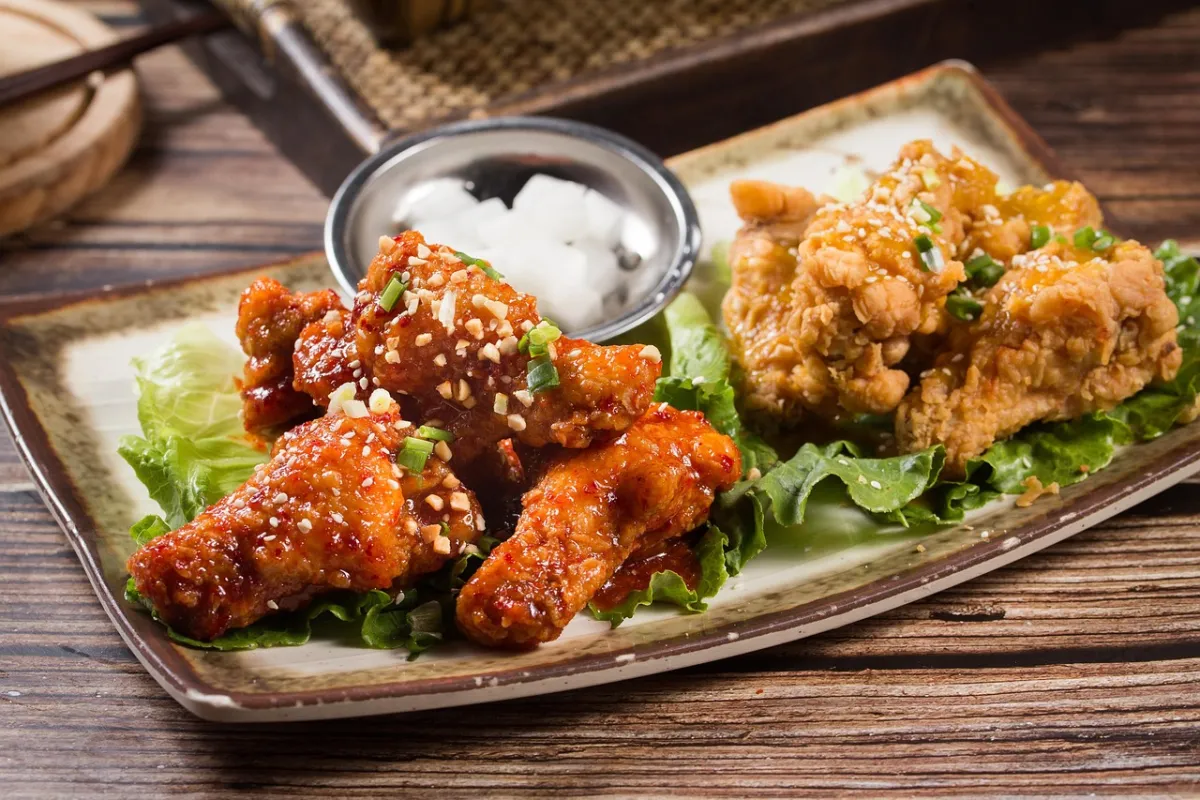
"Huraideu" is the Korean pronunciation of "fried", and on a menu it means plain fried chicken without sauce. It is lightly seasoned before frying and served with salt and pepper on the side. Good huraideu is the best test of a chicken shop, because there is no sauce to hide behind. Many Koreans swear that plain fried chicken is the true classic, and it is the best partner for beer.
Yangnyeom: sweet and spicy glazed chicken
Yangnyeom means "seasoning", and yangnyeom chicken is fried chicken coated in a red, glossy sauce. The usual base is gochujang or chilli powder, ketchup, garlic, sugar or rice syrup and a little soy sauce. The flavour is sweet first, then gently spicy, with a sticky finish. Many shops also offer a hotter version, and some sell the sauce on the side for dipping so the crust stays crisper.
Soy garlic chicken
Ganjang chicken, or soy garlic chicken, is glazed with a savoury-sweet sauce of soy sauce, garlic and sugar, sometimes with ginger or chilli. It is darker than yangnyeom chicken and less spicy, which makes it a favourite for children and for anyone who finds gochujang too hot. A well-made soy garlic glaze is thin enough to keep the crust crisp but sticky enough to cling.
Padak: green onion chicken
Padak combines fried chicken with a big heap of very thinly shredded green onion dressed in a light, tangy sauce, often with a little chilli powder and mustard. The fresh, sharp onion cuts through the richness of the fried chicken. It is a popular choice when friends want something that tastes a little lighter.
Powdered and cheese styles
Since the 2010s, many franchises have introduced chicken dusted with seasoning powders. "Snow cheese" style chicken is coated in a sweet-salty cheese powder, while other versions use onion, sweet corn, honey butter or spicy seasoning. These styles are especially popular with younger customers and are often ordered for parties.
Market tongdak and roast chicken
At traditional markets, you can still find whole chickens fried in large pots, often with a crispier, more rustic crust and a lower price. Some shops also sell oven-roasted or charcoal-grilled chicken for people who want a lighter option. In Suwon, a whole street near the old fortress is famous for chicken shops that fry whole chickens in big iron cauldrons.
Popular styles at a glance
| Style | Korean name | Flavour | Spice level | Good for |
|---|---|---|---|---|
| Plain fried | Huraideu (후라이드) | Salty, savoury, very crisp | None | Beer, purists, first-timers |
| Sweet and spicy | Yangnyeom (양념) | Sweet, tangy, garlicky | Mild to medium | The classic Korean taste |
| Soy garlic | Ganjang (간장) | Savoury-sweet, garlicky | None to mild | Children, spice-sensitive eaters |
| Green onion | Padak (파닭) | Fresh, tangy, sharp | Mild | A lighter-tasting option |
| Cheese or seasoning powder | Ppurinkkeul (뿌링클) style | Sweet, salty, cheesy | None | Parties, younger eaters |
| Half and half | Banban (반반) | Two styles in one box | Varies | Groups who cannot decide |
How ordering works: banban, boneless and the white radish
Ordering fried chicken in Korea has its own vocabulary. Knowing a few words will help whether you are in a restaurant or ordering through a delivery app.
- Banban (half and half). The most famous ordering habit. Instead of choosing between plain and sauced chicken, you get half of each in one box. Some shops offer three-way splits or let you pair other flavours. Banban exists because so many people could not decide, and now it is almost a national compromise.
- Bone-in or boneless. Chicken comes bone-in (ppyeo) by default. Boneless chicken (sunsal) is usually thigh meat and costs a little more. Many Koreans prefer bone-in because the meat stays juicier, while boneless is easier to share and to eat while watching sport.
- One chicken. Prices are listed per bird, called "han mari" (one chicken). One chicken typically feeds two people as a meal, or three to four as a snack with beer.
- Pickled radish. Every order comes with chicken-mu, cubes of white radish pickled in a sweet and sour brine. The cool, crunchy radish refreshes the palate between greasy bites and is so essential that people complain loudly if it is missing.
- Sauces and extras. Expect salt and pepper for plain chicken, and often a small pot of extra sauce, a cabbage salad with mayonnaise and ketchup, and sometimes a can of soft drink.
Chicken shops also sell drumstick-only or wing-only boxes, gizzards (dakttongjip) fried with garlic, and side dishes such as french fries, cheese balls and rice cakes.
Chimaek: why chicken and beer belong together
Chimaek is a blend of "chikin" (chicken) and "maekju" (beer). It describes the simple pleasure of fried chicken with a cold, light lager, and it has become one of the most recognisable rituals of Korean social life. Light Korean lagers are crisp and not very bitter, so they wash down salt and oil without competing with the flavours of the chicken.
Chimaek has its seasons and settings. It is the standard snack for big football and baseball matches, when chicken shops are flooded with orders and delivery times stretch. It is a favourite summer meal, eaten outdoors on warm evenings. Picnickers order chicken to the riverside parks in Seoul, where delivery riders meet customers at designated spots. The city of Daegu, which played a large part in the growth of Korean chicken franchises, even holds a summer chicken and beer festival.
Korean dramas helped turn chimaek into an international trend. A memorable scene of a character craving fried chicken and beer on the first snowy day sent viewers across Asia searching for Korean chicken shops. Since then, chimaek has become shorthand for a relaxed, unpretentious night with friends.
Chimaek is about company rather than alcohol. Many people enjoy chicken with cola, cider (the Korean name for lemon-lime soda) or iced tea, and nobody will think it strange. If you do drink beer, the usual Korean drinking etiquette applies, and you should never feel pressured to drink more than you want.
Delivery culture: chicken at your door
Korea's delivery culture is famous for its speed, and fried chicken is its flagship. Most chicken shops are small, delivery-focused businesses with only a few tables, or none at all. People order through delivery apps or by phone and expect the food within thirty to fifty minutes.
A few points help when ordering:
- Delivery apps. The main apps are in Korean and usually need a Korean phone number and payment card. Some newer apps and services support foreign cards or English menus, and staff at hotels or guesthouses can often help you order.
- Delivery fees. Shops add a small delivery fee and often require a minimum order. Ordering with friends spreads the cost.
- Takeaway discounts. Many shops offer a discount if you collect the chicken yourself, which can be a good deal if the shop is nearby.
- Peak times. Friday and Saturday evenings, rainy days and nights with big matches are the busiest, so expect longer waits.
- Waste sorting. In Korean homes, bones and leftover food go in food waste, while boxes go to paper recycling. Accommodation hosts will usually explain local rules.
Delivery is not limited to homes. Couriers deliver to parks, offices, university campuses and even some beaches, usually to a clearly marked delivery point where you meet the rider.
Where to eat Korean fried chicken in Korea
You will never be far from fried chicken in Korea, but different places offer different experiences.
- Neighbourhood chicken pubs (hof). A "hof" is a casual beer pub, and most of them serve fried chicken. They are lively in the evening, with large tables, sports on television and pitchers of draft beer. Ordering one chicken and a drink each is perfectly normal.
- Franchise shops. National chains offer consistent quality, signature sauces and picture menus. Each chain has a famous house flavour, and Koreans have strong opinions about which is best.
- Traditional markets. Market chicken stalls sell big, freshly fried chickens at lower prices, often with a free fried gizzard or extra fries. Suwon's chicken street near Paldalmun Gate is a well-known destination for this style.
- Convenience stores. Many convenience stores sell fried chicken pieces from a warmer near the counter. It is not the same as a fresh shop, but it is a cheap late-night snack.
- Riverside parks and outdoor spaces. In warm weather, ordering chicken to a park lawn is one of the most local experiences you can have.
Side dishes and what to eat with chicken
Korean fried chicken is rarely eaten completely alone. Besides pickled radish, some combinations are classic:
- Cabbage slaw. Finely shredded cabbage with a sweet mayonnaise and ketchup dressing, often included with the order.
- Tteokbokki. Spicy rice cakes and fried chicken make a popular late-night pairing, and some shops sell the two as a set.
- Fried rice cakes and cheese balls. Small add-ons that appear on many franchise menus.
- Rice the next morning. Leftover chicken often turns into a quick meal the next day, reheated and eaten with rice, or chopped into fried rice.
Recipe: homemade yangnyeom chicken
This recipe makes crisp, double-fried chicken with a classic sweet and spicy glaze. It serves two to three people. Chicken wings or boneless thighs are the easiest cuts to cook at home because they fry evenly.
Ingredients
For the chicken:
- 1 kg chicken wings, drumettes or boneless thighs cut into bite-sized pieces
- 1 teaspoon salt
- Half a teaspoon black pepper
- 1 teaspoon minced garlic
- 1 teaspoon grated ginger (optional)
- 2 tablespoons milk or water (optional, for tenderising)
- 60 g potato starch or corn starch
- 30 g plain flour
- About 100 ml cold water
- Neutral oil for deep frying
For the yangnyeom sauce:
- 2 tablespoons gochujang (Korean chilli paste)
- 3 tablespoons ketchup
- 3 tablespoons rice syrup, corn syrup or honey
- 1 tablespoon sugar
- 1 tablespoon soy sauce
- 1 tablespoon minced garlic
- 3 tablespoons water
- 1 teaspoon chilli powder (gochugaru), adjusted to taste
- Toasted sesame seeds and chopped peanuts to finish (leave out the peanuts if anyone has a nut allergy)
Method
- Prepare the chicken. Rinse the chicken if you like and pat it very dry with kitchen paper. Dry chicken fries crisper and spits less oil. Season with salt, pepper, garlic and ginger, add the milk if using, and leave to marinate for 20 to 30 minutes in the fridge.
- Make the batter. Mix the starch and flour in a bowl, then add cold water a little at a time until you have a thin batter, about the consistency of single cream. Toss the chicken in the batter until every piece is lightly coated.
- Heat the oil. Pour oil into a deep, heavy pot to a depth of at least 5 cm and heat it to about 170°C. Use a thermometer if you have one. Never fill the pot more than halfway, and keep children and pets away from the stove.
- First fry. Fry the chicken in small batches for about 8 to 10 minutes, turning occasionally, until pale golden and cooked through. Do not crowd the pot, because that lowers the oil temperature. Lift the pieces onto a rack and rest them for 5 to 10 minutes.
- Make the sauce. While the chicken rests, combine all sauce ingredients in a wide pan. Simmer over low heat for 2 to 3 minutes, stirring, until glossy and slightly thickened. Turn off the heat.
- Second fry. Raise the oil temperature to about 180 to 185°C. Fry the chicken again for 2 to 4 minutes until deep golden and very crisp. Drain on the rack.
- Glaze. Warm the sauce briefly, add the hot chicken and toss quickly until evenly coated. Sprinkle with sesame seeds and peanuts and serve straight away with pickled radish.
Tips and variations
- Check that it is cooked. Chicken must be cooked through. If you have a meat thermometer, the thickest part should reach a safe internal temperature (75°C is a common guide). Otherwise, cut into the largest piece: the juices should run clear and there should be no pink meat near the bone.
- Soy garlic version. Replace the sauce with 3 tablespoons soy sauce, 3 tablespoons rice syrup or honey, 1 tablespoon sugar, 2 tablespoons minced garlic, 3 tablespoons water and a slice of ginger. Simmer until syrupy.
- Air fryer option. Coat the chicken with starch only, spray lightly with oil and cook at about 200°C for 20 to 25 minutes, turning halfway. The crust will be less glassy than deep-fried chicken but still very good.
- Keep it crisp. If you are serving guests, offer the sauce on the side or toss only part of the chicken.
- Quick pickled radish. Cube a white radish (daikon), cover with a brine of equal parts water, vinegar and sugar plus a pinch of salt, and chill for a few hours.
- Oil safety. Let used oil cool completely before straining or disposing of it. Never pour hot oil down the sink, and never add water to hot oil.
Common mistakes and tips
- Skipping the second fry. One fry gives cooked chicken but not the signature crackly crust. The second, hotter fry is what makes Korean fried chicken special.
- Using wet chicken. Moisture on the skin makes the batter slide off and the oil spit. Pat the pieces dry before seasoning.
- Batter that is too thick. A heavy batter makes a bready crust. Keep it thin and runny.
- Saucing too early. Toss the chicken in glaze only at the last moment, and use a warm, not boiling, sauce.
- Ordering too much. Korean portions are generous. As a rule of thumb, one chicken serves two people with side dishes.
- Forgetting the radish. If you make chicken at home, a simple pickle makes the meal taste far more Korean.
Eating fried chicken mindfully
Fried chicken is a treat, and Koreans themselves tend to enjoy it as a weekend or celebration meal. If you are watching your salt, fat or sugar intake, choose plain or roasted chicken, share one order between more people and add a fresh salad or vegetable side. Anyone with specific dietary needs or health conditions should follow the advice of their doctor or a registered dietitian. Sauced chicken often contains wheat, soy, sesame and sometimes peanuts or dairy, so ask the shop if you have a food allergy.
Frequently asked questions
Why is Korean fried chicken so crispy?
It uses a thin, starch-based batter and is fried twice, first at a lower temperature to cook the meat and then at a higher temperature to dry and crisp the crust. Sauce is added only after frying.
What is the difference between huraideu and yangnyeom chicken?
Huraideu is plain fried chicken without sauce, served with salt and pepper. Yangnyeom chicken is fried chicken tossed in a sweet, tangy and mildly spicy red sauce.
What does banban mean?
Banban means "half and half". It is an order with half plain chicken and half sauced chicken in one box, so you can enjoy both styles.
Is Korean fried chicken very spicy?
Most styles are not. Plain and soy garlic chicken have no real heat, and standard yangnyeom chicken is only mildly spicy. Many shops do offer extra-hot versions for spice lovers.
Do I have to drink beer to enjoy chimaek?
Not at all. Chimaek is about sharing chicken with friends. Soft drinks, sparkling water and tea are all common, and nobody will mind.
Why does Korean fried chicken come with pickled radish?
The cool, sweet and sour radish refreshes your mouth between rich, salty bites. It balances the oiliness of the chicken in the same way kimchi balances other Korean meals.
Final thought: more than a snack
Korean fried chicken is a small window into modern Korean life. It tells a story of fast change, of entrepreneurship, of a delivery culture that brings dinner to a park bench, and of friends who gather around a box of chicken to celebrate a goal, a payday or simply the end of a long week. Whether you order banban at a lively pub in Seoul or fry a batch of yangnyeom chicken in your own kitchen, you are taking part in one of the country's warmest everyday rituals.