Korean Desserts Explained: Tteok Rice Cakes, Hangwa Sweets, Hotteok, Bingsu, Traditional Teas and Modern Café Culture, with a Homemade Hotteok Recipe
Korean desserts are rarely as sugary as Western cakes, yet they are full of texture, nutty grains, honey and seasonal fruit. This guide explains the main families of Korean sweets, from chewy tteok and honey-soaked yakgwa to winter hotteok, summer bingsu and traditional drinks such as sikhye and sujeonggwa, and shows how Korean café culture keeps reinventing them. A step-by-step hotteok recipe is included.

Contents
- How Koreans think about dessert
- Tteok: the heart of Korean sweets
- Hangwa: honey cookies, puffed rice and tea sweets
- Street sweets: hotteok, gyeranppang and friends
- Bingsu: Korea's iconic shaved ice dessert
- Traditional drinks that work as dessert
- Seasonal desserts through the year
- Modern café culture and new Korean desserts
- Where to try Korean desserts as a visitor
- Recipe: homemade hotteok (Korean sweet pancakes)
- Common mistakes and tips for enjoying Korean desserts
- Frequently asked questions
- Final thought: sweetness with a story
Ask a Korean grandmother what dessert means and she might hand you a plate of chewy rice cakes dusted with roasted soybean powder, a cup of chilled rice punch, or a handful of honey cookies shaped like flowers. Ask a university student in Seoul and you might get a towering bowl of shaved milk ice, a brown-sugar pancake from a street stall or a photo of the newest café dessert. Both answers are correct. Korean desserts stretch across centuries, and the old and the new sit comfortably side by side.
What unites them is a particular idea of sweetness. Traditional Korean sweets rely on grains, beans, nuts, honey, malt syrup and fruit rather than butter and refined sugar. Texture matters as much as taste: the bounce of glutinous rice, the crunch of puffed rice, the soft give of red bean paste. In this guide we look at the main families of Korean desserts, where they came from, when people eat them, and how to enjoy them as a visitor or at home.
How Koreans think about dessert
In a traditional Korean meal there is no fixed dessert course. Meals end with rice, soup and side dishes, and afterwards people might share seasonal fruit, a cup of tea or a small sweet. Many of the sweets in this guide were historically eaten as snacks, gifts or ceremonial foods rather than as an after-dinner treat.
The Korean word for these refreshments is dessert in modern usage, but older terms tell a richer story. Huusik (후식) means "after-food" and is what a restaurant offers at the end of a meal, often a small cup of sikhye, a slice of fruit or a piece of candy. Gansik (간식) means a snack between meals, and it is the category where tteok, hotteok and many street sweets belong. Dasik (다식) literally means "tea food", and refers to small sweets designed to accompany tea.
Three ideas run through Korean desserts:
- Grains first. Rice, glutinous rice, barley, millet, mung beans and red beans form the base of most traditional sweets.
- Gentle sweetness. Honey, grain syrup (jocheong) and fruit are the classic sweeteners. A common compliment for a dessert in Korea is that it is "not too sweet" (안 달아서 좋아요).
- Meaning and season. Many sweets are tied to festivals, birthdays, weddings or ancestral rites, and to the ingredients of a particular season.
Tteok: the heart of Korean sweets
Tteok (떡) is the umbrella term for Korean rice cakes. There are hundreds of regional and historical varieties, and not all are sweet: the sliced rice cakes in tteokbokki or tteokguk are savoury. As a dessert, though, tteok is the most important and oldest Korean sweet.
Tteok is usually grouped by how it is made:
- Steamed tteok (jjineun tteok) – rice flour is layered in a steamer, sometimes with beans or nuts, and steamed into a soft cake. Sirutteok and baekseolgi belong here.
- Pounded tteok (chineun tteok) – cooked glutinous rice is pounded until it becomes smooth and stretchy, then shaped and coated. Injeolmi is the classic example.
- Shaped and boiled tteok – dough is shaped into balls or half-moons and boiled or steamed, like gyeongdan and songpyeon.
- Pan-fried tteok – small flat cakes are fried in a little oil and decorated with edible flowers, such as hwajeon, a spring speciality.
Tteok you should know
| Name | What it is | When it appears |
|---|---|---|
| Injeolmi (인절미) | Chewy pounded glutinous rice coated in roasted soybean powder | All year; a favourite with tea and in modern bingsu |
| Songpyeon (송편) | Half-moon rice cakes filled with sesame, beans or chestnut, steamed on pine needles | Chuseok, the autumn harvest festival |
| Sirutteok (시루떡) | Layers of rice flour and red bean powder steamed together | Moving house, opening a business, rituals for good luck |
| Baekseolgi (백설기) | Plain white steamed rice cake, soft and lightly sweet | A baby's 100th day and first birthday |
| Gyeongdan (경단) | Small glutinous rice balls rolled in colourful powders | Birthdays and celebrations |
| Chapssaltteok (찹쌀떡) | Soft glutinous rice cake filled with sweet red bean paste | A traditional good-luck gift before exams |
| Hwajeon (화전) | Small pan-fried rice cakes decorated with azalea or other flowers | Spring flower outings |
Many tteok carry symbolic meanings. The red colour of red beans in sirutteok was traditionally believed to ward off bad luck, which is why families still share it with new neighbours after moving house. Pure white baekseolgi symbolises purity and a long, clean life for a newborn. Sticky chapssaltteok is given to students before the national university entrance exam in the hope that they will "stick" to the university of their choice. These customs are less strictly followed today, but they are still widely recognised.
Where to buy tteok
Every Korean neighbourhood used to have a tteokjip (떡집), a rice cake shop that steamed fresh batches every morning. Many still exist, especially near traditional markets. Tteok is best eaten on the day it is made, because rice starch hardens in the fridge. If you have leftovers, keep them in the freezer and let them thaw at room temperature, or warm them briefly in a steamer or microwave with a little water.
Hangwa: honey cookies, puffed rice and tea sweets
Hangwa (한과) is the name for traditional Korean confections other than tteok. They were once luxury foods served at royal banquets, weddings and ancestral rites, because honey, sesame oil and refined grain were precious. Today they are a popular holiday gift and are enjoying a new wave of popularity among young people.
- Yakgwa (약과) – a flower-shaped cookie made from wheat flour, sesame oil, honey and ginger juice, fried slowly and then soaked in syrup. The name contains the character for "medicine", reflecting the old view of honey as healthy. Its dense, soft, honey-soaked texture made it a café trend in the early 2020s, appearing in cookies, cakes and ice cream.
- Yugwa (유과) – a light, airy confection made from glutinous rice dough that is dried, fried until it puffs up, coated in syrup and rolled in puffed rice or sesame. It crumbles softly in the mouth.
- Gangjeong (강정) – crunchy bars of puffed rice, nuts or seeds held together with grain syrup, similar to a granola bar.
- Dasik (다식) – small pressed sweets made from powders of roasted grain, pine pollen, black sesame or chestnut mixed with honey and pressed in carved wooden moulds. Each one carries a pattern such as a flower or a character for good fortune.
- Jeonggwa (정과) – fruits, roots or ginseng slowly simmered in honey or syrup until translucent and chewy.
- Yeot (엿) – a traditional taffy made from boiled-down rice and malt. Like chapssaltteok, it is a classic exam gift, because "sticking" is a symbol of passing.
Hangwa is usually served with tea, which balances its sweetness. Department stores and specialist shops sell beautiful gift boxes before Seollal and Chuseok, and traditional tea houses in Insadong or Bukchon often include a small plate of hangwa with every drink.
Street sweets: hotteok, gyeranppang and friends
Some of the most memorable Korean desserts are bought from a small cart on a cold evening. These sweets are cheap, warm and meant to be eaten on the spot.
- Hotteok (호떡) – a yeasted dough pancake filled with brown sugar, cinnamon and chopped nuts, pressed flat on a griddle until the filling melts into a hot syrup. It is the defining winter street snack. In Busan, ssiat hotteok is cut open and stuffed with a mix of seeds such as sunflower and pumpkin.
- Gyeranppang (계란빵) – a small, slightly sweet bread baked with a whole egg on top. It is part dessert, part snack.
- Bungeoppang (붕어빵) – a fish-shaped waffle filled with red bean paste or custard, one of the best known winter treats.
- Dalgona (달고나) – a brittle candy made by melting sugar and adding baking soda so it puffs up. Street vendors press a shape into it, and the challenge is to break the shape out without cracking it. This old childhood game became known worldwide through a hit series.
Most of these are seasonal. Carts selling hotteok and bungeoppang appear in late autumn and disappear in spring, and finding a nearby stall is a small winter hobby for many Koreans. We cover many more savoury snacks in our street food guide.
A safety tip: the sugar filling in freshly made hotteok is extremely hot. Vendors usually hand it over in a paper cup; take a small first bite at the edge and let it cool for a moment.
Bingsu: Korea's iconic shaved ice dessert
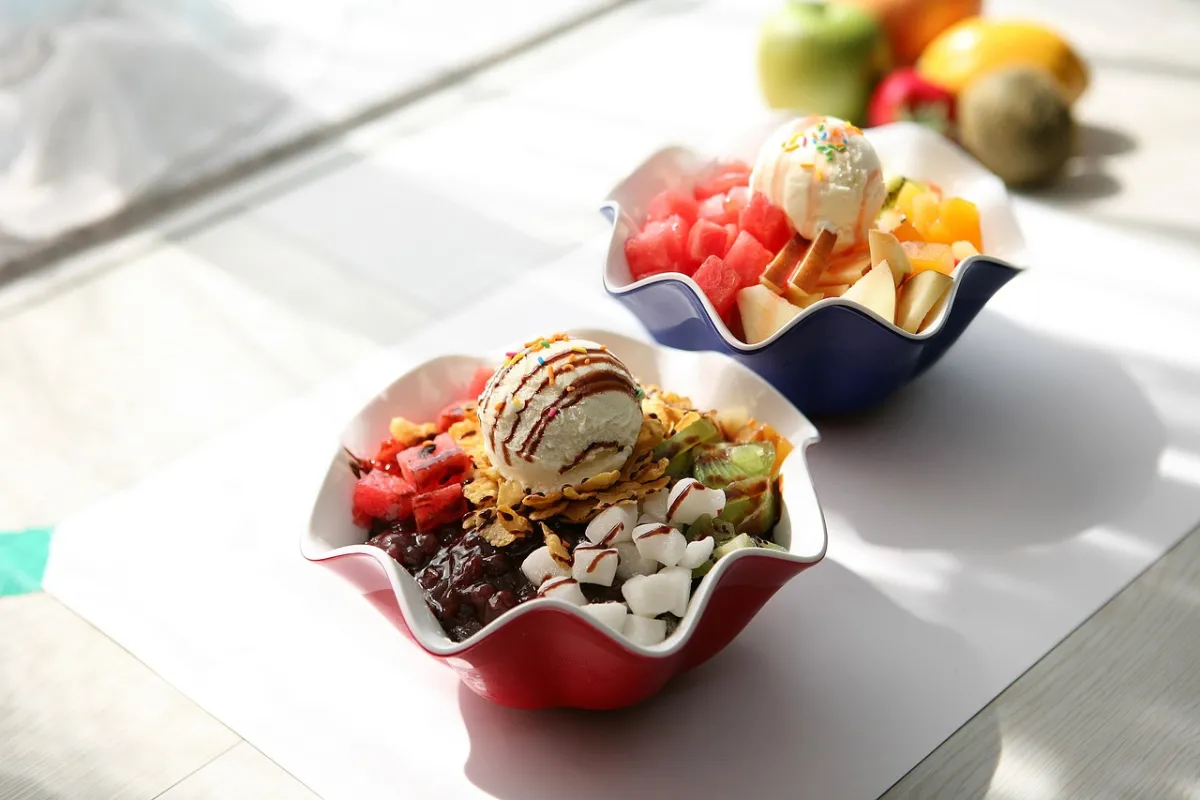
If there is one Korean dessert that visitors fall in love with, it is bingsu (빙수), a mountain of finely shaved ice topped with sweet ingredients and meant to be shared with a spoon each.
A short history
Koreans have stored ice for centuries. During the Joseon period, the state kept river ice cut in winter in large storehouses so that it could be used in summer. The names of two Seoul neighbourhoods, Seobinggo and Dongbinggo ("west ice storage" and "east ice storage"), come from these royal ice houses. Ice was a luxury reserved mostly for the court and officials.
Shaved ice topped with sweet red beans became a popular summer treat in the twentieth century, sold at bakeries and snack bars as patbingsu (팥빙수, "red bean ice"). Older versions mixed ice with fruit cocktail, cereal, jelly and condensed milk in a cheerful jumble. From the 2010s onward a new style spread through dessert cafés: instead of water ice, milk is frozen and shaved into feather-light flakes that melt like snow. This "snow ice" bingsu is now the standard in most cafés.
Popular bingsu styles
| Style | Typical toppings | Flavour |
|---|---|---|
| Patbingsu | Sweet red beans, small rice cakes, condensed milk | Classic, nutty and comforting |
| Injeolmi bingsu | Roasted soybean powder, injeolmi pieces, almonds | Toasty, lightly sweet |
| Fruit bingsu | Mango, strawberry, melon or peach depending on season | Fresh and bright |
| Green tea bingsu | Matcha powder or syrup, red beans, rice cakes | Slightly bitter and balanced |
| Hotel bingsu | Premium fruit such as whole mangoes, often in large portions | Luxurious, a summer event in itself |
A single bowl is usually large enough for two or three people. In Korea it is normal to order one bingsu for the table, with everyone digging in from their own side. Prices vary enormously, from an affordable bowl at a chain café to a hotel bingsu that costs as much as a full meal, so check menus before ordering.
How to eat bingsu like a local
There are two schools of thought. Some people mix everything together straight away, so that the red beans, milk ice and powder blend into a single sweet slush. Others carefully eat from the top down, keeping each layer separate. Friends sometimes debate this with surprising passion, but there is no wrong way. Just eat it quickly, because snow ice melts fast.
Traditional drinks that work as dessert
Many Korean meals end with a cool or warm drink rather than a sweet. These traditional beverages, sometimes called eumcheongnyu (음청류), are refreshing, lightly sweet and often made with grains, fruit or spices.
- Sikhye (식혜) – a sweet rice punch made by fermenting cooked rice with malted barley, so that the rice starch turns into sugar. Grains of rice float in the pale golden drink. It is served cold, often at the end of a meal or at a jjimjilbang.
- Sujeonggwa (수정과) – a deep red-brown punch made by simmering cinnamon and ginger, sweetening the liquid and serving it chilled with dried persimmon and pine nuts. It has a warm, spicy aroma.
- Yuja-cha (유자차) – citron tea made by stirring a spoonful of yuja marmalade, with its peel, into hot water. It is a classic winter drink.
- Omija-cha (오미자차) – a bright pink drink made from omija berries, whose name means "five flavours" because they are said to taste sweet, sour, salty, bitter and pungent all at once.
- Misutgaru (미숫가루) – a powder of roasted mixed grains shaken with cold water or milk and a little honey. It is a filling summer drink that many cafés now serve as a latte.
- Hwachae (화채) – a fruit punch made with fresh fruit pieces floating in sweetened water, juice or omija tea. Watermelon hwachae is a summer favourite.
Traditional tea houses are the best place to try several of these together. Many also serve daechu-cha (jujube tea) and ssanghwa-cha, a dark herbal tea. Some of these drinks are traditionally associated with health, but they are best enjoyed as foods rather than as remedies. If you have a medical condition, are pregnant or take regular medication, check with a doctor or pharmacist before drinking large amounts of herbal teas.
Seasonal desserts through the year
Seasons shape Korean sweets as much as they shape savoury dishes. A rough calendar looks like this:
| Season | Typical sweets | Why |
|---|---|---|
| Spring | Hwajeon, ssuk (mugwort) tteok, strawberry desserts | Flowers and young mugwort appear; strawberry season peaks in late winter and spring |
| Summer | Bingsu, hwachae, misutgaru, sikhye | Cold, refreshing sweets for hot, humid days |
| Autumn | Songpyeon, roasted chestnuts, dried persimmons | Harvest season and Chuseok |
| Winter | Hotteok, bungeoppang, yuja-cha, patjuk (red bean porridge) | Warm snacks; red bean porridge is traditionally eaten around the winter solstice |
Patjuk (팥죽), a thick red bean porridge with small glutinous rice balls called saealsim, is especially interesting. It is traditionally eaten on Dongji, the winter solstice, when the red colour was believed to drive away bad spirits. Some versions are sweetened and eaten like a dessert, while others are lightly salted.
Gotgam (곶감), dried persimmons hung under the eaves in autumn, are another classic. Their concentrated sweetness made them a precious winter treat long before refined sugar was common, and they still appear in gift boxes and in sujeonggwa.
Modern café culture and new Korean desserts
Korea has one of the most active café cultures in the world, and dessert is a big part of it. Cafés compete on interior design and signature desserts, and trends can spread across the country within weeks on social media.
Some of the most visible trends of recent years include:
- Fusion of old and new. Traditional ingredients such as injeolmi powder, black sesame, sweet potato, yakgwa and red beans appear in croissants, lattes, cakes and ice cream.
- Thick "Korean-style" macarons. Locally nicknamed ttungkaron (뚱카롱), these are macarons with an extra-thick filling, often decorated like characters.
- Croffles and pastry hybrids. Croissant dough pressed in a waffle iron became a café staple, topped with ice cream or syrup.
- Bakery tours. Famous regional bakeries attract visitors from across the country, and some travellers plan whole trips around them.
- Short-lived street trends. Fruit candy skewers, new bingsu flavours and viral cakes appear and fade quickly, which is part of the fun.
A typical Korean café also offers drinks rarely found elsewhere, such as sweet potato latte, misutgaru latte, grapefruit ade and yuja tea. Many cafés keep traditional sweets on the menu alongside cakes, so a single visit can show you both sides of Korean dessert culture.
Where to try Korean desserts as a visitor
- Traditional markets – Gwangjang Market and other markets have tteok shops, hotteok stalls and stands selling sikhye.
- Traditional tea houses – in Insadong, Bukchon and Ikseon-dong in Seoul, or in hanok villages such as Jeonju, tea houses serve hangwa, yakgwa and traditional teas in quiet surroundings.
- Department store food halls – the basement food floors of large department stores sell high-quality tteok, hangwa gift boxes and seasonal desserts.
- Bingsu cafés – dessert chains and independent cafés serve bingsu all year, but summer brings the widest choice.
- Convenience stores – surprisingly good for trying ice cream bars inspired by traditional flavours, bottled sikhye and packaged yakgwa.
- Street stalls in winter – look for hotteok and bungeoppang carts near subway exits and residential streets.
Opening hours and seasonal menus change, so check a recent map listing before travelling to a specific shop.
Recipe: homemade hotteok (Korean sweet pancakes)
Hotteok is one of the easiest Korean desserts to make at home, and the smell of melting brown sugar and cinnamon is worth the effort alone. This recipe makes about eight pancakes.
Ingredients
- 250 g plain flour (or 200 g plain flour and 50 g glutinous rice flour for a chewier texture)
- 1 teaspoon instant dry yeast
- 1 tablespoon sugar and ½ teaspoon salt
- About 200 ml lukewarm milk or water
- 1 tablespoon neutral oil, plus more for frying
- Filling: 80 g brown sugar, 1 teaspoon ground cinnamon, 3 tablespoons chopped nuts or mixed seeds
Method
- Make the dough. Mix the flour, yeast, sugar and salt. Add the lukewarm milk and oil, and stir until a soft, sticky dough forms. It should be wetter than bread dough.
- Let it rise. Cover the bowl and leave it in a warm place for about one hour, until the dough has roughly doubled. Punch it down gently and rest it for another ten minutes.
- Prepare the filling. Mix the brown sugar, cinnamon and nuts in a small bowl.
- Shape the pancakes. Oil your hands to stop the dough sticking. Take a piece of dough about the size of a golf ball, flatten it in your palm, place a heaped tablespoon of filling in the centre and pinch the edges together to seal it completely.
- Fry and press. Heat a generous amount of oil in a frying pan over medium-low heat. Place the ball seam-side down and cook for about 30 seconds until the bottom is lightly golden. Turn it over and press it flat with a spatula or the bottom of an oiled cup.
- Finish cooking. Cook for one to two minutes on each side until both sides are golden and the sugar has melted inside. Lower the heat if the outside browns too quickly.
- Serve carefully. Let the hotteok rest for a minute before eating, as the syrup inside will be very hot.
Tips and variations
- A little glutinous rice flour makes the pancake chewier, closer to street hotteok.
- For a Busan-style version, split the cooked hotteok open with scissors and stuff it with a mix of roasted sunflower seeds, pumpkin seeds and peanuts.
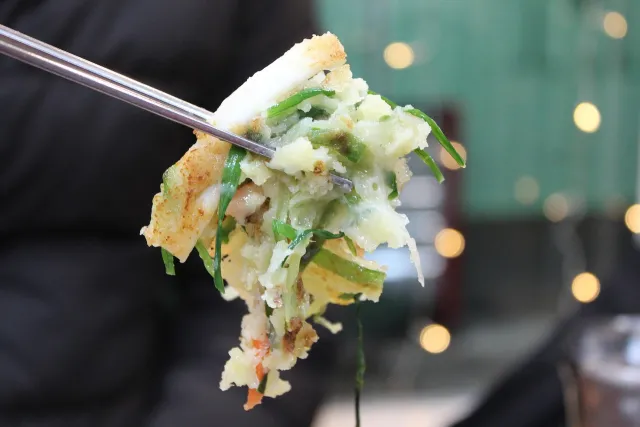
- Savoury hotteok with glass noodles and vegetables is also popular, especially in markets.
- Leftovers can be reheated in a dry pan over low heat; avoid the microwave, which makes them tough.
Common mistakes and tips for enjoying Korean desserts
- Expecting Western sweetness. Many Korean sweets are deliberately mild. Taste them for texture and aroma, not just sugar.
- Refrigerating tteok. Rice cakes harden quickly in the fridge. Eat them fresh or freeze them.
- Ordering one bingsu each. Portions are designed for sharing. Start with one for two people.
- Skipping the drinks. Sikhye, sujeonggwa and yuja tea are part of the dessert experience and a great way to balance richer foods.
- Checking allergies. Nuts, sesame, soybeans, wheat and milk are common in Korean desserts. If you have food allergies, ask about ingredients; the phrase "땅콩 들어가요?" (Does it contain peanuts?) can help.
Frequently asked questions
Are Korean desserts very sweet?
Traditional ones are usually less sweet than Western cakes and pastries, relying on grains, beans, honey and fruit. Modern café desserts vary widely and can be just as sweet as desserts anywhere else.
Is tteok gluten-free?
Many tteok are made from rice or glutinous rice, which do not contain gluten, but some recipes add wheat flour and shops may handle wheat in the same space. If you need to avoid gluten strictly, ask the shop directly.
What is the difference between patbingsu and bingsu?
Bingsu is the general word for shaved ice desserts. Patbingsu is the classic version topped with sweet red beans; other bingsu use fruit, injeolmi powder, matcha and many other toppings.
When is the best season for hotteok?
Late autumn and winter. Street carts usually appear when the weather turns cold, but some markets and tourist areas sell hotteok all year.
Does sikhye contain alcohol?
Sikhye is made with malted barley, which converts rice starch into sugar, and it is normally sold and served as a non-alcoholic sweet drink. It is different from makgeolli, which is a rice wine.
Which Korean dessert should a beginner try first?
Injeolmi bingsu or patbingsu in summer, hotteok in winter, and a plate of yakgwa with yuja tea at a traditional tea house at any time of year. Together they give a good sense of Korean sweetness and texture.
Final thought: sweetness with a story
Korean desserts are not only about taste. A plate of sirutteok carries wishes for a new home, a box of yakgwa says thank you at a holiday, a bowl of bingsu is a summer afternoon with friends, and a paper cup of hotteok is a warm hand on a winter night. Whether you try them at a market stall, a quiet tea house or a busy café, each one offers a small, sweet window into Korean life.