Korean Jjimjilbang and Bathhouse Guide: What to Expect, Step-by-Step Etiquette, Sauna Rooms, Scrubs, Snacks, Overnight Stays and First-Timer Tips
Hot baths, heated stone rooms, baked eggs, sweet rice punch and families napping on warm floors: a Korean jjimjilbang is part spa, part community centre and part budget sleepover. This guide explains how a jjimjilbang works, the difference from a neighbourhood bathhouse, the bathing etiquette step by step, the themed sauna rooms, body scrubs, classic snacks, overnight stays, costs and practical tips for your first visit.

Contents
- Jjimjilbang vs mogyoktang: what is the difference?
- Why Koreans love the jjimjilbang
- Step by step: your first visit
- Bathing etiquette in the baths
- The pools and wet saunas
- The jjimjil area: themed heated rooms
- The "sheep-head" towel hat
- The Korean body scrub (seshin)
- What to eat and drink
- Sleeping overnight at a jjimjilbang
- How much does it cost?
- What to bring and what is provided
- Health and safety precautions
- Useful Korean words at the jjimjilbang
- How to choose a jjimjilbang
- Common first-timer mistakes
- A relaxed two-and-a-half-hour plan for first-timers
- Visiting in different seasons
- Jjimjilbang culture in modern Korea
- Frequently asked questions
- Final thought: warmth, rest and everyday Korea
Ask Koreans where they go to recover from a long week, a cold winter day or a late night out and many will mention the same place: the jjimjilbang (찜질방). It is a large, often 24-hour facility with gender-separated bathing areas full of hot pools and saunas, and a shared area where everyone, in matching loose uniforms, relaxes in heated rooms, eats snacks, watches TV, reads, chats and sometimes sleeps on the warm floor. For travellers, a visit is one of the most memorable and affordable ways to see everyday Korean life up close.
The first visit can feel confusing, especially if you have never bathed in a public bath. This guide walks you through everything: what a jjimjilbang is, how it differs from a neighbourhood bathhouse, how to check in, the etiquette in the baths, the themed sauna rooms, the famous body scrub, what to eat, how overnight stays work, typical costs and some health precautions.
Jjimjilbang vs mogyoktang: what is the difference?
Korea has two closely related types of bathing facilities, and many buildings combine both.
- Mogyoktang (목욕탕) is the traditional public bathhouse. It has gender-separated areas with showers, hot and cold pools and usually a steam or dry sauna. You bathe without clothes, as in most public baths around the world. Neighbourhood bathhouses have long been part of Korean life, dating from times when many homes had no hot water.
- Jjimjilbang (찜질방) adds a large mixed-gender area on top of the bathhouse. Here everyone wears the uniform provided, and there are heated rooms of different temperatures, rest areas, snack bars, sometimes restaurants, game rooms, reading corners and sleeping areas. The word comes from jjimjil (찜질), meaning to warm the body with heat to relax it.
- Sauna (사우나) is a word you will see on many signs. In Korea it often refers to a bathhouse rather than just a sauna room, so a building called "OO Sauna" may be a mogyoktang, a jjimjilbang or both.
Some places charge separately for the bath only and for the bath plus the jjimjil area, so read the price board at the counter.
Why Koreans love the jjimjilbang
A jjimjilbang is not just about getting clean. It plays many roles in Korean society.
- Relaxation and recovery. Many people believe that sweating in heated rooms helps them feel refreshed after work, exercise or a hiking trip.
- Family outing. Parents bring children on weekends, grandparents meet friends, and couples come together, since the shared area is mixed.
- Social space. Friends spend hours chatting on heated floors, a little like meeting at a café, but lying down.
- Budget accommodation. Some open 24 hours and allow overnight stays for a small fee, which makes them a backup option for late-night travellers or people who miss the last train.
- Pop culture. Jjimjilbang scenes are a staple of Korean variety shows and dramas, which is why the towel "sheep-head" hat has become famous abroad.
Step by step: your first visit
1. Shoes off at the entrance
As in Korean homes, shoes come off first. Put them in a small shoe locker near the entrance and take the key. In some places the shoe key is exchanged at the counter for your main locker key.
2. Pay at the counter
Pay the entrance fee and say whether you want the bath only or the jjimjilbang as well. You will receive a locker key, usually on a wristband, a set of uniform (often a T-shirt and shorts) and one or two small towels. Larger towels may cost extra. Some facilities charge an additional fee after a certain hour or for staying overnight.
3. The wristband key is your wallet
In many jjimjilbang you can buy snacks, drinks and services inside by showing your locker key. The charges are added to your tab and paid when you leave. It is convenient, but keep track so the final bill does not surprise you.
4. Go to your gender's changing room
Follow the signs: 남 (nam) or 남탕 means men, and 여 (yeo) or 여탕 means women. Colours often help: blue for men and red or pink for women, although not always. Find your locker by the number on your key.
Bathing etiquette in the baths
The bathing area is where first-timers feel most nervous. Remember that everyone else is simply there to relax, and nobody is looking at you. Follow these rules and you will fit in naturally.
- Bathing is done without clothes. Swimsuits are not worn in the bathing area. The small towel can be carried for modesty, but it should not go into the pool.
- Shower thoroughly first. Wash your whole body with soap and rinse well before entering any pool. This is the most important rule.
- Use the seated or standing showers. Many bathhouses have low stools and mirrors where people sit to wash. Rinse the stool before and after use.
- Tie up long hair. Hair should not touch the water in the pools.
- Keep towels out of the water. Place your towel on the edge or fold it on your head.
- Keep your voice low. Chatting quietly is fine; splashing, shouting and swimming are not.
- No photos. Phones and cameras are not used in changing rooms or bathing areas. Many places do not allow phones there at all.
- Clean up after yourself. Rinse your area, return bowls and stools, and do not leave hair or used razors behind.
Tattoos are generally more accepted at Korean bathhouses than in some neighbouring countries, but policies differ from place to place. If you have large tattoos, it is polite to check at the counter first.
The pools and wet saunas
Typical bathing areas include several pools with temperatures written on signs.
- Warm pool (온탕, ontang): usually around 38 to 40°C, the place to start.
- Hot pool (열탕, yeoltang): hotter, often over 40°C. Enter slowly and stay only briefly.
- Cold pool (냉탕, naengtang): refreshing after the hot pools. Some people alternate between hot and cold.
- Herbal or mineral pools: some baths add mugwort, ginseng or other herbs, or use hot spring water.
- Steam room and dry sauna: usually located next to the pools in the bathing area.
A common routine is to shower, warm up in the warm pool, sit in the hot pool or sauna, cool down, rest and repeat, finishing with a final shower.
The jjimjil area: themed heated rooms
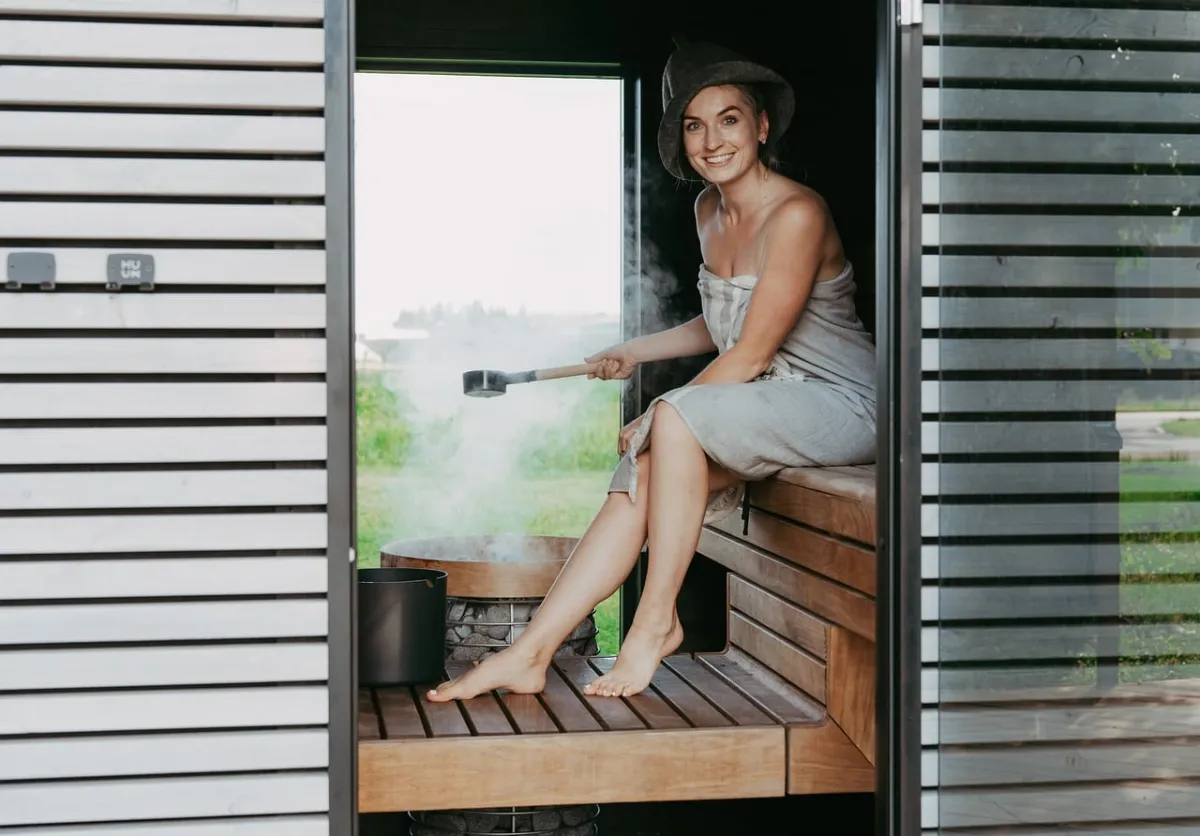
After bathing, put on the uniform and head to the shared area. This is the heart of the jjimjilbang. The highlight is a series of heated rooms, each with a different theme and temperature. Signs outside usually show the temperature.
- Hwangto-bang (황토방): a room lined with yellow clay, valued in Korean tradition for its earthy warmth.
- Sogeum-bang (소금방): a salt room with walls or floors of salt crystals.
- Sutgama (숯가마): a charcoal kiln-style room, often the hottest, inspired by traditional charcoal kilns. Some are extremely hot, so short visits are recommended.
- Jade or amethyst rooms (옥방, 자수정방): rooms decorated with stones and minerals.
- Hinoki or wooden rooms: rooms with fragrant wood.
- Eoreum-bang (얼음방): the ice room, kept cold for cooling down between hot rooms.
Many claims are made about the health effects of these materials. They are part of the culture and tradition, but they should be enjoyed as relaxation rather than as medical treatment. What matters most is listening to your body.
The "sheep-head" towel hat
You will likely notice people wearing a towel rolled into a shape that looks like a small head with two curled ears. This is the famous yangmeori (양머리), or sheep head. It keeps hair tidy and protects the head and ears from the heat in hot rooms. Making one is a fun first-timer challenge.
- Lay a small towel flat and fold the long edges toward the middle so it forms a long strip.
- Roll each short end tightly toward the centre until the rolls are about the size of your ear.
- Gently open the middle of the towel and place it on your head with a roll over each ear.
It might take a few tries, and you can always watch how others do it or search for a short video before you go.
The Korean body scrub (seshin)
One of the most famous bathhouse experiences is the seshin (세신), commonly called ttaemiri (때밀이). A trained attendant scrubs your whole body with a rough mitt, removing a surprising amount of dead skin. It is an old tradition, and many Koreans swear by the smooth feeling afterwards.
- How to book: find the scrub counter or station in the bathing area, usually with a price board, and put your key or name on the waiting list.
- What to expect: you lie on a padded table and the attendant scrubs, rinses and turns you over. It is done without clothes in the gender-separated area by an attendant of the same gender.
- Pressure: it can feel strong. Say "salsal haejuseyo" (살살 해주세요) for "please be gentle" or "apayo" (아파요) for "it hurts".
- Extra services: many places offer packages with massage, a cucumber face mask or hair wash.
- DIY option: many Koreans buy a scrub mitt, called ttaetaol (때타올), and do it themselves after soaking well in the warm pool.
If you have sensitive skin, a skin condition, sunburn or a recent cosmetic procedure, skip the scrub or ask for very light pressure, and consult a doctor if you are unsure.
What to eat and drink
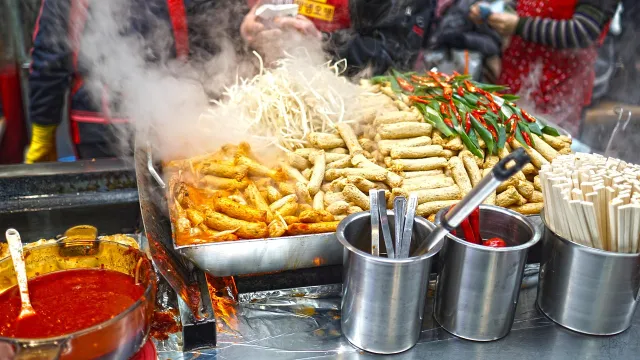
Snacks are a big part of the fun. Almost every jjimjilbang has a snack bar.
- Maekbanseok gyeran (맥반석 계란): eggs baked slowly until the shell turns brown and the inside becomes firm and slightly smoky. They are the classic jjimjilbang snack, often eaten with a pinch of salt. Koreans traditionally crack them on their foreheads, a joke frequently seen on TV.
- Sikhye (식혜): a sweet, chilled rice drink with soft grains of rice floating in it, served in a cup with ice. It is refreshing after the heat.
- Ramyeon and simple meals: many jjimjilbang have small restaurants serving ramyeon, kimbap, bibimbap or seaweed soup.
- Patbingsu and ice cream: shaved ice desserts are popular in warmer months.
Drink water regularly. Sweating in heated rooms can dehydrate you faster than you expect.
Sleeping overnight at a jjimjilbang
Some jjimjilbang open 24 hours and let guests sleep in common rest areas. People lie on mats on the heated floor with a small block-like pillow, sometimes in dedicated sleeping rooms, including women-only rooms in some places. For travellers, this can be a cheap backup when the last train has left or when you arrive very late.
Keep realistic expectations:
- It is a shared space with lights, snoring and people coming and going, so earplugs and an eye mask help.
- There is little privacy and no real bed.
- Many places charge an extra fee for staying after a certain time, often late evening.
- Keep valuables in your locker, not next to you.
- Minors are generally not allowed to stay late at night without a guardian under Korean rules, and individual facilities may have their own policies.
- Not all jjimjilbang allow overnight stays, and opening hours changed in many places after the pandemic, so check before you plan to sleep there.
How much does it cost?
Prices vary by city, size and facilities, so treat the following as a rough guide and check the board at the entrance.
| Item | Typical price range | Notes |
|---|---|---|
| Bathhouse only | About 8,000–15,000 won | Neighbourhood baths are usually cheaper |
| Bath + jjimjil area | About 12,000–25,000 won | Large spa-style facilities cost more |
| Overnight surcharge | A few thousand won extra | Not offered everywhere |
| Body scrub (seshin) | About 20,000–40,000 won | Packages with massage cost more |
| Baked eggs and sikhye | A few thousand won | Often sold as a set |
Prices have risen in recent years with energy costs, and some neighbourhood bathhouses have closed. Always confirm current prices locally.
What to bring and what is provided
- Usually provided: uniform, small towels, locker, hair dryers and often basic soap or body wash.
- Sometimes provided: shampoo, conditioner, lotion and cotton swabs, depending on the facility.
- Bring if you like: your own toiletries, a hair tie, a comb, skincare, a change of underwear, earplugs if staying overnight, and a water bottle.
- Toothbrushes, razors and scrub mitts are often sold at the counter for a small fee.
Health and safety precautions
Heat bathing is enjoyed by people of all ages, but it is not suitable for everyone, and common sense is important.
- If you are pregnant, have heart or blood pressure problems, or any other health condition, consult a doctor before using hot pools and saunas.
- Do not use hot rooms after drinking alcohol, on a full stomach or when you feel unwell.
- Limit your time in very hot rooms, step out if you feel dizzy and rest in a cooler area.
- Drink water often and stand up slowly after sitting in the heat.
- Watch children closely in pools and hot rooms.
- Floors can be slippery, so walk carefully in the bathing area.
Useful Korean words at the jjimjilbang
| Korean | Pronunciation | Meaning |
|---|---|---|
| 남탕 / 여탕 | namtang / yeotang | Men's bath / women's bath |
| 탈의실 | taruisil | Changing room |
| 사물함 / 열쇠 | samulham / yeolsoe | Locker / key |
| 찜질복 | jjimjilbok | Jjimjilbang uniform |
| 수건 | sugeon | Towel |
| 세신 / 때밀이 | seshin / ttaemiri | Body scrub |
| 수면실 | sumyeonsil | Sleeping room |
| 얼마예요? | eolmayeyo? | How much is it? |
| 살살 해주세요 | salsal haejuseyo | Please be gentle |
How to choose a jjimjilbang
- Large spa complexes in big cities often have many themed rooms, restaurants and English signs. Places such as Spa Land in Busan's Centum City and well-known facilities in central Seoul are popular with visitors. Check the latest information before you go, as facilities change.
- Neighbourhood jjimjilbang are smaller and simpler but give a more local experience and are often cheaper.
- Hot spring towns such as Onyang, Suanbo or Busan's Dongnae area offer baths using natural spring water.
- Read recent reviews on map apps such as Naver Map or Kakao Map for cleanliness, opening hours and overnight policy.
Common first-timer mistakes
- Entering a pool without showering first.
- Wearing a swimsuit or underwear in the bathing area.
- Putting a towel in the pool water.
- Taking the phone into the changing room or baths and appearing to take photos.
- Staying too long in the hottest room on the first visit.
- Forgetting that snacks are added to the key tab, then being surprised at checkout.
- Wearing outdoor shoes beyond the entrance.
A relaxed two-and-a-half-hour plan for first-timers
If you are not sure how to spend your time, this simple route works well for most visitors.
- 0:00–0:15 Check in, store your shoes and belongings, and shower thoroughly.
- 0:15–0:45 Soak in the warm pool, try the hot pool briefly, cool off in the cold pool and rest on a bench.
- 0:45–1:00 Shower again, put on the uniform and dry your hair.
- 1:00–1:45 Explore the heated rooms. Start with a mild clay or salt room, spend a few minutes in a hotter room if you feel comfortable, and cool down in the ice room or rest area between rooms.
- 1:45–2:15 Order baked eggs and sikhye, or a bowl of ramyeon, and rest on the heated floor.
- 2:15–2:30 Return to the changing room, take a final rinse, get dressed and settle your tab at the counter.
If you book a body scrub, add about 30 to 40 minutes and do it after your first long soak, when your skin is soft.
Visiting in different seasons
The jjimjilbang is a year-round habit, but the experience changes with the seasons. In winter, when temperatures in Seoul can drop well below freezing, the heated floors and hot pools feel wonderful and facilities are at their busiest, especially on weekend evenings. In summer, many visitors spend more time in the ice room and the cold pool, and treat themselves to patbingsu. During major holidays such as Seollal and Chuseok, some neighbourhood bathhouses close for a day or two while large complexes become crowded with families. Weekday mornings and early afternoons are usually the quietest times to visit.
Jjimjilbang culture in modern Korea
The jjimjilbang boomed in the 1990s and 2000s, and it remains a familiar part of life. In recent years the industry has faced challenges: energy costs have risen, the pandemic forced temporary closures and many neighbourhood bathhouses have shut down. At the same time, new spa-style complexes with cafés, rooftop pools and modern design attract younger visitors, and the jjimjilbang has become a symbol of Korean culture overseas, with Korean-style spas opening in other countries. Whether old or new, the basic appeal stays the same: warmth, rest and a relaxed shared space.
Frequently asked questions
Do I have to be naked?
In the gender-separated bathing area, yes, bathing is done without clothes, as in many public baths around the world. In the shared jjimjil area everyone wears the uniform provided. If you prefer not to use the baths, some facilities let you shower briefly and spend your time in the uniform area.
Can couples and families go together?
Yes. Men and women use separate bathing areas but meet again in the mixed jjimjil area in uniform, which is why the jjimjilbang is a popular spot for families and couples.
Is it safe to leave my things?
Use your locker for valuables and keep the key on your wrist. Large facilities often also have a front-desk safe for passports or large items.
Is a jjimjilbang a good place to sleep?
It can work as a cheap backup for a night, but it is noisy, bright and shared. For a restful sleep, a guesthouse or hotel is better.
Are jjimjilbang suitable for children?
Many families bring children, and some facilities have play areas. Children must be supervised, and rules about which changing room young children may enter and late-night stays vary, so check with staff.
How long should I stay?
Two to three hours is enough for a first visit: a bath, a few heated rooms, a snack and a rest. Many Koreans stay half a day.
Final thought: warmth, rest and everyday Korea
A jjimjilbang does not appear on many sightseeing lists, yet it might teach you more about everyday Korean life than a famous landmark. Grandmothers chatting on warm floors, teenagers laughing over baked eggs, office workers napping after a long week and families sharing a bowl of ramyeon all show how Koreans rest and recharge together. Shower first, keep your towel out of the pool, try the sheep-head towel and finish with a cold cup of sikhye. You will leave warm, relaxed and with a story to tell.