Seoul's Han River Parks: A Visitor's Guide to Yeouido, Banpo, Ttukseom, Mangwon and More, with Picnics, Cycling, Night Views, Festivals and Local Etiquette
The Han River cuts Seoul in two, and its banks are lined with free public parks where locals cycle, picnic, order fried chicken to the grass and watch the city lights at night. This guide explains how the Hangang parks work, which ones suit which kind of visit, what to do in each season, how to rent a bike or a shade tent, and the unwritten rules that make a river evening feel truly Korean.

Contents
- The Han River and its parks at a glance
- The main Hangang parks and what each is best for
- Yeouido Hangang Park: the classic choice
- Banpo and the Moonlight Rainbow Fountain
- Ttukseom, Jamsil and the eastern parks
- The western parks: Mangwon, Nanji and Yanghwa
- River islands and unusual spots
- Things to do by the river
- The Han River through the seasons
- Rules and etiquette in the Hangang parks
- A suggested Han River evening
- Practical tips
- Combining the river with nearby sights
- The Han River on screen and in pop culture
- Visiting with children, older travellers or limited mobility
- Frequently asked questions
- Final thought: the city's living room
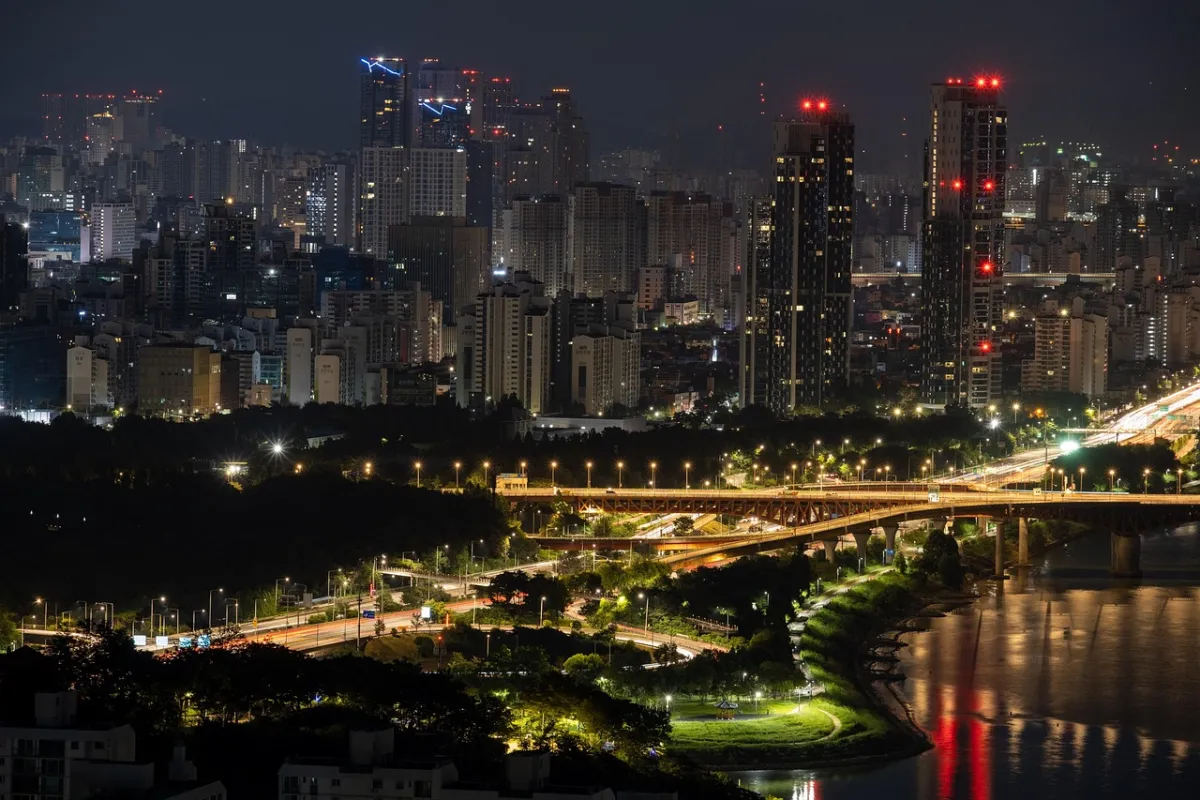
Every big city has a river, but few rivers are lived in the way Seoul's Han River is. On a warm evening the banks fill with people: office workers jogging after work, couples sitting on mats with a box of fried chicken, families flying kites, students strumming guitars, cyclists streaming past, and groups of friends watching the bridges light up one by one. It costs nothing to join them, and for many visitors an evening by the river becomes one of the most memorable parts of a trip to Korea.
This guide explains what the Han River parks are, how to choose the right one, what to do throughout the year, and how to enjoy them like a local, from ordering food to the grass to the simple courtesies that keep these shared spaces pleasant for everyone.
The Han River and its parks at a glance
The Han River (한강, Hangang) flows from east to west through the middle of Seoul and on to the Yellow Sea. Inside the city it is very wide, often more than a kilometre, and it is crossed by more than two dozen road and rail bridges. The northern side, called Gangbuk, holds the historic centre and palaces, while the southern side, Gangnam in the broad sense, developed rapidly from the 1970s onwards.
Along both banks the city maintains a continuous green belt known as the Hangang Parks (한강공원). It is divided into eleven main parks that run almost without interruption from the eastern edge of the city to the west, linked by riverside cycle paths and walking trails. The parks are free to enter and open all day, although facilities such as cafés, rental shops and swimming pools have their own hours.
The riverside parks largely took their current shape during large-scale river development projects in the 1980s and later redesign programmes. Today they are run by the city and include lawns, sports fields, playgrounds, convenience stores, cafés, toilets, bike rental points, water sports facilities and seasonal events.
The main Hangang parks and what each is best for
| Park | Location | Best for |
|---|---|---|
| Yeouido | Yeouido island, south bank, west-central | First-time visitors, cherry blossoms, fireworks, picnics with a skyline view |
| Banpo | South bank, central | Moonlight Rainbow Fountain, sunset, night views, Seorae Island |
| Ttukseom | North-east bank | Easy subway access, water sports, outdoor pool in summer, lively atmosphere |
| Jamsil | South-east bank | Near Lotte World and the Olympic area, sports facilities, quieter lawns |
| Mangwon | North-west bank | Combining a river walk with Mangwon Market and the Mangwon-dong café area |
| Nanji | North-west bank | Camping, wide open spaces, near World Cup Park and Haneul Park |
| Gwangnaru | Far east bank | Nature, cycling, a calmer and greener riverside |
| Ichon | Yongsan, north bank | Natural reed areas, close to the National Museum of Korea |
| Jamwon | South bank, near Sinsa | Easy combination with Garosu-gil, swimming pool in summer |
| Yanghwa | South bank, west | Access to Seonyudo Park, sunset views |
| Gangseo | Far west bank | Wetlands and birdwatching, very quiet |
If you only have time for one or two, Yeouido and Banpo give the classic Han River experience, while Ttukseom is the most convenient by subway. Travellers staying in the Hongdae area often find Mangwon the easiest to reach on foot.
Yeouido Hangang Park: the classic choice
Yeouido is an island in the river that holds the National Assembly, broadcasting stations, the financial district and some of Seoul's tallest buildings. Its riverside park is the most famous of all the Hangang parks and the one that appears most often in Korean dramas and variety shows.
- Picnic lawns stretch along the water with a view of the north bank and Namsan Seoul Tower in the distance.
- Cherry blossoms: in early to mid April the road behind the National Assembly, Yunjung-ro, becomes a tunnel of blossoms, and a spring flower festival is usually held nearby.
- Fireworks: the Seoul International Fireworks Festival, normally held in autumn, draws enormous crowds to Yeouido. People arrive many hours early to claim a spot.
- Night markets: seasonal night markets with food trucks and craft stalls have been held around Yeouido on weekends in the warmer months.
- Cruises: Han River cruise boats depart from the Yeouido area, offering daytime, sunset and night trips.
Yeouinaru Station on subway Line 5 is right next to the park. On sunny weekends it can be crowded, so arrive early if you want a good spot near the water.
Banpo and the Moonlight Rainbow Fountain
Banpo Hangang Park on the south bank is the place to go for the river's most famous night show. The Moonlight Rainbow Fountain sends jets of water from both sides of the upper deck of Banpo Bridge, lit in changing colours and choreographed to music. It was recognised by Guinness World Records as the longest bridge fountain.
The fountain usually operates in the warmer months, roughly spring to autumn, with several shows a day around lunchtime and in the evening. Schedules change by season and shows may be cancelled in rain, strong wind or for maintenance, so check the official schedule before going.
Next to the bridge, the Floating Islands (Some Sevit) are a group of artificial islands with cafés, restaurants and event spaces that light up beautifully at night. The lower deck of Banpo Bridge, called Jamsu Bridge, is a low bridge that pedestrians and cyclists can cross, and it is a pleasant way to walk to the north bank. Seorae Island, a small green island nearby, is known for seasonal flower fields.
Ttukseom, Jamsil and the eastern parks
Ttukseom Hangang Park is directly connected to Jayang Station on Line 7 (also signed as Ttukseom Hangang Park), which makes it one of the easiest parks to reach. It has a lively, youthful feel, with water sports rental, an outdoor swimming pool in summer, a large lawn, a sculpture-like observation building and weekend events.
Jamsil Hangang Park, near the Olympic Stadium and Lotte World Tower, is good for combining a river walk with sightseeing in the Jamsil area. It has sports fields and long stretches of quieter lawn. Further east, Gwangnaru Hangang Park feels greener and wilder, with ecological areas and long, smooth cycle paths that attract serious cyclists.
The western parks: Mangwon, Nanji and Yanghwa
Mangwon Hangang Park is close to Mangwon Market and the café-filled streets of Mangwon-dong, and within walking distance of Hongdae. A popular plan is to buy snacks at the market, walk to the river and have a picnic with a view of the Seongsan and Yanghwa bridges.
Nanji Hangang Park is wide and spacious, with a camping area, a lawn plaza and an ecological wetland. It sits next to World Cup Park, which includes Haneul Park, a hilltop park famous for silver grass in autumn. Nanji is a good choice if you want space rather than crowds.
Yanghwa Hangang Park gives access to Seonyudo Park, a small island that was once a water treatment plant. Its old concrete tanks and pillars have been turned into gardens and walkways, creating an unusual and atmospheric park that is especially beautiful at sunset.
River islands and unusual spots
- Nodeulseom (노들섬) – an island under Hangang Bridge between Yongsan and Noryangjin that has been redeveloped as a cultural space with a performance hall, bookshop, cafés and rooftop lawns. It offers one of the best sunset views over the river.
- Seonyudo Park – the former water treatment plant described above, reached by a pedestrian bridge.
- Bamseom (밤섬) – a small protected island used by migratory birds. It is closed to the public, but you can see it from Yeouido and the Mapo area.
- Floating Islands – the artificial islands next to Banpo Bridge.
- Observation spaces on bridges – several bridges have small cafés or viewing decks, and some were redesigned with walking areas.
Things to do by the river
Picnics and "Han River chicken"
The most Korean way to enjoy the river is a simple picnic on the grass. Many people bring a mat or rent one, and then order fried chicken and drinks to the park. Delivery riders bring food to designated delivery zones near the park entrances, and you go to meet them there; flyers and apps show the nearest zone. Pizza, jokbal (braised pork trotters) and other foods are also popular.
Han River ramyeon
Convenience stores in the parks are famous for their instant ramyeon machines. You buy a packet of instant noodles and a disposable paper bowl, place it under the machine, which adds hot water and cooks the noodles for a couple of minutes, and then eat it at an outdoor table with a river view. It sounds simple, but "Hangang ramyeon" has become a small cultural ritual that visitors love.
Cycling
Continuous cycle paths run along both banks for tens of kilometres. You can rent a bike from rental shops in some parks or use Seoul's public bike system, Ttareungyi (따릉이), whose stations are found near the parks and throughout the city. Visitors can usually buy a day pass through the official app with a foreign card, although registration steps can change. Ride on the right, keep to the cycle lane, slow down in crowded areas and use a light at night.
Walking and running
Walking paths follow the river through every park. A pleasant short route is to cross Jamsu Bridge on foot between Banpo and the north bank, or to walk from Mangwon to the Seongsan Bridge area at sunset.
Water activities
Several parks offer seasonal kayaking, paddleboarding, water skiing or duck-shaped pedal boats, mainly in summer. Outdoor swimming pools open during the summer holiday season in some parks. Always use life jackets and follow staff instructions; swimming in the river itself is not allowed.
Cruises and river transport
Han River cruise boats run sightseeing trips from Yeouido and other piers. Seoul has also been developing scheduled river boat services for commuters and visitors. Routes, schedules and fares can change, so check the latest information before planning around a boat.
The Han River through the seasons
| Season | Highlights | Tips |
|---|---|---|
| Spring (April–May) | Cherry blossoms in Yeouido, flower fields, pleasant picnic weather | Check the fine dust forecast; bring a light jacket for evenings |
| Summer (June–August) | Night picnics, swimming pools, water sports, night markets, fountain shows | Bring mosquito repellent and water; the rainy season in July can close riverside areas |
| Autumn (September–November) | Fireworks festival, clear skies, golden sunsets, cycling weather | The most popular season; arrive early for events |
| Winter (December–February) | Crisp walks, quiet riverbanks, occasional sledding and winter events | Wind by the river is very cold; dress warmly and keep visits short |
Monsoon and flooding: during heavy summer rain the river can rise quickly, and parts of the riverside parks, roads and paths may be closed for safety. Follow closure signs and emergency alerts, and never go down to the water's edge when warnings are issued.
Rules and etiquette in the Hangang parks
The Han River parks feel relaxed, but there are rules, and Koreans pay attention to them. They may change over time, so read the signs at each park.
- Shade tents: small tents and sunshades are usually allowed only in designated zones and during certain hours, and they must stay open on at least two sides. Large camping tents are permitted only at official campsites.
- Smoking: smoking is restricted in most park areas. Use designated smoking zones only.
- Rubbish: take your rubbish to the collection points and separate it into general waste, recyclables and food waste. Leaving chicken boxes on the grass is considered very bad manners.
- Alcohol: drinking in moderation at a picnic is a common sight, but rules on alcohol in public spaces can change and some areas or times may be restricted. Drink responsibly, and never cycle after drinking.
- Noise: music from small speakers is common, but keep it at a level that does not bother nearby groups, especially late at night.
- Drones: much of central Seoul, including large parts of the river, falls under flight restrictions. Do not fly a drone unless you have confirmed that it is allowed.
- Pets: dogs are welcome on a lead; clean up after them.
A suggested Han River evening
Here is a simple plan that works for most first-time visitors in the warmer months:
- Late afternoon: take the subway to Yeouinaru Station and walk along the river in Yeouido Hangang Park. If you like, rent a bike for an hour.
- Before sunset: find a spot on the grass, lay out a mat and order fried chicken to the nearest delivery zone, or buy snacks and ramyeon at a convenience store.
- Sunset: watch the sky change colour over the western bridges and the light fade on the skyline.
- Evening: take a taxi or bus to Banpo Hangang Park for the Moonlight Rainbow Fountain show, then walk around the Floating Islands.
- Late evening: cross Jamsu Bridge on foot for a final view of the lit-up bridge before heading back.
Alternatively, in winter or on a short visit, combine a walk in Mangwon with dinner at Mangwon Market, or watch the sunset from Nodeulseom.
Practical tips
- Getting there: some parks are directly connected to subway stations (such as Yeouinaru and Jayang), while others require a 10 to 20 minute walk through underpasses. Map apps used in Korea show the nearest entrance.
- Facilities: each park has toilets, convenience stores, drinking fountains in season and information points. Cafés and rental shops have their own hours.
- Bring: a mat, a light jacket, a power bank, wet wipes and a bag for rubbish. In summer, add sunscreen and insect repellent.
- Safety: the parks are generally safe and busy until late, but keep an eye on belongings, stay away from the water's edge after drinking, and be careful of fast cyclists when crossing cycle lanes.
- Air quality: on days with high fine dust levels, outdoor exercise may be uncomfortable; check an air quality app.
Combining the river with nearby sights
One of the best things about the Hangang parks is how easily they fit into a wider day of sightseeing. Because the river runs through the middle of the city, almost every district has a park within reach.
| Park | Combine with | Idea for the day |
|---|---|---|
| Yeouido | The Hyundai Seoul department store, IFC Mall, Yeouido Park | Shopping and lunch in Yeouido, then a riverside picnic at sunset |
| Ichon | National Museum of Korea, Yongsan Family Park | A morning at the museum followed by a quiet walk through the reed beds |
| Mangwon | Mangwon Market, Hongdae, Yeonnam-dong | Market snacks for lunch, cafés in the afternoon, river at sunset |
| Jamwon | Garosu-gil and Sinsa-dong | Boutique shopping, then cross to the river for an evening breeze |
| Jamsil | Lotte World Tower, Seokchon Lake, Olympic Park | Observation deck and lake walk, then a picnic by the river |
| Nanji | World Cup Park, Haneul Park, Seoul World Cup Stadium | Climb to Haneul Park in autumn, then relax on Nanji's open lawns |
The Han River on screen and in pop culture
If the riverbank looks familiar, it is probably because you have seen it many times on screen. Korean dramas use the Han River as a backdrop for confessions, break-ups, late-night talks and quiet moments of reflection. Characters sit on the stone steps with a can of beer, ride bikes along the path, or stand on a bridge looking out over the water. Variety shows film picnics and cycling challenges here, and idols often share photos of their own river walks.
For many Koreans, the river also has an emotional meaning. It is where people go to clear their heads, celebrate small victories with friends or simply be alone in a crowd. The phrase "let's go to Hangang" (한강 가자) is an everyday invitation that can mean anything from a quick bike ride to a long night of conversation. Visiting with this in mind makes even a short walk feel more meaningful.
Fans who want to visit specific filming spots should remember that the parks are shared public spaces. Take photos without blocking paths, and respect other visitors' privacy.
Visiting with children, older travellers or limited mobility
- Families will find playgrounds, open lawns for kites and ball games, and, in summer, shallow water play areas and pools in some parks. Weekend mornings are calmer than evenings.
- Older travellers can enjoy flat, well-maintained paths and plenty of benches. Shaded areas are limited in some parks, so a hat and water are essential in summer.
- Wheelchair users can use the main paths, which are paved and mostly level. Some entrances involve steep slopes or stairs through underpasses, while others have lifts or gentle ramps. It is worth checking the entrance route on a map in advance.
- Strollers are easy to use along the river, but crowded cycle lanes require care when crossing.
Frequently asked questions
Are the Han River parks free?
Yes. The parks themselves are free and open to everyone. You pay only for rentals, food, pools, cruises and paid events.
Which Han River park is best for a first visit?
Yeouido Hangang Park is the classic choice for picnics and skyline views, and Banpo Hangang Park is best in the evening for the fountain and night views. Ttukseom is the easiest to reach by subway.
Can I really order food to the park?
Yes. Fried chicken and other foods can be delivered to designated delivery zones near park entrances. Ordering usually requires a Korean delivery app or phone number, so many visitors buy food at a nearby shop or convenience store instead, or ask a Korean friend to help.
Is it safe to visit at night?
The parks are popular in the evening and generally feel safe, especially in summer when they are busy until late. As anywhere, use common sense, stay in lit areas and avoid the water's edge.
When does the Moonlight Rainbow Fountain run?
It usually operates in the warmer months with several daily shows, mostly at lunchtime and in the evening. Times change by season and weather, so check the latest official schedule.
Can I swim in the Han River?
No. Swimming in the river is not permitted. In summer you can use the outdoor swimming pools that open in some of the Hangang parks.
Final thought: the city's living room
The Han River parks are where Seoul exhales. After long workdays and crowded subways, people come here to sit on the grass, eat together, exercise and simply watch the water. As a visitor you do not need a ticket or a plan to join them. Bring a mat, find a patch of grass, and let the bridges light up around you. It is one of the simplest and most authentic experiences Seoul has to offer.