Korean Mandu (Dumplings) Explained: Steamed, Pan-Fried and Boiled Mandu, Kimchi and Meat Fillings, Regional Styles, Mandu on Seollal, Frozen Mandu Culture and a Homemade Kimchi Pork Mandu Recipe
Mandu are Korean dumplings, and they appear everywhere from New Year's soup to street stalls and supermarket freezers. This guide explains the main types of mandu, popular fillings, regional and royal court styles, how mandu differ from other Asian dumplings, where to eat them in Korea, how to cook frozen mandu and how to make, fold and cook kimchi pork mandu at home.

Contents
- What Is Mandu?
- A Short History of Mandu
- Types of Mandu by Cooking Method
- Types of Mandu by Filling
- Regional and Special Mandu
- Mandu and Seollal
- Mandu, Jiaozi, Gyoza and Other Dumplings
- Where to Eat Mandu in Korea
- Frozen Mandu Culture
- Ingredients for Homemade Mandu
- Recipe: Kimchi Pork Mandu
- Tips for a Juicier, Tastier Filling
- Folding Shapes
- Cooking Methods Step by Step
- Dipping Sauce
- Storage and Freezing
- Mandu in Everyday Korean Life
- Common Mistakes
- Frequently Asked Questions
- Final Thoughts
Few foods are as comforting in Korea as a plate of hot mandu. On a winter street, steam rises from tall bamboo baskets in front of small shops selling giant dumplings. At home, families gather around a table on the day before Seollal, folding hundreds of dumplings while they talk. In the evening, someone pulls a bag of frozen mandu from the freezer and pan-fries a few as a quick snack. Mandu are simple, flexible and loved across generations.
This guide covers everything you need to know about Korean dumplings: what they are, how they arrived in Korea, the many ways they are cooked and filled, regional and royal court styles, how they compare with Chinese and Japanese dumplings, where to eat them, how frozen mandu became a household staple and, finally, a detailed recipe for kimchi pork mandu with folding and cooking instructions. If you enjoy Korean snacks, our Korean street food guide is a good companion to this article.
What Is Mandu?
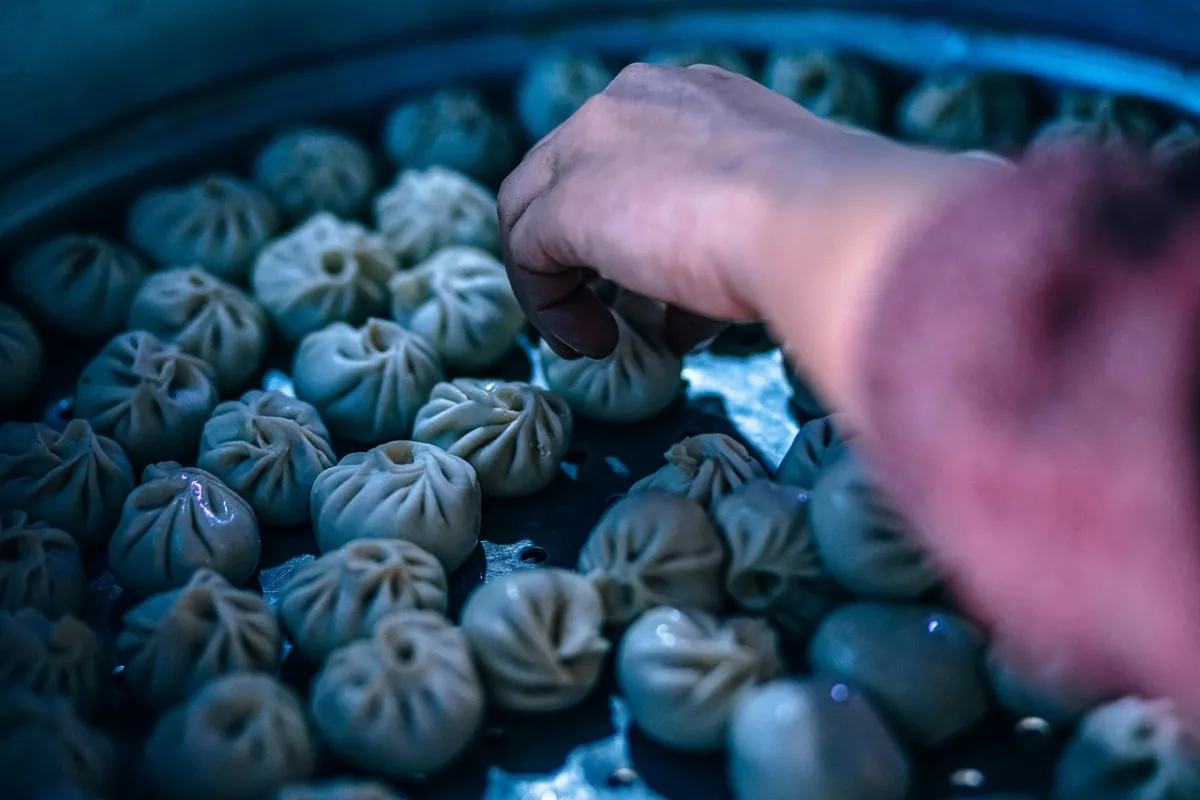
Mandu (만두) are dumplings made by wrapping a filling in a thin sheet of wheat dough. The filling usually combines minced meat, tofu, vegetables and noodles, often with kimchi for extra flavour. Once folded, mandu can be steamed, pan-fried, boiled, deep-fried or cooked in soup.
What makes Korean mandu distinctive is the balance of the filling. Instead of being mostly meat, a typical Korean mandu filling contains a large proportion of tofu and vegetables such as cabbage, zucchini, bean sprouts and chives, along with glass noodles (dangmyeon). This gives the dumplings a juicy but light texture. Kimchi mandu add a pleasant sourness and mild heat that many people consider the most Korean flavour of all.
A Short History of Mandu
Dumplings have a long history across Asia, and mandu are generally believed to have come to Korea from the north, through contact with neighbouring regions. They are often associated with the Goryeo period, when trade and cultural exchange brought new foods to the peninsula. A Goryeo-era song called "Ssanghwajeom" is frequently cited as describing a shop selling dumplings, which suggests that dumplings were already known at that time.
During the Joseon period, mandu appeared in cookbooks and royal court records, sometimes made with buckwheat flour because wheat was relatively expensive. Over time, wheat-based wrappers became standard, and mandu spread from special occasions into everyday life. Today they are eaten all year round, but they remain closely tied to winter and to the Lunar New Year, especially in families with roots in the northern part of the peninsula.
Types of Mandu by Cooking Method
The same dumpling can taste very different depending on how it is cooked. The main types are:
- Jjinmandu (찐만두) – steamed mandu. Soft and juicy, often served in bamboo steamers at dumpling shops.
- Gunmandu (군만두) – pan-fried mandu with a crisp, golden bottom. Some are fried on all sides until crunchy.
- Mulmandu (물만두) – boiled mandu, usually smaller with thin wrappers, served with dipping sauce.
- Twigim mandu (튀김만두) – deep-fried mandu, a common partner for tteokbokki at snack shops.
- Manduguk (만둣국) – mandu cooked in a clear beef or anchovy broth, often with sliced rice cakes as tteok-manduguk.
Mandu are also added to other dishes. A few dumplings in a pot of instant noodles make the meal more filling, and they are a popular addition to hot pots and stews. If you like to customise instant noodles, our Korean ramyeon guide has more topping ideas.
Types of Mandu by Filling
Fillings vary by region, family and season. Common types include:
- Gogi mandu (고기만두) – meat mandu, usually made with pork or a mix of pork and beef, plus tofu and vegetables.
- Kimchi mandu (김치만두) – mandu filled with chopped kimchi, tofu and meat. Slightly spicy and tangy.
- Saeu mandu (새우만두) – shrimp mandu, often with a translucent wrapper.
- Yachae mandu (야채만두) – vegetable mandu with tofu, noodles and vegetables. Many are suitable for vegetarians, but check the label because some contain meat-based seasonings.
- Gogi-kimchi mandu – a mix of meat and kimchi, perhaps the most common homemade style.
The kimchi used in mandu is usually well-fermented and slightly sour, which gives more flavour than fresh kimchi. If you make kimchi at home, older batches are perfect for mandu. Our guide on how to make kimchi at home explains how kimchi changes as it ferments.
Regional and Special Mandu
Korea has many regional and traditional dumpling styles:
- Pyongyang-style mandu (평양만두) – large dumplings with a mild, generous filling of meat, tofu and vegetables. They are associated with the northern regions and with restaurants run by families with northern roots.
- Pyeonsu (편수) – square-shaped dumplings, traditionally associated with Gaeseong, often filled with vegetables and served cold or in broth in summer.
- Gullim mandu (굴림만두) – "rolled" dumplings made without a wrapper. Balls of filling are rolled in flour and then boiled or steamed.
- Gyuasang (규아상) – a summer dumpling from the royal court tradition, shaped to resemble a sea cucumber and filled with cucumber and beef.
- Napjak mandu (납작만두) – flat, thin dumplings associated with Daegu, pan-fried and topped with soy sauce, chilli flakes and spring onions.
- Wang mandu (왕만두) – "king" dumplings, extra large steamed mandu sold in many snack shops and markets.
Mandu and Seollal
In many Korean families, especially those from the central and northern regions, mandu are an essential part of Lunar New Year (Seollal). Relatives gather to make mandu together, often in huge quantities. Some people believe that well-shaped dumplings bring good luck, and there is a saying that someone who makes pretty mandu will have a pretty daughter, a light-hearted remark that still comes up while folding.
The finished mandu are added to tteokguk, the rice cake soup eaten on New Year's morning, to make tteok-manduguk. Families in southern regions more often eat tteokguk without mandu, so the presence of dumplings in the soup can tell you something about where a family comes from. Our guide to Korean holiday and seasonal foods explains more traditions connected with Seollal and other festivals.
Mandu, Jiaozi, Gyoza and Other Dumplings
Many cuisines have dumplings, and mandu share a family resemblance with Chinese jiaozi, Japanese gyoza, Central Asian manti and Eastern European pelmeni. Some differences are worth noting:
- Filling balance – Korean mandu typically contain more tofu, vegetables and glass noodles than many Chinese and Japanese dumplings, which can be more meat-focused.
- Kimchi – kimchi fillings are a distinctly Korean feature.
- Size – mandu range from small boiled dumplings to large wang mandu, while gyoza are usually small and thin-skinned.
- Serving style – mandu are often served in soup, especially at New Year, as well as steamed or fried.
These are general tendencies, not strict rules. Every region and family has its own style, and the boundaries between dumpling traditions are often blurry.
Where to Eat Mandu in Korea
You can find mandu almost everywhere in Korea:
- Mandu specialty shops (만두 전문점) – often with steamers at the entrance, selling meat, kimchi and wang mandu by the plate or for takeaway.
- Bunsik restaurants – casual snack restaurants that serve fried mandu alongside tteokbokki, kimbap and ramyeon.
- Traditional markets – stalls selling freshly steamed dumplings, often at reasonable prices.
- Restaurants specialising in northern cuisine – places serving naengmyeon and Pyongyang-style mandu or manduguk.
- Convenience stores – microwaveable mandu and dumplings in instant noodle cups.
At bunsik restaurants, many people dip fried mandu into tteokbokki sauce. If you enjoy that combination, our tteokbokki guide and recipe explains the sauce and its variations.
Frozen Mandu Culture
Frozen mandu are one of the most popular convenience foods in Korea. Supermarket freezers hold a wide range of brands and styles, from meat and kimchi mandu to thin-skinned boiled dumplings and large steamed buns. Many households always keep a bag in the freezer for quick meals, soups or late-night snacks.
Cooking frozen mandu is easy. You can pan-fry them in a little oil, add water and cover the pan to steam them through, steam them directly in a steamer, microwave them with a small amount of water or drop them into boiling soup. Follow the instructions on the package, and make sure the filling is hot all the way through.
Ingredients for Homemade Mandu
To make about 40 to 50 medium mandu, you will need:
- About 50 round dumpling wrappers (store-bought) or homemade dough
- 300 g minced pork (or a mix of pork and beef)
- 1 block (about 300 g) firm tofu
- 250 g well-fermented napa cabbage kimchi
- 150 g mung bean sprouts
- 50 g dried glass noodles (dangmyeon)
- 3 to 4 spring onions or a handful of garlic chives
- 1 tablespoon minced garlic
- 1 teaspoon minced ginger
- 1 egg
- 1 tablespoon soy sauce
- 1 tablespoon sesame oil
- Salt and ground black pepper
For homemade wrappers, mix 300 g all-purpose flour with a pinch of salt, about 150 ml warm water and a teaspoon of oil. Knead until smooth, rest the dough for 30 minutes, then roll it thinly and cut circles about 9 to 10 cm across.
Recipe: Kimchi Pork Mandu
- Prepare the noodles. Cook the glass noodles in boiling water until soft, about 6 to 8 minutes. Drain, rinse in cold water and chop them finely.
- Blanch the sprouts. Boil the bean sprouts for 1 to 2 minutes, cool them, squeeze out the water and chop.
- Squeeze the kimchi. Chop the kimchi finely and squeeze out as much liquid as possible with your hands or a cloth. Extra liquid makes the wrappers soggy.
- Drain the tofu. Wrap the tofu in a clean cloth and squeeze firmly to remove water. Crumble it into a large bowl.
- Mix the filling. Add the pork, kimchi, sprouts, noodles, spring onions, garlic, ginger, egg, soy sauce and sesame oil. Season with a pinch of salt and pepper. Mix well with your hand until the filling holds together.
- Test the seasoning. Cook a small spoonful of filling in a pan and taste it. Adjust salt or soy sauce if needed.
- Fill the wrappers. Place about one heaped tablespoon of filling in the centre of each wrapper. Do not overfill.
- Seal. Wet the edge of the wrapper with water, fold it in half and press firmly to remove air and seal the edges.
- Cook. Steam, pan-fry or boil the mandu as described below. The pork filling must be cooked through.
Tips for a Juicier, Tastier Filling
The difference between average and excellent mandu usually comes down to the filling. A few habits help a lot:
- Balance moisture. Squeeze tofu, kimchi and vegetables well, but do not make the filling completely dry. The fat in the meat and a little sesame oil keep it juicy.
- Chop everything finely. Large pieces of cabbage or noodles can pierce the wrapper. Aim for a fine, even texture.
- Mix thoroughly. Kneading the filling by hand for a minute or two helps the meat bind with the other ingredients, so the filling stays together when you bite into it.
- Season gently. Kimchi is already salty, so add salt and soy sauce gradually and always taste a cooked test piece.
- Add aromatics. Garlic chives, ginger and a pinch of black pepper make the flavour brighter. Some cooks add a little minced onion for sweetness.
- Rest the filling. Letting the mixed filling rest in the refrigerator for 20 to 30 minutes makes it easier to handle.
If you are making mandu for people who do not eat spicy food, prepare two bowls of filling: one with kimchi and one with extra cabbage instead. Fold them in different shapes so everyone can tell them apart.
Folding Shapes
There are several common ways to fold mandu:
- Half-moon – the simplest shape. Fold the wrapper in half and press the edges together.
- Pleated half-moon – fold in half, then make small pleats along one side for a decorative edge that stands upright in a pan.
- Round "hat" shape – make a half-moon, then bring the two corners together and press them to form a round dumpling. This is a classic shape for manduguk.
- Purse shape – gather the edges of the wrapper upward around the filling and pinch them at the top.
Whatever shape you choose, the key is a tight seal so the filling does not leak during cooking.
Cooking Methods Step by Step
Steaming: Line a steamer basket with a damp cloth, cabbage leaves or baking paper. Arrange the mandu with space between them and steam over boiling water for about 10 to 12 minutes, until the wrappers look slightly translucent and the filling is cooked through.
Pan-frying (water-fry method): Heat a little oil in a non-stick pan over medium heat. Add the mandu and fry for 2 to 3 minutes until the bottoms are golden. Add about 4 tablespoons of water, cover immediately and steam for 5 to 7 minutes. Remove the lid and cook until the water evaporates and the bottoms become crisp again.
Boiling: Bring a large pot of water to a boil. Add the mandu, stir gently so they do not stick and cook until they float, then cook for another 2 to 3 minutes. Remove with a slotted spoon.
Manduguk: Bring beef or anchovy broth to a boil, season with soy sauce and salt, add the mandu and cook until they float and are cooked through. Add sliced rice cakes if you like, then finish with a beaten egg, spring onions and dried seaweed strips. Our guide to Korean soups and stews explains broths and seasonings in more detail.
Dipping Sauce
The classic dipping sauce for mandu is simple: mix 2 tablespoons of soy sauce, 1 tablespoon of vinegar and a little water. Add red pepper flakes, sesame seeds or a few drops of sesame oil if you like. Some people prefer a sauce with chopped spring onions or a little sugar for balance. Soupy mandu like manduguk usually do not need a sauce.
Storage and Freezing
Homemade mandu freeze very well. Place the uncooked dumplings on a tray lined with baking paper or dusted with flour, making sure they do not touch. Freeze until firm, then transfer them to a freezer bag. This prevents them from sticking together. Cook frozen mandu directly without thawing, adding a few extra minutes of cooking time.
Cooked mandu can be stored in the refrigerator in an airtight container for a short time. Reheat them thoroughly in a pan, steamer or microwave. As with any food containing meat, follow general food safety guidelines and do not leave cooked mandu at room temperature for long.
Mandu in Everyday Korean Life
Mandu show up in many corners of daily life in Korea. Students share a plate of fried mandu with tteokbokki after school. Office workers grab a box of steamed dumplings from a shop near the station on cold evenings. On rainy days, some people crave mandu together with jeon and makgeolli. Late at night, a few frozen mandu in a pot of ramyeon turn a simple snack into a satisfying meal.
Making mandu is also a social activity. Families and friends often prepare them together, especially before holidays, because folding a large batch is much faster and more enjoyable with several pairs of hands. Conversations, jokes about who folds the prettiest dumplings and the smell of steaming mandu are part of the memory. Even people who usually buy frozen mandu often remember these gatherings with fondness.
Common Mistakes
- Not squeezing the filling ingredients. Wet kimchi, tofu or sprouts make the filling watery and the wrappers tear.
- Overfilling. Too much filling makes sealing difficult and causes bursting during cooking.
- Leaving air inside. Press out the air when sealing so the dumplings keep their shape.
- Letting wrappers dry out. Keep unused wrappers covered with a damp cloth while you work.
- Crowding the pot. Too many mandu in one pot or steamer causes them to stick together and cook unevenly.
- Undercooking the filling. Make sure meat fillings are fully cooked, especially in large mandu.
Frequently Asked Questions
What is the difference between mandu and gyoza?
Both are dumplings with wheat wrappers, but Korean mandu often contain more tofu, vegetables and glass noodles, and kimchi fillings are common. Gyoza are usually smaller, thinner and most often pan-fried.
Can I make vegetarian mandu?
Yes. Replace the meat with extra tofu, mushrooms and vegetables. Check that your kimchi does not contain fish sauce or seafood if you want a fully vegetarian version.
Do I need to thaw frozen mandu before cooking?
No. Cook them straight from the freezer and allow a few extra minutes so the filling heats through completely.
Why do my mandu burst when boiling?
Usually the edges were not sealed well, the dumplings were overfilled or air was trapped inside. Press the edges firmly and avoid boiling too vigorously.
What kimchi is best for mandu?
Well-fermented, slightly sour napa cabbage kimchi has the best flavour. Squeeze it well and chop it finely.
How long do homemade frozen mandu keep?
Stored airtight in the freezer, they keep their quality for a few weeks to a couple of months. Over time they may dry out or develop freezer burn.
Final Thoughts
Mandu show how Korean cooking turns simple ingredients into something warm and generous. A sheet of dough, some tofu, vegetables, a little meat and well-fermented kimchi become dumplings that can be steamed for a snack, fried for a crunchy side, floated in New Year's soup or kept in the freezer for busy days. Making them at home takes some time, but it is the kind of cooking that invites company: one person mixes the filling, another rolls wrappers and everyone folds while talking. Whether you buy a steaming basket of wang mandu at a market or fold your first batch at home, mandu are one of the most rewarding ways to enjoy Korean food.